
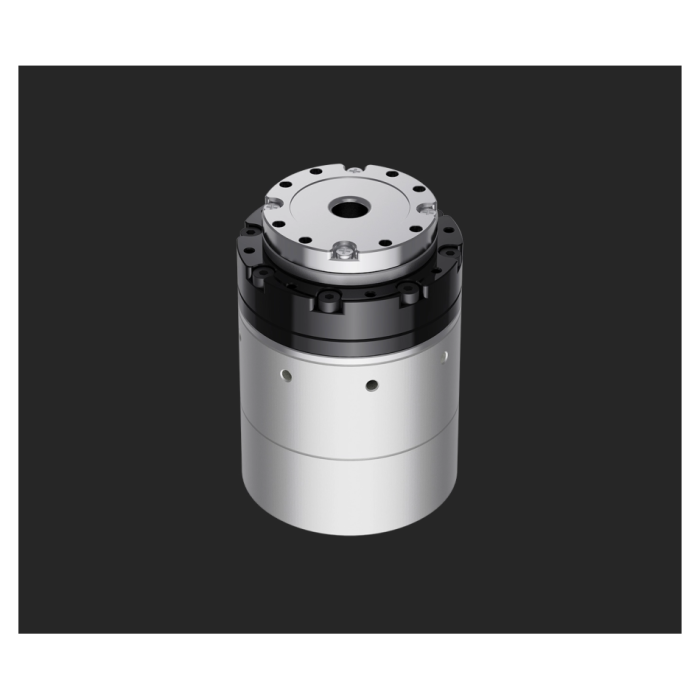
Ti5 Robotics 30-40 Lightweight Joint Module
In stock
- KAUBAMÄRK:
- TI5 ROBOTICS
- MUDEL:
- 30-40
- ORIGIN:
- Hiina
- Warranty:
- 12 MONTHS
- AVAILABILITY:
- SUBJECT TO AVAILABILITY
- SKU:
- Ti5-Robotics-Joint-Module-30-40
Ti5 Robotics 30-40 Lightweight Joint Module
Ti5 Robotics 30-40 Lightweight Joint Module is a compact rotary actuator family that combines a motor, precision gear reducer, encoder and drive electronics in a single integrated housing. Developed by Ti5 Robotics for robot joints where mass and volume are at a premium, the 30-40 series is offered in four joint versions and two gear ratios, allowing designers to balance torque, speed, body length and communication interface for each axis of a machine rather than accepting a one-size-fits-all actuator.
Background
Why integrated joint modules matter
Traditional robot joints are assembled from separately sourced motors, gearboxes, encoders and servo drives, which increases wiring complexity, weight and engineering effort. Integrated joint modules collapse that chain into one unit, typically with a through-going hollow shaft for cable routing. Ti5 Robotics positions the 30-40 series around three qualities: modularity that supports flexible assembly and easy maintenance, a lightweight structure that enhances mobility and energy efficiency, and a highly integrated layout that optimizes space utilization and performance output for modern intelligent equipment. The manufacturer supplies such actuator modules ready for integration into humanoid robots and other machines.
The 30-40 model family
The series comprises four joint versions built on the same 30-40 frame: the base CRA-RI30-40-PRO-2-XXX, the extended-body CRA-RI30-40-PRO-2-XXX-B, the CRA-RI30-40-PRO-2-XXX-2E-EC with a dual-encoder configuration and an EtherCAT-capable interface, and the CRA-RI30-40-PRO-2-XXX-B-2E-EC, which pairs the extended body with that interface option. Each documented version is offered with a 51:1 or a 101:1 gear ratio, trading output speed against torque. The manufacturer lists the fourth version by name but does not publish a parameter table for it, so only the three documented versions are quantified below.
Technical Specifications
The following tables preserve the published configuration distinctions. Blank, malformed, or ambiguous source values are not confirmation of a capability; confirm the selected configuration during quotation.
CRA-RI30-40-PRO-2-XXX
| Gear Ratio | Peak Torque(N.m) | Max Allowable Torque At Average Load (N.m) | Rated Torque @ 2000RPM (N.m) | Peak Speed(RPM) | Rated Speed (With 1/2 Rated Torque) (RPM) | Gear Backlash(arcsec) |
| 51 | 3.3 | 2.3 | 1.8 | 118 | 90 | 40 |
| 101 | 4.8 | 3.3 | 2.4 | 59 | 45 | 40 |
| Rated Power(W) | Supply Voltage(V) | Max Continuous Current(A) | Rated Current(A) | Torque Constant (N.m/A) | Encoder Resolution (bit) | Communication Bus |
| 36 | 24-48 | 2 | 1 | 0.024 | 16 | CAN |
| Hollow Shaft(mm) | Length(mm) | Mass(kg) | Inertia(g * c㎡) |
| 6 | 60.5±0.5 | 0.19 | 27.4 |
CRA-RI30-40-PRO-2-XXX-B
| Gear Ratio | Peak Torque (N.m) | Max Allowable Torque At Average Load (N.m) | Rated Torque @ 2000RPM (N.m) | Peak Speed (RPM) | Rated Speed (With 1/2 Rated Torque) (RPM) | Gear Backlash (arcsec) |
| 51 | 3.3 | 2.3 | 1.8 | 118 | 90 | 40 |
| 101 | 4.8 | 3.3 | 2.4 | 59 | 45 | 40 |
| Rated Power(W) | Supply Voltage(V) | Max Continuous Current(A) | Rated Current(A) | Torque Constant (N.m/A) | Encoder Resolution (bit) | Communication Bus |
| 36 | 24-48 | 2 | 1 | 0.024 | 16 | CAN |
| Hollow Shaft(mm) | Length(mm) | Mass(kg) | Inertia(g * c㎡) |
| 6 | 78.6±0.5 | 0.27 | 45.1 |
CRA-RI30-40-PRO-2-XXX-2E-EC
| Gear Ratio | Peak Torque (N.m) | Max Allowable Torque At Average Load (N.m) | Rated Torque @ 2000RPM (N.m) | Peak Speed (RPM) | Rated Speed (With 1/2 Rated Torque) (RPM) | Gear Backlash (arcsec) |
| 51 | 3.3 | 2.3 | 1.8 | 118 | 90 | 40 |
| 101 | 4.8 | 3.3 | 2.4 | 59 | 45 | 40 |
| Rated Power(W) | Supply Voltage(V) | Max Continuous Current(A) | Rated Current(A) | Torque Constant (N.m/A) | Encoder Resolution (bit) | Communication Bus |
| 36 | 24-48 | 2 | 1 | 0.024 | 16/18 | CAN/EtherCAT |
| Hollow Shaft(mm) | Length(mm) | Mass(kg) | Inertia(g * c㎡) |
| 6 | 60.5±0.5 | 0.23 | 23.73 |
How do the four versions of the 30-40 joint module differ?
Torque, speed, backlash and electrical ratings are identical across the documented versions for a given gear ratio; the versions differ in packaging and interface. The B version uses a longer body — 78.6 mm versus 60.5 mm — and is correspondingly heavier at 0.27 kg versus 0.19 kg for the base unit. The 2E-EC version keeps the short 60.5 mm body but adds a second encoder option at 16/18-bit resolution and supports EtherCAT alongside CAN, at a mass of 0.23 kg. The B-2E-EC version nominally combines the extended body with the dual-encoder EtherCAT configuration, but its parameters are not published, so it should be specified only after direct confirmation with the factory.
Who is the Ti5 Robotics 30-40 Lightweight Joint Module for?
The 30-40 series targets OEM robot builders, research laboratories, system integrators and product development teams that need a small, low-mass rotary joint with documented torque and speed figures. It suits engineers designing distal axes — wrists, grippers and small limb joints — where every gram matters, as well as educators and researchers who want a self-contained actuator with a hollow shaft for clean cable routing and a standard CAN or EtherCAT control interface. Buyers choosing among the four versions should start from required torque, available axial length and the fieldbus used by their controller.
What is the Ti5 Robotics 30-40 Lightweight Joint Module used for?
- Joint axes in humanoid robot limbs, where the manufacturer supplies actuator modules ready for integration.
- Wrist and distal joints of collaborative robot arms that need low moving mass.
- Scientific research and education platforms, including custom experimental manipulators.
- Industrial production mechanisms such as compact positioning and handling axes.
- Development of medical and rehabilitation equipment, an application area listed by the manufacturer.
- Commercial service robot prototypes and other space-constrained motion systems.
Pricing and Availability
The manufacturer does not publish list pricing for the 30-40 series. Cost depends on the selected version, gear ratio, encoder and bus configuration, and order quantity. Configuration and final pricing should be confirmed during quotation, and lead times should be verified at the time of order. A quotation request from this product page is the direct route to current commercial terms.
Frequently Asked Questions
Which gear ratios are available for the 30-40 module?
Two ratios are documented: 51:1, rated for 3.3 N·m peak torque at up to 118 RPM, and 101:1, rated for 4.8 N·m peak torque at up to 59 RPM.
What communication interfaces does the module support?
The base and B versions communicate over CAN with a 16-bit encoder. The 2E-EC version supports CAN/EtherCAT with 16/18-bit encoder resolution.
How much does the module weigh?
Documented masses range from 0.19 kg for the base version to 0.23 kg for the 2E-EC version and 0.27 kg for the extended-body B version.
Does the module have a hollow shaft?
Yes. All documented versions include a 6 mm hollow shaft, which simplifies routing of cables through the joint.
What power supply does it require?
The documented versions accept 24–48 V, with 36 W rated power, 1 A rated current and 2 A maximum continuous current.
Can it be used in humanoid robots?
Yes. Ti5 Robotics explicitly supplies joint actuator modules for humanoid robots, and the 30-40 frame suits small limb, wrist and hand-adjacent joints.
Where can I buy the Ti5 Robotics 30-40 Lightweight Joint Module and what does it cost?
It can be ordered through this product page. Pricing varies by version, gear ratio and quantity, so submit a quotation request to receive current cost and delivery information.
Summary
The Ti5 Robotics 30-40 Lightweight Joint Module packs motor, reducer, encoder and drive into a unit as light as 0.19 kg, with 51:1 and 101:1 ratios, up to 4.8 N·m peak torque and CAN or EtherCAT control across four versions. For anyone comparing compact joint actuators or preparing a quotation, this page is the starting point.