Faraday Future
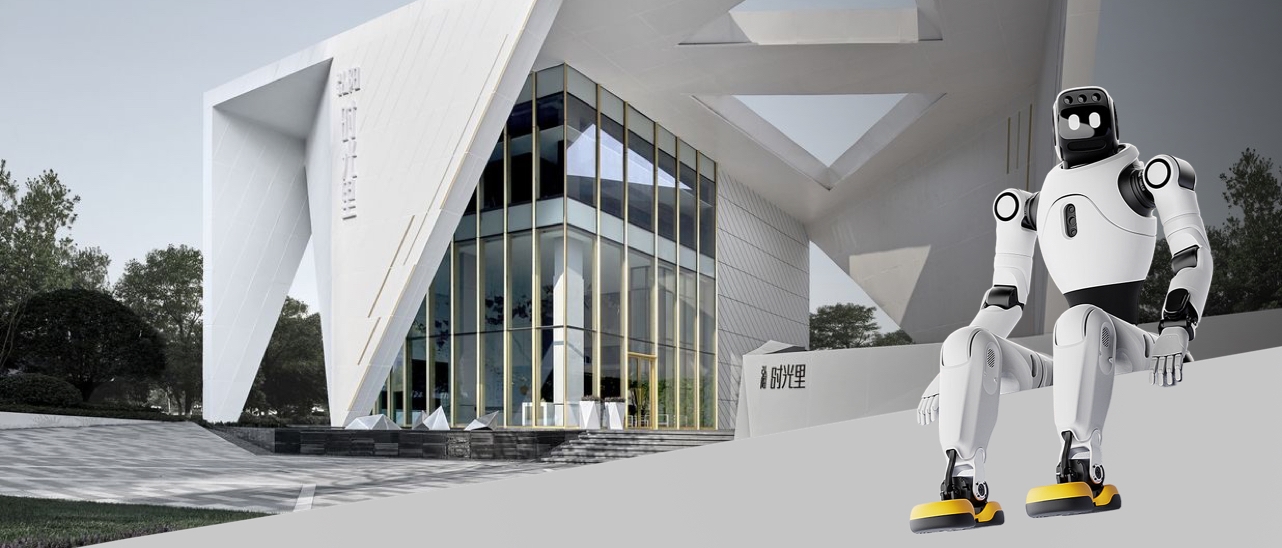
Faraday Future is the California-based, NASDAQ-listed electric vehicle pioneer that repositioned itself in 2026 as a physical AI ecosystem company, launching the FF EAI Robot World — billed as the most complete family of robot form factors offered in the United States: six product series spanning the full-size Futurist flagship humanoid with 31 body degrees of freedom, six-hour dual-battery endurance and native NVIDIA SONIC whole-body motion control, the Master and Nova humanoid lines, the Aegis and Navi quadruped series, and the Faber industrial-grade mobile manipulator — all running one shared Embodied AI platform under the company's Device-Data-Brain architecture, with a downloadable SKILLS capability marketplace, U.S. regulatory certification on its first products, and hundreds of robots already delivered across education, commercial service, security, inspection and industrial applications.
Faraday Future
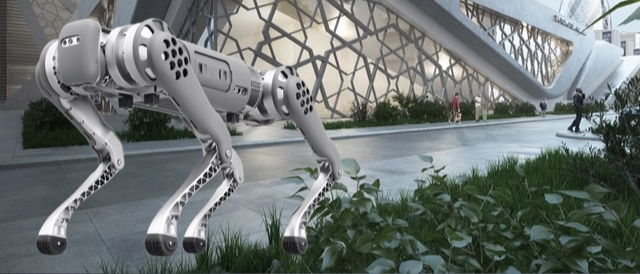
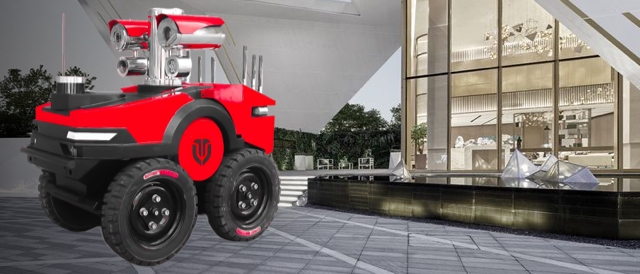
Car companies have long promised that the technologies inside an electric vehicle — motors, batteries, sensors, AI — would someday walk out of the chassis on legs. Faraday Future stopped promising and reorganised the company around it. The California firm that built the FF 91 luxury EV formally upgraded its positioning in 2026 to a physical AI ecosystem company, and within a single year assembled what it bills as the most complete range of robot form factors offered in the United States, or anywhere: the FF EAI Robot World, six "All-Star" product series launched between its NADA Show debut in Las Vegas in February and its full-family showing at Automate 2026 in Chicago. Three humanoid lines — the flagship Futurist, the Master and the Nova — stand alongside two quadruped series, Aegis and Navi, and Faber, an industrial-grade mobile manipulator family. The philosophy binding them is "one brain, multiple forms": every machine runs the same Embodied AI software platform under FF's Device-Data-Brain architecture, feeding real-world data back into shared intelligence, and drawing capabilities from a downloadable SKILLS marketplace — someone teaches one robot to fold clothes or sort a shelf, and every compatible robot can download the ability. And unlike most humanoid ventures, this one ships: FF's first robotics products completed U.S. regulatory certification at launch, deliveries began in the first quarter of 2026 with positive single-product gross margins, and hundreds of units had reached customers by midsummer against a raised full-year target of 1,500.
Faraday Future robots are available for purchase internationally through this page, with delivery, customs clearance and after-sales support arranged for buyers across the Americas, Europe, the Middle East, Asia-Pacific and worldwide.
Background
From the FF 91 to the Futurist
Founded in 2014 and headquartered in Los Angeles, Faraday Future spent a decade engineering intelligent electric vehicles — the FF 91 flagship and the FX Super One — building exactly the industrial base a robot company needs: high-density battery systems, precision electric drive, real-time perception, AI compute and a California supply-and-certification operation. The company's "industrial bridge" strategy transfers that base directly: vehicle-grade motion control becomes whole-body robot balance, EV battery engineering becomes six-hour humanoid endurance, automotive certification discipline becomes U.S.-certified robot products. FF frames vehicles and robots as one continuum of embodied intelligence — its EVs as "automotive robots" complementing the humanoid and bionic lines — and has made robotics its primary near-term commercial priority, with the stated aim of becoming the first U.S. company to deliver humanoid robots at positive gross margins, a milestone its first delivery quarter already recorded at product level.
One brain, multiple forms — and an app store
The EAI Robot World's structure is deliberately platform-shaped. The All-New Futurist leads: a full-size humanoid at roughly 173 centimetres and 55 kilograms — 14 percent lighter than its predecessor — with 31 degrees of freedom in the body before counting the hands, around five kilograms of lift per arm, a dual-battery system delivering some six hours of continuous operation, an Ultra variant that returns to its dock autonomously, and native support for NVIDIA's SONIC whole-body motion control, which FF cites as a U.S. first for a full-size humanoid. Around it, the Master and Nova humanoid lines, the Aegis and Navi quadrupeds and the Faber mobile manipulators extend the same brain into service, security, education and industrial form factors. The SKILLS marketplace then turns capability into content — downloadable software packs that already generate a quarter of FF's robotics revenue — while the RoboShare platform, operated through FF's majority-held AIxCrypto venture, adds an "Uber-plus-Turo" rental layer so organisations can deploy robots without buying them outright. Distribution agreements, an education lab and summer-camp programmes round out an ecosystem being built in public, quarter by quarter.
Brand Overview
| Aspect | Faraday Future Robotics |
|---|---|
| Company | Faraday Future Intelligent Electric Inc. — NASDAQ-listed, headquartered in Los Angeles, California |
| Founded / pivot | founded 2014 as an EV pioneer; repositioned 2026 as a physical AI (Embodied AI) ecosystem company |
| Product family | FF EAI Robot World — six series: Futurist, Master, Nova (humanoids); Aegis, Navi (quadrupeds); Faber (mobile manipulators) |
| Flagship | All-New Futurist: ~173 cm, ~55 kg, 31 body DOF, ~5 kg per-arm lift, ~6 h dual-battery endurance, autonomous dock return (Ultra), native NVIDIA SONIC whole-body control |
| Architecture | "one brain, multiple forms" — shared EAI platform; Device-Data-Brain loop; open-source and open developer platform strategy |
| Software ecosystem | SKILLS downloadable capability packs; software already ~26% of robotics revenue |
| Deployment models | direct purchase and RoboShare robot rental/sharing platform |
| Certification | first products U.S. regulatory certified at launch |
| Traction (2026) | deliveries from Q1 with positive single-product gross margins; 220+ units by H1, hundreds cumulative by late summer; full-year target raised to 1,500 |
| Application focus | education, commercial service and entertainment, security and inspection, industrial productivity and logistics |
Series specifications and configurations are confirmed against current datasheets at quotation.
What makes Faraday Future different from other humanoid makers?
The ecosystem is the product. Most robot companies sell a machine and improve it; FF sells membership in a loop. Every Futurist, Aegis or Faber in the field is a Device gathering real-world Data that trains the shared Brain, whose improvements flow back to every unit — and whose new abilities arrive as SKILLS downloads rather than hardware revisions, the smartphone economics that turned handsets into platforms. Three consequences matter to buyers. Breadth: one vendor, one software platform and one developer ecosystem cover humanoid, quadruped and manipulator needs — no other U.S. supplier offers the span. Longevity: a robot whose capabilities grow by download depreciates like a platform, not an appliance, and RoboShare's sharing layer even gives machines a second commercial life. Accountability: this is a NASDAQ-listed American company shipping U.S.-certified products from a California base — with the procurement, support and compliance profile that North American institutions, schools and enterprises increasingly require.
Who are Faraday Future robots for?
For educational institutions first — FF has made education a launch market, with an education lab, camp programmes and platforms suited to teaching embodied AI from school to university level; for commercial venues, brands and entertainment operators deploying humanoids as hosts, performers and attractions; for security and facility teams fielding the Aegis and Navi quadruped lines on patrol and inspection rounds; for industrial and logistics operators evaluating the Faber mobile manipulators on handling and productivity tasks — FF's supermarket shelf-sorting demonstrations preview the brief; for research groups and developers, drawn by native NVIDIA SONIC support on the Futurist and the open developer platform; and for organisations that want robot capability without robot ownership, through the RoboShare rental model. It is also, plainly, the family for buyers who prefer an American-certified, exchange-listed supplier behind their fleet.
What are Faraday Future robots used for?
- Education and research: embodied-AI teaching labs, curricula and development platforms across the six-series family.
- Commercial service and entertainment: humanoid hosting, brand activations, performances and venue attractions.
- Security and inspection: quadruped patrol and monitoring with the Aegis and Navi series.
- Industrial productivity: Faber mobile manipulation for handling, sorting and workcell tasks.
- Logistics support: mobile manipulation and multi-form deployments across warehouse workflows.
- Ecosystem development: SKILLS creation, data-driven applications and shared-fleet operations via RoboShare.
Pricing and Availability
Faraday Future robots are available for purchase and international delivery through this page across the Futurist, Master, Nova, Aegis, Navi and Faber series, from single units for schools and venues to fleet and programme deployments; rental-based access through the RoboShare model can be explored alongside purchase. As a rapidly expanding family with software bundles, SKILLS packages and configuration options per series, price and cost are confirmed by individual quotation for each model and deployment; delivery, customs clearance and after-sales support are arranged worldwide. Purchase enquiries, datasheets and availability details for Faraday Future robots are available on this page.
Frequently Asked Questions
Who is Faraday Future?
A California-based, NASDAQ-listed technology company founded in 2014 as an intelligent EV pioneer — maker of the FF 91 — which repositioned in 2026 as a physical AI ecosystem company and launched the FF EAI Robot World, its six-series robot family.
What robots does Faraday Future make?
Three humanoid series — the flagship Futurist, the Master and the Nova — two quadruped series, Aegis and Navi, and the Faber industrial-grade mobile manipulator line: billed as the most complete range of robot form factors offered by any single company in the U.S. market.
What are the Futurist's key capabilities?
The All-New Futurist stands about 173 centimetres at roughly 55 kilograms, moves through 31 body degrees of freedom with around five kilograms of lift per arm, runs some six hours on its dual-battery system — with autonomous dock return on the Ultra — and is cited as the first full-size U.S. humanoid natively supporting NVIDIA's SONIC whole-body motion control.
What does "one brain, multiple forms" mean?
That every FF robot, whatever its body, runs one shared Embodied AI platform: real-world data from all deployed machines improves the common intelligence, and new abilities are distributed as downloadable SKILLS capability packs rather than per-robot programming.
Are these robots actually shipping?
Yes — deliveries began in the first quarter of 2026 with positive single-product gross margins, first-half shipments exceeded 220 units ahead of target, hundreds were delivered by late summer, and the company raised its full-year target to 1,500 units.
Can robots be rented instead of purchased?
That is the purpose of RoboShare, the robot rental and sharing platform operated through FF's majority-held venture — access to working robots without outright purchase, and a second commercial life cycle for deployed machines.
Where can I buy Faraday Future robots and what do they cost?
Faraday Future robots are available through this page, with delivery, customs clearance and after-sales support arranged for buyers worldwide. Because cost varies by series, model, software bundle and quantity, buyers should request an individual quotation. All purchasing details are available on this page.
Summary
Faraday Future arrived at robotics the way carmakers always theorised and rarely executed: by pouring a decade of EV motors, batteries, perception and certification into machines that walk. The result, assembled in one extraordinary year, is America's broadest robot family — Futurist, Master and Nova humanoids, Aegis and Navi quadrupeds, Faber manipulators — sharing one brain, one data loop and one app-store of downloadable skills, sold, certified and already shipping in the hundreds from a listed California company. For schools, venues, security teams, industry and developers, it offers something the humanoid market has lacked: a full ecosystem with an American address. The robot world FF built is open for orders — and this page is the starting point.