
Unitree R1 Edu Pro H AI Humanoid Robot For Advanced Robotics Research
Disponibile
- MARCA:
- UNITREE ROBOTICS
- MODELLO:
- R1 EDU-U10
- NUMERO PARTE #:
- R1 EDU-U10
- ORIGIN:
- Cina
- Warranty:
- 12 MONTHS
- AVAILABILITY:
- SUBJECT TO AVAILABILITY
- SKU:
- Unitree-R1-EDU-U10
Buy now, pay later
Unitree R1 Edu Pro H AI Humanoid Robot For Advanced Robotics Research
Most robot hands put a motor in each finger. These route tendons through the wrist instead, which makes the fingers lighter, naturally compliant and backdrivable — they give when pushed, rather than fighting back.
What it is
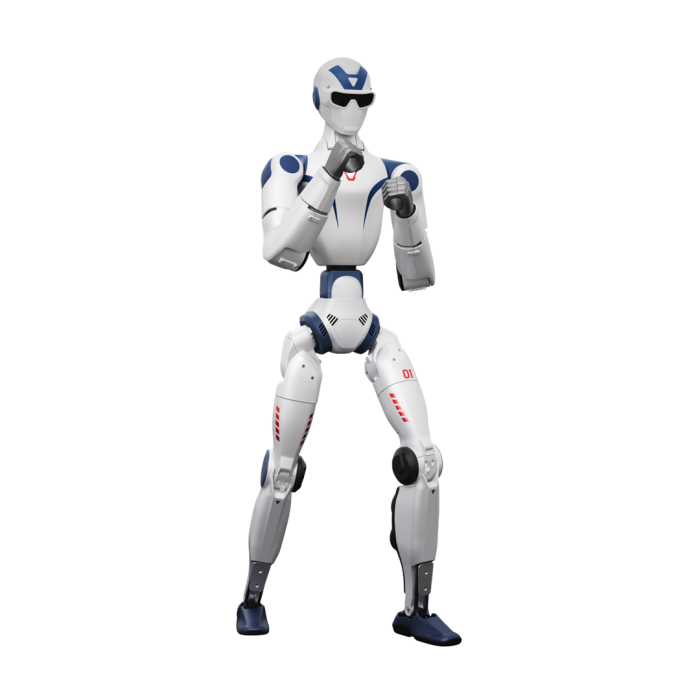
The Unitree R1 EDU Pro H (U10) is a configuration of Unitree's compact R1 EDU bipedal research humanoid: a 1.23 m frame with 26 actuated degrees of freedom in the body, an NVIDIA Jetson Orin at 100 TOPS, stereo binocular vision and full SDK access, fitted with two Unitree tendon-driven five-finger dexterous hands. Total freedom reaches 30 degrees. It is sold as a development platform rather than as a closed product.
What tendon drive actually changes
In a tendon-driven hand the actuators sit back in the forearm and pull cables that run through the wrist to the fingers, much as human tendons do. Two consequences matter for research. The fingers carry very little mass, so a fast-moving arm is not swinging motors around at its far end. And the drive is backdrivable: push a finger and it yields rather than resisting, which is inherently safer around people and more forgiving when a grasp goes wrong.
The trade is control authority. Ten joints driven by two axes per hand means the fingers move in coordinated patterns rather than independently. For human-robot interaction, safe contact and anthropomorphic appearance that is a good bargain; for per-finger manipulation research it is not.
The ten R1 EDU configurations
Every rung shares the same body: a 1.23 m bipedal frame with 26 actuated degrees of freedom — six joints in each leg, five in each arm, two in the waist and two in the head. What changes up the ladder is compute and, above all, hands. Total freedom is simply 26 plus whatever the hands add.
| Configuration | Hands | DOF per hand | Tactile | Total DOF |
|---|---|---|---|---|
| U1 Standard | None | — | No | 26 |
| U2 Smart | None | — | No | 26 |
| U9 Pro G | Dex1-1 Plus two-finger grippers | 1 | No | 28 |
| U10 Pro H | Unitree tendon-driven five-finger | 2 | No | 30 |
| U7 Pro E | LinkerBot Linker Hand O6, five-finger | 6 | No | 38 |
| U8 Pro F | LinkerBot Linker Hand O6, five-finger | 6 | Yes | 38 |
| U3 Pro A | Unitree Dex3-1, three-finger | 7 | No | 40 |
| U4 Pro B | Unitree Dex3-1, three-finger | 7 | Yes | 40 |
| U5 Pro C | BrainCo Revo 2 Basic, five-finger | 6 | No | 38 |
| U6 Pro D | BrainCo Revo 2 Touch, five-finger | 6 | Yes | 38 |
The U1 Standard runs a 40 TOPS Jetson Orin module; every Pro trim runs 100 TOPS. Because the frame, SDK, simulation models, batteries, chargers, controllers and gantry are common across the whole ladder, mixed fleets are normal and hands can be changed after purchase.
Where this configuration sits
Within the ladder above, the Unitree R1 EDU Pro H is defined entirely by its hands — the frame, compute, sensing and SDK are the same as every other Pro trim. Choose between the rungs on what the robot has to hold, not on the robot itself.
Unitree R1 EDU Pro H (U10) specifications
| Specification | Value |
|---|---|
| Platform | Unitree R1 EDU, compact bipedal research humanoid |
| Height | About 1.23 m standing (1,230 × 357 × 190 mm) |
| Weight | About 25 to 29 kg with battery, varying by hand option |
| Body degrees of freedom | 26 — 6 per leg, 5 per arm, 2 waist, 2 head |
| Hands | Unitree tendon-driven five-finger dexterous hands |
| Hand degrees of freedom | 2 per hand |
| Tactile sensing | None |
| Total degrees of freedom | 30 (26 body + 2 per hand) |
| Actuation | Low-inertia permanent magnet synchronous motors, crossed roller bearings, internal cable routing through hollow joints |
| Compute | NVIDIA Jetson Orin at 100 TOPS, plus an 8-core onboard control processor |
| Perception | Stereo binocular vision |
| Battery life | About 1 hour from a quick-release smart battery |
| Development | Full SDK access, documented interfaces and simulation models |
Figures follow published specifications for this configuration and vary by production batch. Confirm the exact build on your quotation before ordering.
Who buys it
- Human-robot interaction and safe-contact research
- Work where backdrivable, naturally yielding fingers matter
- Compliant grasping and contact-rich interaction studies
- Groups studying tendon-driven and cable-actuated mechanisms
- Demonstration and outreach where human hand shape reads well
How to choose
Move to the U7 Pro E for a linkage-driven five-finger hand with six driven axes, or to the Dex3-1 trims U3 and U4 for force control and per-joint authority. Drop to the U9 Pro G if a two-finger gripper would genuinely do. Because the whole ladder shares one frame, SDK, battery and accessory ecosystem, mixed fleets are normal and hands can be changed after purchase. Compare the whole field in our humanoid robots category.
Safety and standards
The R1 EDU is research and development equipment. The industrial robot safety standards — ISO 10218 and the ANSI/RIA R15.06 family — and the mobile robot standard R15.08 do not cover it, so the duty of care sits with the operator. Define and mark a working area, keep untrained people outside it, keep a trained operator with the emergency stop within reach, use a support gantry while developing locomotion, and complete a written risk assessment before any public demonstration.
Lithium batteries are regulated dangerous goods in transit, which affects how spares ship and how quickly.
Deployment and running costs
Budget for at least one spare battery. Runtime is about an hour, which is short by design on a robot this light, so a single pack means a lab that works in bursts. A support gantry is close to essential if you are developing locomotion, because the robot will fall repeatedly and that is the process working rather than failing. End-effector spares are worth planning for as well; related parts are listed under robot accessories. International buyers should add duty and import charges. Current pricing is shown on the listing above; for quantities, grant purchases or bundles, request a written quotation.
Import and delivery
Units ship from the manufacturer and lead times follow production batches rather than a fixed schedule. Lithium batteries restrict some routes and add documentation. Tell us the destination country when you enquire and we will confirm delivered cost, a realistic lead time and the paperwork required before you commit.
Support before and after the sale
Before you buy, our team will confirm whether tendon-driven compliance is what your work needs, or whether a hand with more independent control would serve you better. After delivery, we help with training, set up and ongoing support. The specifics for your order are confirmed on your quotation.
Where to buy
This configuration is listed above with current price and availability, alongside the rest of the R1 EDU ladder so you can compare before committing. Order directly, or contact our team for a formal quotation including delivery to your country. Universities and institutions buying against a purchase order should request a written quotation first.
Frequently asked questions
How much does a Unitree R1 EDU Pro H (U10) cost?
Current pricing is shown on the listing above. Request a quotation for delivered pricing or quantities.
What does tendon-driven mean?
The actuators sit in the forearm and pull cables through the wrist to the fingers, as human tendons do. The fingers themselves carry almost no mass.
Why only two degrees of freedom per hand?
Ten joints are driven by two actuated axes, so the fingers move in coordinated patterns rather than independently. That keeps the hand light, compliant and inexpensive.
Are these hands safer around people?
They are backdrivable, meaning a finger yields when pushed rather than resisting. That is inherently more forgiving than a rigid, geared hand.
How tall is the R1 EDU?
About 1.23 m standing, at roughly 25 to 29 kg with battery.
How many degrees of freedom does the body have?
26 — six joints in each leg, five in each arm, two in the waist and two in the head. Hands add to that total.
How long does the battery last?
About an hour from a quick-release smart battery. Plan at least one spare.
Is it open for development?
Yes. The EDU line ships with full SDK access, documented interfaces and simulation models.
Can I change the hands later?
Yes. End effectors are sold separately and can be changed, though specifying correctly at order saves cost and downtime.
Is it safe to demonstrate in public?
Only with a defined working area, a trained operator holding the emergency stop and a written risk assessment.
Do you ship internationally?
Yes. Lithium batteries affect routing and lead time, so confirm the destination country when you enquire.