
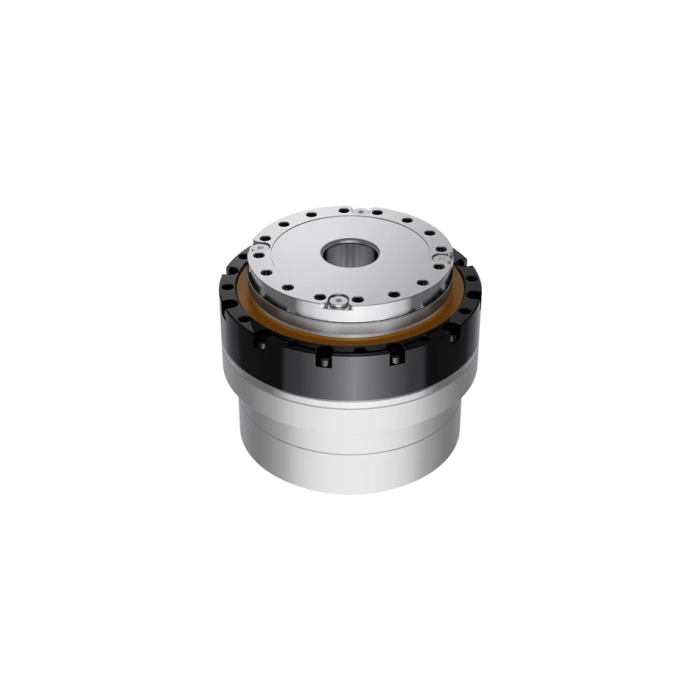
Ti5 Robotics 70-90 Lightweight Joint Module
Op voorraad
- MERK:
- TI5 ROBOTICS
- MODEL:
- 70-90
- ORIGIN:
- China
- Warranty:
- 12 MONTHS
- AVAILABILITY:
- SUBJECT TO AVAILABILITY
- SKU:
- Ti5-Robotics-Joint-Module-70-90
Ti5 Robotics 70-90 Lightweight Joint Module
Ti5 Robotics 70-90 Lightweight Joint Module (model 70-90) is a modular, integrated rotary actuator built for humanoid robots, collaborative arms, and other intelligent equipment. The manufacturer offers the family in four joint versions — CRA-RI70-90-PRO-2-XXX, CRA-RI70-90-PRO-2-XXX-B, CRA-RI70-90-PRO-2-XXX-2E-EC, and CRA-RI70-90-PRO-2-XXX-B-2E-EC — and each is configured with one of four gear ratios (51, 81, 101, or 121), so designers can match torque, speed, and backlash to a specific joint position rather than forcing one actuator to serve every axis. This page covers the whole 70-90 family as a single listing, with all documented versions and ratios described together.
Background
A modular, integrated, lightweight actuator platform
The 70-90 module follows the design philosophy stated in the manufacturer's introduction: modular, integrated, and lightweight. Modularity means the actuator is a self-contained joint — motor, gearing, encoder feedback, and drive electronics in one housing — which simplifies assembly and maintenance on multi-axis machines. The lightweight structure is intended to improve mobility and energy efficiency in mobile and humanoid platforms, where every joint's mass is carried by the joints below it. The highly integrated layout is aimed at space utilization and performance output, which matters in arms and limbs where envelope diameter and segment length are tightly constrained. Documented masses in this family run from 1.27 kg to 1.5 kg depending on version, with housing lengths of 73.5 ±0.5 mm or 92 ±0.5 mm.
Four joint versions and four gear ratios
The family's four versions share a common electrical platform — 500 W rated power, 24–48 V supply, 8.4 A maximum continuous current, 6.1 A rated current, and a 0.118 N·m/A torque constant — but differ in length, mass, inertia, and communication options. The base CRA-RI70-90-PRO-2-XXX is 73.5 mm long at 1.27 kg with a 16-bit encoder on a CAN bus. The -B version is longer (92 mm) and heavier (1.5 kg) with higher rotor-side inertia. The -2E-EC version adds an EtherCAT option alongside CAN, with encoder resolution listed as 16/18-bit, at 73.5 mm and 1.3 kg. The fourth version, CRA-RI70-90-PRO-2-XXX-B-2E-EC, is named in the source but its parameter table is not published there, so its figures should be confirmed with the supplier before specifying it. Independently of version, the gear ratio chosen (51, 81, 101, or 121) sets the torque/speed trade-off: across the family, peak torque spans 69–108 N·m and peak speed spans 30–77 RPM, with gear backlash of 20 arcsec at the two lower ratios and 10 arcsec at the two higher ratios.
Technical Specifications
The following tables preserve the published configuration distinctions. Blank, malformed, or ambiguous source values are not confirmation of a capability; confirm the selected configuration during quotation.
CRA-RI70-90-PRO-2-XXX
| Gear Ratio | Peak Torque (N.m) | Max Allowable Torque At Average Load (N.m) | Rated Torque @ 2000RPM (N.m) | Peak Speed (RPM) | Rated Speed (With 1/2 Rated Torque) (RPM) | Gear Backlash (arcsec) |
| 51 | 69 | 42 | 32 | 77 | 61 | 20 |
| 81 | 91 | 58 | 42 | 48 | 38 | 20 |
| 101 | 102 | 61 | 50 | 40 | 30 | 10 |
| 121 | 108 | 61 | 50 | 30 | 25 | 10 |
| Rated Power(W) | Supply Voltage(V) | Max Continuous Current(A) | Rated Current(A) | Torque Constant (N.m/A) | Encoder Resolution (bit) | Communication Bus |
| 500 | 24-48 | 8.4 | 6.1 | 0.118 | 16 | CAN |
| Hollow Shaft(mm) | Length(mm) | Mass(kg) | Inertia(g * c㎡) |
| 18 | 73.5±0.5 | 1.27 | 596.4 |
CRA-RI70-90-PRO-2-XXX-B
| Gear Ratio | Peak Torque (N.m) | Max Allowable Torque At Average Load (N.m) | Rated Torque @ 2000RPM (N.m) | Peak Speed (RPM) | Rated Speed (With 1/2 Rated Torque) (RPM) | Gear Backlash (arcsec) |
| 51 | 69 | 42 | 32 | 77 | 61 | 20 |
| 81 | 91 | 58 | 42 | 48 | 38 | 20 |
| 101 | 102 | 61 | 50 | 40 | 30 | 10 |
| 121 | 108 | 61 | 50 | 30 | 25 | 10 |
| Rated Power(W) | Supply Voltage(V) | Max Continuous Current(A) | Rated Current(A) | Torque Constant (N.m/A) | Encoder Resolution (bit) | Communication Bus |
| 500 | 24-48 | 8.4 | 6.1 | 0.118 | 16 | CAN |
| Hollow Shaft(mm) | Length(mm) | Mass(kg) | Inertia(g * c㎡) |
| 18 | 92±0.5 | 1.5 | 746.7 |
CRA-RI70-90-PRO-2-XXX-2E-EC
| Gear Ratio | Peak Torque (N.m) | Max Allowable Torque At Average Load (N.m) | Rated Torque @ 2000RPM (N.m) | Peak Speed (RPM) | Rated Speed (With 1/2 Rated Torque) (RPM) | Gear Backlash (arcsec) |
| 51 | 69 | 42 | 32 | 77 | 61 | 20 |
| 81 | 91 | 58 | 42 | 48 | 38 | 20 |
| 101 | 102 | 61 | 50 | 40 | 30 | 10 |
| 121 | 108 | 61 | 50 | 30 | 25 | 10 |
| Rated Power(W) | Supply Voltage(V) | Max Continuous Current(A) | Rated Current(A) | Torque Constant (N.m/A) | Encoder Resolution (bit) | Communication Bus |
| 500 | 24-48 | 8.4 | 6.1 | 0.118 | 16/18 | CAN/EtherCAT |
| Hollow Shaft(mm) | Length(mm) | Mass(kg) | Inertia(g * c㎡) |
| 18 | 73.5±0.5 | 1.3 | 622.79 |
How do you choose among the 70-90 gear ratios and versions?
Start with the joint's torque and speed duty. Lower ratios (51, 81) favor speed — up to 77 RPM peak — at lower torque, suiting distal joints such as wrists and elbows on lighter arms. Higher ratios (101, 121) deliver up to 108 N·m peak with tighter 10-arcsec backlash, suiting load-bearing joints like shoulders, hips, and knees where stiffness and holding torque dominate. Then select the version: the base unit is the shortest and lightest; the -B unit trades 18.5 mm of length and roughly 0.23 kg for its mechanical configuration; the -2E-EC unit is the choice when a deterministic EtherCAT control loop or higher encoder resolution is required. The 18 mm hollow shaft on all documented versions allows cabling to pass through the joint, keeping harnesses internal across serial kinematic chains.
Who is the Ti5 Robotics 70-90 Lightweight Joint Module for?
This module family targets humanoid robot developers, collaborative robot arm builders, research laboratories, and OEM machine designers who need a ready-to-integrate joint rather than a motor-plus-gearbox assembly of their own. It suits teams prototyping full-scale humanoid limbs, universities running robotics and control courses, and integrators building custom manipulators, exoskeleton research rigs, or automated mechanisms where a compact actuator with integrated feedback and a fieldbus interface shortens development time. Buyers comparing the manufacturer's smaller and larger joint sizes can use the 70-90's 69–108 N·m peak-torque envelope as the deciding criterion.
What is the Ti5 Robotics 70-90 Lightweight Joint Module used for?
- Powering primary joints — shoulders, hips, elbows, and knees — in humanoid robot limbs, with the gear ratio chosen per axis.
- Building collaborative robot arms where each axis uses an integrated joint with CAN or EtherCAT control.
- Scientific research and education platforms for studying actuation, control algorithms, and whole-body motion.
- Medical and rehabilitation robotics research programs listed among the manufacturer's application areas.
- Industrial production mechanisms that need compact, high-torque rotary actuation with through-shaft cabling.
- Commercial-scenario service robots and custom automation prototypes requiring modular, maintainable joints.
Pricing and Availability
The manufacturer positions this family for direct inquiry, and configuration drives the final quotation: version, gear ratio, communication bus, and order quantity all affect cost. Because the module is supplied in four versions and four ratios, requesting a quote with your full axis-by-axis specification is the practical route. Submit a quote request through this listing with your intended version, ratio, and application details, and current pricing and lead-time information will be provided.
Frequently Asked Questions
Which gear ratios are available and how do they differ?
Four ratios: 51, 81, 101, and 121. Peak torque rises from 69 to 108 N·m as the ratio increases, while peak speed falls from 77 to 30 RPM; backlash is 20 arcsec at ratios 51 and 81, and 10 arcsec at 101 and 121.
What communication interfaces does the module support?
The base and -B versions use a CAN bus with a 16-bit encoder. The -2E-EC version lists CAN/EtherCAT with 16/18-bit encoder resolution.
Does the module have a hollow shaft?
Yes. All documented versions include an 18 mm hollow shaft for routing cables through the joint.
What is the difference between the standard and -B versions?
The -B version is longer (92 mm vs 73.5 mm), heavier (1.5 kg vs 1.27 kg), and has higher inertia (746.7 vs 596.4 g·cm²); electrical ratings and gear-ratio performance figures are the same in the source.
Are specifications published for all four versions?
No. The CRA-RI70-90-PRO-2-XXX-B-2E-EC version is named in the source without a parameter table, so its data should be confirmed directly before specifying it in a design.
What power supply does the module require?
Documented versions operate from a 24–48 V supply, with 500 W rated power, 6.1 A rated current, and 8.4 A maximum continuous current.
Where can I buy the Ti5 Robotics 70-90 Lightweight Joint Module and what does it cost?
You can order it through this listing. Pricing depends on the version, gear ratio, bus option, and quantity, so request a quote with your configuration to receive current cost and lead-time details.
Summary
The Ti5 Robotics 70-90 Lightweight Joint Module is a modular, integrated actuator family offered in four joint versions and four gear ratios, spanning 69–108 N·m peak torque, 30–77 RPM peak speed, and 10–20 arcsec backlash on a shared 24–48 V, 500 W electrical platform with an 18 mm hollow shaft. Three versions are fully documented; the fourth should be confirmed with the supplier. For evaluating which configuration fits each axis of your robot and requesting a quotation, this page is the starting point.


