Commercieel
Verken Commercieel met een neutraal, op feiten gebaseerd overzicht van technologie, toepassingen, voordelen en selectiecriteria voor moderne robotoplossingen.
Inleiding en overzicht
Kort overzicht: Ontdek Commercieel met een neutraal, op feiten gebaseerd overzicht van technologie, toepassingen, voordelen en selectiecriteria voor moderne robotoplossingen.
Commercieel maakt deel uit van een snelgroeiende roboticamarkt waarin automatisering, kunstmatige intelligentie, sensoren en robuuste mechanische systemen worden gecombineerd om praktische taken in de industrie, dienstverlening, onderzoek en publieke bedrijfsvoering op te lossen. Een moderne robotcategorie moet worden opgevat als meer dan één enkele machine: het omvat hardware, software, veiligheidsfuncties, integratie, training, onderhoud en de zakelijke context waarin de technologie waarde creëert. Deze pagina biedt een uitgebreid, gezaghebbend en zoekgeoptimaliseerd overzicht van Commercieel voor besluitvormers, ingenieurs, kopers, docenten en onderzoekers.
De belangstelling voor Commercieel wordt gedreven door de behoefte aan hogere productiviteit, betere gegevenskwaliteit, consistentere processen en een veiligere afhandeling van taken die voor mensen zwaar, repetitief, gevaarlijk of tijdrovend kunnen zijn. Wanneer organisaties onderzoek doen naar de aankoop van Commercieel, Commercieel te koop, Commercieel-prijs of Commercieel-kosten, gaat de beslissing zelden alleen over de aankoop. Het omvat ook de volledige levenscyclus: specificatie, implementatie, training van operators, service, reserveonderdelen, software-updates, cyberbeveiliging en langdurige ondersteuning.
Ontwerp en functies
Het ontwerp van Commercieel varieert afhankelijk van taak, omgeving en verwachte autonomie. Sommige systemen zijn stationair en geoptimaliseerd voor precisie, terwijl andere mobiel zijn en gebouwd voor navigatie in complexe ruimtes. Betrouwbare robotoplossingen combineren doorgaans mechanische stabiliteit, betrouwbare actuatoren, sensorfusie, intuïtieve gebruikersinterfaces en gedocumenteerde veiligheidsprotocollen. Servicetoegang, modulariteit en ergonomie zijn ook belangrijk omdat robots vaak in de buurt van operators, technici, klanten of andere geautomatiseerde apparatuur werken.
Typische kenmerken zijn onder meer programmeerbare workflows, monitoring op afstand, modulaire accessoires, realtime diagnostiek, botsingsdetectie, camera's, LiDAR, krachtsensoren, grijpers, batterijbeheer en integratie met bestaande IT- of automatiseringssystemen. Voor mobiele categorieën zijn kaarten, routeplanning, het vermijden van obstakels en wagenparkbeheer vaak belangrijk. Voor robots die dicht bij mensen werken zijn snelheidsbegrenzing, noodstop, redundantie en duidelijke statuscommunicatie essentiële ontwerpeisen.
Technologie en specificaties
De technologie achter Commercieel is normaal gesproken een combinatie van mechanica, elektronica en software. Een robot kan gebruik maken van elektromotoren, harmonische aandrijvingen, lineaire actuatoren, hydraulische componenten of gespecialiseerde verbindingen, afhankelijk van de eisen op het gebied van kracht, snelheid en precisie. De besturing wordt verzorgd door industriële controllers, edge-computers of embedded systemen die sensorgegevens verwerken en omzetten in beweging, navigatie of beslissingen.
Specificaties moeten altijd worden beoordeeld aan de hand van de beoogde toepassing. Relevante parameters kunnen onder meer zijn: laadvermogen, bereik, looptijd, oplaadtijd, snelheid, positioneringsnauwkeurigheid, IP-classificatie, bedrijfstemperatuur, communicatieprotocollen, veiligheidscertificeringen, software-API's en compatibiliteit van accessoires. Een lage aanschafprijs kan van minder belang zijn dan een stabiele werking, documentatie en service, terwijl een geavanceerd model alleen zin heeft als de mogelijkheden ervan ook daadwerkelijk in de workflow worden gebruikt.
Toepassingen en gebruiksscenario's
Commercieel kan worden gebruikt in productie, logistiek, inspectie, onderwijs, onderzoek, gezondheidszorg, service, beveiliging en veldactiviteiten. In industriële omgevingen helpen robots de doorvoer te verbeteren, fouten te verminderen en meer voorspelbare processen te creëren. In service- of klantgerichte omgevingen kunnen ze de beschikbaarheid, informatielevering en routinematige taakafhandeling verbeteren. In onderzoek en ontwikkeling maken robotplatforms het mogelijk om navigatie, manipulatie, mens-robotinteractie en op AI gebaseerde besluitvorming te testen.
Organisaties moeten het probleem definiëren voordat ze de technologie kiezen. Een goede vereistenspecificatie beschrijft de taak, de omgeving, de lading, de veiligheidsbehoeften, integratiepunten, het vaardigheidsniveau van de operator, de gegevensvereisten en de verwachte servicecyclus. Commercieel kan vervolgens worden vergeleken op basis van verifieerbare kenmerken in plaats van op brede marketingclaims. Dit vermindert het inkooprisico en maakt het gemakkelijker om te beslissen of de oplossing standaard, op maat gemaakt of onderdeel van een groter automatiseringsproject moet zijn.
Voordelen en beperkingen
De belangrijkste voordelen van Commercieel zijn doorgaans hogere efficiëntie, verbeterde herhaalbaarheid, betere veiligheid, betere gegevensverzameling en de mogelijkheid om mensen te bevrijden van eentonig of riskant werk. Robots kunnen werken met stabiele processen, gebeurtenissen documenteren en resultaten leveren die moeilijk handmatig te onderhouden zijn gedurende lange perioden. Voor veel organisaties wordt robotica daardoor een strategische vaardigheid in plaats van een eenvoudige aanschaf van apparatuur.
Beperkingen moeten realistisch worden beoordeeld. Implementatie vereist planning, testen, training, integratie en soms wijzigingen in bestaande workflows. Omgevingen met veel onvoorspelbare variabelen kunnen extra sensoren, softwareaanpassing of menselijk toezicht vereisen. De totale economie omvat niet alleen aanschaf, maar ook onderhoud, reserveonderdelen, serviceovereenkomsten, energieverbruik, cyberbeveiliging en interne competentieopbouw. Om die reden moeten de Commercieel-prijs en Commercieel-kosten worden gezien als de totale eigendomskosten, en niet als één getal.
Inkoop, evaluatie en implementatie
Wanneer gebruikers zoeken naar Commercieel kopen of Commercieel te koop, is het beste startpunt de relevante categoriepagina, waar modellen, accessoires en gerelateerde oplossingen in dezelfde context kunnen worden vergeleken. Een distributeur kan helpen bij het verduidelijken van compatibiliteit, garantie, training, documentatie, levering en ondersteuning. Specifieke prijzen worden hier niet vermeld omdat de juiste prijs afhankelijk is van configuratie, volume, accessoires, ondersteuningsniveau, levering en eventuele integratievereisten.
Een gestructureerde implementatie omvat doorgaans een behoefteanalyse, technische validatie, een proefproject, risicobeoordeling, training van operators en voortdurende optimalisatie. Succescriteria moeten vooraf worden gedocumenteerd: uptime, cyclustijd, foutenpercentage, veiligheidsincidenten, energieverbruik, datakwaliteit en gebruikersacceptatie. Dit maakt het mogelijk om Commercieel objectief te evalueren na implementatie.
Veelgestelde vragen
Wat is Commercieel?
Commercieel verwijst naar robotoplossingen, systemen of categorieën die zijn ontworpen voor specifieke taken op het gebied van automatisering, service, onderzoek, operaties of veldwerk.
Hoe werkt Commercieel?
Commercieel werkt door mechanische componenten, sensoren, controllers en software te combineren die de omgeving waarnemen en geprogrammeerde of autonome acties uitvoeren.
Waarom is Commercieel belangrijk?
Commercieel is belangrijk omdat robotica de veiligheid, productiviteit, precisie en datagestuurde besluitvorming in moderne organisaties kan verbeteren.
Wat zijn de voordelen van Commercieel?
Voordelen zijn onder meer consistentere processen, verminderde handmatige werklast, betere documentatie, hogere beschikbaarheid en de mogelijkheid om complexe of gevaarlijke taken te automatiseren.
Wat is van invloed op de Commercieel-prijs en Commercieel-kosten?
Prijs en kosten worden beïnvloed door configuratie, accessoires, software, ondersteuning, levering, integratie, training en langdurig onderhoud. Gebruik dezelfde categoriepagina om een relevant assessment aan te vragen.
Waar kan ik Commercieel kopen?
Het meest relevante pad is om deze categoriepagina te gebruiken om de beschikbare opties te vergelijken en contact op te nemen met de distributeur over configuratie, beschikbaarheid en volgende stappen.
Samenvatting
Commercieel is een belangrijk onderdeel van moderne robotica en automatisering. Met de juiste specificatie, technische beoordeling en implementatieplan kan de categorie veiligere, efficiëntere en schaalbare processen in alle sectoren en toepassingen ondersteunen.
Commercial
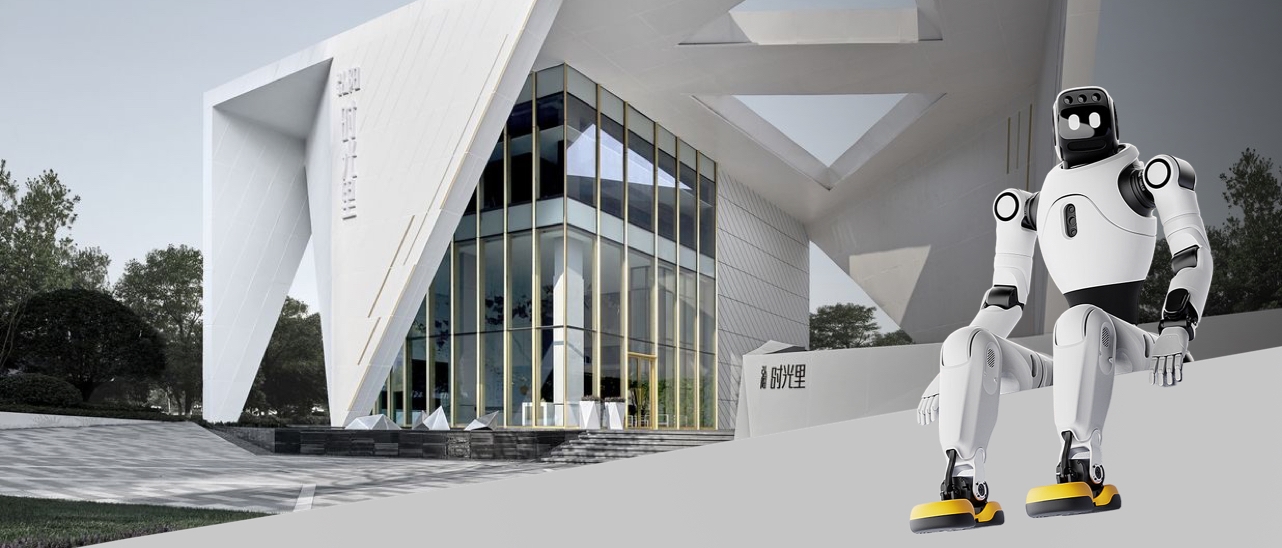
In UBTECH’s own structure, commercial robotics is separate from its industrial, AI education, logistics, and consumer segments. The company’s commercial portfolio currently centers on humanoid service robots, cloud-based intelligent service robots, wheeled humanoid robots, and related service solutions for places such as exhibition halls, transport hubs, office buildings, pharmacies, hospitals, retail stores, and supermarkets.
The commercial lineup shown on UBTECH’s official sites includes products such as Walker C, Walker X, Cruzr S2, Cruzr 1S, and commercial cleaning or delivery systems marketed through UBTECH’s commercial platform. UBTECH’s commercial page frames these products as tools for “enterprise intelligent operations” and “business scenario innovation,” which is a useful summary of how the company positions its commercial robot business.
Design and Features
Product Categories Within UBTECH Commercial Robotics
UBTECH’s current commercial robot ecosystem is not a single machine but a family of platforms. On its commercial solutions page, UBTECH highlights Walker C as a humanoid service robot, Cruzr 1S as a cloud-based intelligent service robot, Cruzr S2 as a full-sized wheeled humanoid robot, and a one-stop service robot station focused on delivery, air purification, and patrol functions. That mix shows UBTECH is targeting both interactive front-of-house service and practical operational automation.
The company’s humanoid line is especially prominent. UBTECH’s application-scenarios page separates humanoids into Industrial products like Walker S-series and Commercial products like Walker C and Walker X, while also showing Cruzr S2 as a wheeled humanoid and Panda Robot as a specialized public-interaction platform. This suggests UBTECH treats commercial humanoids as a core part of its business strategy rather than as one-off demonstration products.
Human-Centered Design
UBTECH’s commercial robots are designed primarily for shared human environments rather than factory cells. Official scenario pages emphasize reception, guidance, live Q&A support, office greeting, retail assistance, airport services, and exhibition tours. That means the design priorities are not just locomotion and payload, but also appearance, communication, navigation safety, multilingual interaction, and ease of deployment.
Walker C illustrates this particularly well. UBTECH describes it as a full-size, electric-driven embodied intelligent humanoid robot powered by its self-developed Embodied Interactive Large Model, with multilingual interaction for exhibition halls and office buildings. Official application descriptions list greeting and reception, smart guide services, AI curator-style narration, and entertainment-oriented human-robot interaction.
Walker X, by contrast, emphasizes more advanced physical capability. UBTECH says it incorporates six AI technologies, upgraded vision-based navigation, hand-eye coordination, and a comprehensive perception system. The product page also lists 41 high-performance servo joints, a 160° face-surrounding 4.6K HD dual flexible curved screen, a 4-dimensional light language system, modular design, and a removable battery.
Technology and Specifications
Core Technology Stack
UBTECH says its broader robotics platform is built on full-stack humanoid technologies that combine robotic motion planning and control, high-performance servo actuators, AI systems modeled on human-like brain and cerebellum functions, SLAM and autonomous technology, visual servo operation, and human-robot interaction. That matters because UBTECH’s commercial robots are not presented as isolated devices; they are built on a common in-house robotics technology base.
Walker C Specifications
Walker C is one of UBTECH’s clearest commercial humanoid examples because the official page publishes a visible specification block. UBTECH lists Walker C at 163 cm height, 43 kg weight, 20 degrees of freedom, 48V 15Ah lithium battery, 1.5 hours charging time, 2 hours walking time, 4 hours standing time, RGBD cameras, structured-light 3D cameras, high-precision inertial measurement, and Wi-Fi/Bluetooth connectivity. UBTECH also states Walker C maintains a steady running pace of 6 km/h and uses U-SLAM navigation for autonomous tour routing.
Walker X Specifications
Walker X’s official page provides a different profile. UBTECH lists 130 cm height, 63 kg weight, and 41 high-performance servo joints. It also highlights U-SLAM navigation and autonomous path planning, excellent environment and human perception, and hand-eye coordination for object manipulation. UBTECH states that Walker X uses a four-eye system, dual RGBD sensors, 7-DOF robot arms, and 6-DOF force-controlled human-like hands, and says it can operate objects such as refrigerators, coffee machines, and vacuum cleaners.
Commercial Cleaning and Service Systems
UBTECH’s commercial site also promotes non-humanoid service robots. Its commercial cleaning pages describe CLEINBOT CC201 as an intelligent commercial cleaning robot with compact design, flexible automatic navigation, efficient cleaning, and full-coverage operation, while CLEINBOT M79 is positioned for medium and large areas with 120-liter dual water tanks and a cleaning chassis designed for deep cleaning without damaging floors. These products show that UBTECH’s commercial strategy extends beyond humanoids into practical service robotics for facilities management.
Applications and Use Cases
Exhibition Halls and Museums
UBTECH heavily emphasizes exhibition halls as a commercial application. Walker robots are described as supporting multimodal interaction through text, voice, vision, motion, and environmental elements, with official use cases including visitor reception, guidance and introduction, AIoT control, and entertainment performance. UBTECH’s commercial page also cites deployments at the China Pavilion at Expo 2025 Osaka, Yunnan Provincial Museum, MoCA Shanghai, and the Ping An International Smart City Exhibition Hall.
Office Buildings and Service Centers
UBTECH explicitly lists office buildings and service centers as commercial scenarios. Walker C is presented for office building greeting and reception and service-center live Q&A support, while UBTECH’s application-scenarios page says Walker can integrate accurate face recognition with digital surveillance to greet visitors, automatically scan them, serve drinks, and control smart devices.
Airports and Transport Hubs
UBTECH also targets transport hubs and airports. Walker C’s official page lists “transport hubs” as a smart guide scenario, while the commercial solutions page names airport service robotic solutions and cites deployments at Shenzhen Baoan International Airport, Paris Charles de Gaulle Airport, Chengdu Tianfu International Airport, and Kunming Changshui International Airport.
Retail and Supermarkets
Retail is another major vertical in UBTECH’s commercial strategy. The company says its multi-scenario solutions are designed for retail and supermarkets, and the official commercial page cites real-world examples including BYD’s overseas stores, Denza vehicle showrooms, Easyhome retail stores, and Alibaba Koubei smart restaurant activity. This suggests UBTECH sees commercial robots as tools for both retail assistance and brand-experience environments.
Public Services, Healthcare, and Facilities
UBTECH’s official commercial page also mentions pharmacies, hospitals, and public services, and lists cases such as the Shenzhen Administrative Service Hall, Nanshan Exit-Entry Administration, and Nanshan District Administration of State Taxation. Combined with its cleaning-robot lineup, this points to a commercial robotics business that includes both customer-facing interaction and behind-the-scenes operational support.
Advantages / Benefits
One of UBTECH commercial robots’ main advantages is portfolio breadth. The company is not limited to one format; it offers bipedal humanoids, wheeled humanoids, cloud-based service robots, and cleaning robots, which lets it address different customer needs with different embodiments. That flexibility is unusual compared with robotics vendors focused on a single niche.
A second advantage is full-stack technology ownership. UBTECH says it independently developed its humanoid robotics stack, from servo actuators to SLAM and human-robot interaction, and by June 2025 held more than 2,790 robotics- and AI-related patents, with nearly 58% invention patents. That level of in-house technology development can matter to enterprise buyers looking for long-term platform continuity.
A third advantage is proven commercial deployment across visible public scenarios. UBTECH’s official case lists cover expo pavilions, museums, airports, office services, retail locations, and government halls. That does not prove universal maturity across every product, but it does show that UBTECH commercial robots are being positioned and demonstrated in actual business settings rather than only in laboratories.
FAQ Section
What are UBTECH commercial robots?
UBTECH commercial robots are the company’s business-oriented service robots for scenarios such as exhibition halls, office buildings, transport hubs, retail stores, supermarkets, pharmacies, hospitals, and public-service venues. The lineup includes humanoids, wheeled service robots, and cleaning robots.
How do UBTECH commercial robots work?
They combine autonomous navigation, perception sensors, AI interaction, and task-specific hardware. Depending on the model, they may greet visitors, guide tours, answer questions, carry items, clean floors, or assist with sorting and handling. UBTECH says its broader platform includes SLAM, visual servo operation, human-robot interaction, and ROSA 2.0.
Why are UBTECH commercial robots important?
They are important because they show how one robotics company is commercializing humanoid and service robots across multiple business scenarios, from exhibitions and airports to offices and retail. UBTECH also positions its Walker platform as the first commercialized biped life-sized humanoid robot in China.
What are the benefits of UBTECH commercial robots?
The main benefits are multiscenario deployment, humanoid and wheeled platform options, AI-driven interaction, autonomous navigation, and support for operational efficiency and customer-facing service innovation. For some products, the benefit is human-like interaction; for others, it is practical delivery or cleaning automation.
Are UBTECH commercial robots the same as UBTECH industrial robots?
No. UBTECH separates commercial products such as Walker C and Walker X from industrial products such as the Walker S series. Commercial robots focus on service and interaction settings, while industrial robots focus on manufacturing tasks.
Summary
UBTECH commercial robots are a broad portfolio of business-oriented service robots that include humanoid service robots, wheeled service robots, delivery systems, and cleaning robots. Official UBTECH materials show a commercial strategy focused on exhibition halls, airports, office buildings, retail, public services, pharmacies, and hospitals, supported by a full-stack robotics technology base and a growing list of public deployment cases. For organizations researching current commercial service robotics from UBTECH, the company stands out for combining humanoid interaction, enterprise service automation, and multi-scenario commercial deployment in one product ecosystem.