Komerciale
Eksploroni Komerciale me një përmbledhje neutrale, të bazuar në fakte të teknologjisë, aplikacioneve, përfitimeve dhe kritereve të përzgjedhjes për zgjidhjet moderne të robotëve.
Hyrje dhe pasqyrë
Vështrim i shkurtër: Eksploroni Komerciale me një përmbledhje neutrale, të bazuar në fakte të teknologjisë, aplikacioneve, përfitimeve dhe kritereve të përzgjedhjes për zgjidhjet moderne të robotëve.
Komerciale është pjesë e një tregu robotik që po zgjerohet me shpejtësi, në të cilin automatizimi, inteligjenca artificiale, sensorët dhe sistemet e fuqishme mekanike kombinohen për të zgjidhur detyra praktike në industri, shërbime, kërkime dhe operacione publike. Një kategori moderne robotësh duhet kuptuar si më shumë se një makinë e vetme: ajo përfshin harduerin, softuerin, funksionet e sigurisë, integrimin, trajnimin, mirëmbajtjen dhe kontekstin e biznesit në të cilin teknologjia krijon vlerë. Kjo faqe ofron një përmbledhje gjithëpërfshirëse, autoritative dhe të optimizuar për kërkimin e Komerciale për vendimmarrësit, inxhinierët, blerësit, edukatorët dhe studiuesit.
Interesi për Komerciale nxitet nga nevoja për produktivitet më të lartë, cilësi më të mirë të të dhënave, procese më të qëndrueshme dhe trajtim më të sigurt të detyrave që mund të jenë të rënda, të përsëritura, të rrezikshme ose që kërkojnë kohë për njerëzit. Kur organizatat hulumtojnë blejnë Komerciale, Komerciale për shitje, çmimin Komerciale ose koston Komerciale, vendimi rrallëherë ka të bëjë vetëm me blerjen. Ai përfshin gjithashtu ciklin e plotë të jetës: specifikimin, zbatimin, trajnimin e operatorëve, shërbimin, pjesët e këmbimit, përditësimet e softuerit, sigurinë kibernetike dhe mbështetjen afatgjatë.
Dizajni dhe veçoritë
Dizajni i Komerciale ndryshon sipas detyrës, mjedisit dhe autonomisë së pritur. Disa sisteme janë të palëvizshme dhe të optimizuara për saktësi, ndërsa të tjerët janë të lëvizshëm dhe të ndërtuar për lundrim në hapësira komplekse. Zgjidhjet e besueshme të robotëve zakonisht kombinojnë stabilitetin mekanik, aktivizuesit e besueshëm, bashkimin e sensorëve, ndërfaqet intuitive të përdoruesit dhe protokollet e dokumentuara të sigurisë. Qasja në shërbim, modulariteti dhe ergonomia janë gjithashtu të rëndësishme sepse robotët shpesh punojnë pranë operatorëve, teknikëve, klientëve ose pajisjeve të tjera të automatizuara.
Karakteristikat tipike mund të përfshijnë flukse pune të programueshme, monitorim në distancë, aksesorë modularë, diagnostifikim në kohë reale, zbulim përplasjesh, kamera, LiDAR, sensorë të forcës, kapëse, menaxhim të baterisë dhe integrim me IT ose sistemet ekzistuese të automatizimit. Për kategoritë e lëvizshme, harta, planifikimi i rrugës, shmangia e pengesave dhe menaxhimi i flotës janë shpesh të rëndësishme. Për robotët që punojnë afër njerëzve, kufizimi i shpejtësisë, ndalimi emergjent, teprica dhe komunikimi i qartë i statusit janë kërkesa thelbësore të projektimit.
Teknologjia dhe specifikimet
Teknologjia pas Komerciale është zakonisht një kombinim i mekanikës, elektronikës dhe softuerit. Një robot mund të përdorë motorë elektrikë, disqe harmonikë, aktivizues linearë, komponentë hidraulikë ose nyje të specializuara në varësi të kërkesave për forcë, shpejtësi dhe saktësi. Kontrolli trajtohet nga kontrollorë industrialë, kompjuterë të skajshëm ose sisteme të integruara që përpunojnë të dhënat e sensorëve dhe i konvertojnë ato në lëvizje, navigim ose vendime.
Specifikimet duhet të vlerësohen gjithmonë kundrejt aplikimit të synuar. Parametrat përkatës mund të përfshijnë ngarkesën, arritjen, kohën e funksionimit, kohën e karikimit, shpejtësinë, saktësinë e pozicionimit, vlerësimin e IP, temperaturën e funksionimit, protokollet e komunikimit, certifikatat e sigurisë, API-të e softuerit dhe përputhshmërinë e aksesorëve. Një çmim i ulët blerjeje mund të jetë më pak i rëndësishëm sesa funksionimi, dokumentacioni dhe shërbimi i qëndrueshëm, ndërsa një model i avancuar ka kuptim vetëm kur aftësitë e tij përdoren në të vërtetë në rrjedhën e punës.
Aplikimet dhe rastet e përdorimit
Komerciale mund të përdoret në të gjithë prodhimin, logjistikën, inspektimin, arsimin, kërkimin, kujdesin shëndetësor, shërbimin, sigurinë dhe operacionet në terren. Në mjediset industriale, robotët ndihmojnë në përmirësimin e xhiros, reduktojnë gabimet dhe krijojnë procese më të parashikueshme. Në mjediset e shërbimit ose të klientëve, ato mund të përmirësojnë disponueshmërinë, shpërndarjen e informacionit dhe trajtimin rutinë të detyrave. Në kërkimin dhe zhvillimin, platformat e robotëve bëjnë të mundur testimin e navigimit, manipulimit, ndërveprimit njeri-robot dhe vendimmarrjen e bazuar në AI.
Organizatat duhet të përcaktojnë problemin përpara se të zgjedhin teknologjinë. Një specifikim i mirë i kërkesës përshkruan detyrën, mjedisin, ngarkesën, nevojat e sigurisë, pikat e integrimit, nivelin e aftësive të operatorit, kërkesat e të dhënave dhe ciklin e pritshëm të shërbimit. Komerciale më pas mund të krahasohet duke përdorur karakteristika të verifikueshme në vend të pretendimeve të gjera të marketingut. Kjo redukton rrezikun e prokurimit dhe e bën më të lehtë vendosjen nëse zgjidhja duhet të jetë standarde, e personalizuar apo pjesë e një projekti më të madh automatizimi.
Avantazhet dhe kufizimet
Përfitimet kryesore të Komerciale zakonisht përfshijnë efikasitet më të lartë, përsëritshmëri të përmirësuar, siguri më të mirë, kapje më të fortë të të dhënave dhe aftësinë për të çliruar njerëzit nga puna monotone ose e rrezikshme. Robotët mund të funksionojnë me procese të qëndrueshme, të dokumentojnë ngjarje dhe të japin rezultate që janë të vështira për t'u mbajtur manualisht për periudha të gjata. Për shumë organizata, robotika bëhet kështu një aftësi strategjike dhe jo një blerje e thjeshtë pajisjesh.
Kufizimet duhet të vlerësohen realisht. Zbatimi kërkon planifikim, testim, trajnim, integrim dhe ndonjëherë ndryshime në rrjedhat ekzistuese të punës. Mjediset me shumë ndryshore të paparashikueshme mund të kërkojnë sensorë shtesë, përshtatje softuerike ose mbikëqyrje njerëzore. Ekonomia totale përfshin jo vetëm blerjen, por edhe mirëmbajtjen, pjesët e këmbimit, marrëveshjet e shërbimit, konsumin e energjisë, sigurinë kibernetike dhe ndërtimin e kompetencave të brendshme. Për këtë arsye, çmimi Komerciale dhe kostoja Komerciale duhet të kuptohen si kosto totale e pronësisë, jo si një numër i vetëm.
Blerja, vlerësimi dhe zbatimi
Kur përdoruesit kërkojnë për blerje Komerciale ose Komerciale për shitje, pikënisja më e mirë është faqja e kategorisë përkatëse, ku modelet, aksesorët dhe zgjidhjet përkatëse mund të krahasohen në të njëjtin kontekst. Një shpërndarës mund të ndihmojë në sqarimin e përputhshmërisë, garancisë, trajnimit, dokumentacionit, dorëzimit dhe mbështetjes. Çmimet specifike nuk janë renditur këtu sepse çmimi i saktë varet nga konfigurimi, vëllimi, aksesorët, niveli i mbështetjes, dorëzimi dhe çdo kërkesë integrimi.
Një zbatim i strukturuar zakonisht përfshin analizën e nevojave, vërtetimin teknik, një projekt pilot, vlerësimin e rrezikut, trajnimin e operatorëve dhe optimizimin e vazhdueshëm. Kriteret e suksesit duhet të dokumentohen paraprakisht: koha e funksionimit, koha e ciklit, shkalla e gabimit, incidentet e sigurisë, përdorimi i energjisë, cilësia e të dhënave dhe pranimi i përdoruesit. Kjo bën të mundur vlerësimin objektiv të Komerciale pas vendosjes.
FAQ
Çfarë është Komerciale?
Komerciale u referohet zgjidhjeve, sistemeve ose kategorive të robotëve të krijuar për detyra specifike në automatizimin, shërbimin, kërkimin, operacionet ose punën në terren.
Si funksionon Komerciale?
Komerciale funksionon duke kombinuar komponentë mekanikë, sensorë, kontrollues dhe softuer që perceptojnë mjedisin dhe kryejnë veprime të programuara ose autonome.
Pse është i rëndësishëm Komerciale?
Komerciale është i rëndësishëm sepse robotika mund të përmirësojë sigurinë, produktivitetin, saktësinë dhe vendimmarrjen e drejtuar nga të dhënat në organizatat moderne.
Cilat janë përfitimet e Komerciale?
Përfitimet përfshijnë procese më të qëndrueshme, ulje të ngarkesës manuale, dokumentacion më të mirë, disponueshmëri më të lartë dhe aftësinë për të automatizuar detyra komplekse ose të rrezikshme.
Çfarë ndikon në çmimin Komerciale dhe koston e Komerciale?
Çmimi dhe kostoja ndikohen nga konfigurimi, aksesorët, softueri, mbështetja, shpërndarja, integrimi, trajnimi dhe mirëmbajtja afatgjatë. Përdorni të njëjtën faqe kategorie për të kërkuar një vlerësim përkatës.
Ku mund të blej Komerciale?
Rruga më e rëndësishme është përdorimi i kësaj faqe kategorie për të krahasuar opsionet e disponueshme dhe për të kontaktuar shpërndarësin rreth konfigurimit, disponueshmërisë dhe hapave të mëtejshëm.
Përmbledhje
Komerciale është një pjesë e rëndësishme e robotikës dhe automatizimit modern. Me specifikimet e duhura, rishikimin teknik dhe planin e zbatimit, kategoria mund të mbështesë procese më të sigurta, më efikase dhe të shkallëzueshme nëpër industri dhe aplikacione.
Commercial
In UBTECH’s own structure, commercial robotics is separate from its industrial, AI education, logistics, and consumer segments. The company’s commercial portfolio currently centers on humanoid service robots, cloud-based intelligent service robots, wheeled humanoid robots, and related service solutions for places such as exhibition halls, transport hubs, office buildings, pharmacies, hospitals, retail stores, and supermarkets.
The commercial lineup shown on UBTECH’s official sites includes products such as Walker C, Walker X, Cruzr S2, Cruzr 1S, and commercial cleaning or delivery systems marketed through UBTECH’s commercial platform. UBTECH’s commercial page frames these products as tools for “enterprise intelligent operations” and “business scenario innovation,” which is a useful summary of how the company positions its commercial robot business.
Design and Features
Product Categories Within UBTECH Commercial Robotics
UBTECH’s current commercial robot ecosystem is not a single machine but a family of platforms. On its commercial solutions page, UBTECH highlights Walker C as a humanoid service robot, Cruzr 1S as a cloud-based intelligent service robot, Cruzr S2 as a full-sized wheeled humanoid robot, and a one-stop service robot station focused on delivery, air purification, and patrol functions. That mix shows UBTECH is targeting both interactive front-of-house service and practical operational automation.
The company’s humanoid line is especially prominent. UBTECH’s application-scenarios page separates humanoids into Industrial products like Walker S-series and Commercial products like Walker C and Walker X, while also showing Cruzr S2 as a wheeled humanoid and Panda Robot as a specialized public-interaction platform. This suggests UBTECH treats commercial humanoids as a core part of its business strategy rather than as one-off demonstration products.
Human-Centered Design
UBTECH’s commercial robots are designed primarily for shared human environments rather than factory cells. Official scenario pages emphasize reception, guidance, live Q&A support, office greeting, retail assistance, airport services, and exhibition tours. That means the design priorities are not just locomotion and payload, but also appearance, communication, navigation safety, multilingual interaction, and ease of deployment.
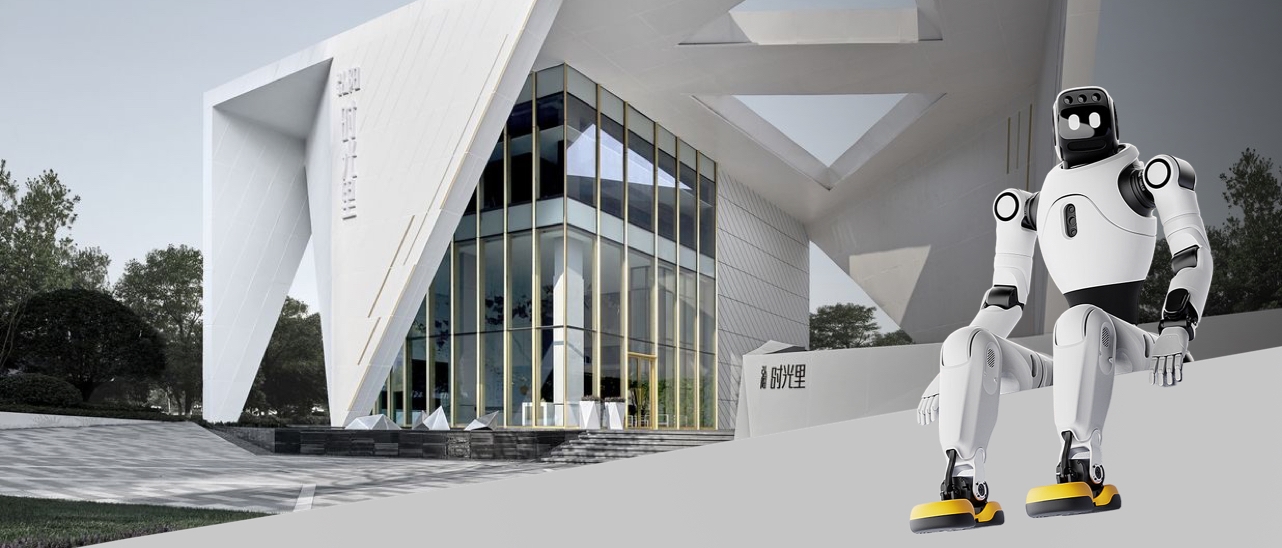
Walker C illustrates this particularly well. UBTECH describes it as a full-size, electric-driven embodied intelligent humanoid robot powered by its self-developed Embodied Interactive Large Model, with multilingual interaction for exhibition halls and office buildings. Official application descriptions list greeting and reception, smart guide services, AI curator-style narration, and entertainment-oriented human-robot interaction.
Walker X, by contrast, emphasizes more advanced physical capability. UBTECH says it incorporates six AI technologies, upgraded vision-based navigation, hand-eye coordination, and a comprehensive perception system. The product page also lists 41 high-performance servo joints, a 160° face-surrounding 4.6K HD dual flexible curved screen, a 4-dimensional light language system, modular design, and a removable battery.
Technology and Specifications
Core Technology Stack
UBTECH says its broader robotics platform is built on full-stack humanoid technologies that combine robotic motion planning and control, high-performance servo actuators, AI systems modeled on human-like brain and cerebellum functions, SLAM and autonomous technology, visual servo operation, and human-robot interaction. That matters because UBTECH’s commercial robots are not presented as isolated devices; they are built on a common in-house robotics technology base.
Walker C Specifications
Walker C is one of UBTECH’s clearest commercial humanoid examples because the official page publishes a visible specification block. UBTECH lists Walker C at 163 cm height, 43 kg weight, 20 degrees of freedom, 48V 15Ah lithium battery, 1.5 hours charging time, 2 hours walking time, 4 hours standing time, RGBD cameras, structured-light 3D cameras, high-precision inertial measurement, and Wi-Fi/Bluetooth connectivity. UBTECH also states Walker C maintains a steady running pace of 6 km/h and uses U-SLAM navigation for autonomous tour routing.
Walker X Specifications
Walker X’s official page provides a different profile. UBTECH lists 130 cm height, 63 kg weight, and 41 high-performance servo joints. It also highlights U-SLAM navigation and autonomous path planning, excellent environment and human perception, and hand-eye coordination for object manipulation. UBTECH states that Walker X uses a four-eye system, dual RGBD sensors, 7-DOF robot arms, and 6-DOF force-controlled human-like hands, and says it can operate objects such as refrigerators, coffee machines, and vacuum cleaners.
Commercial Cleaning and Service Systems
UBTECH’s commercial site also promotes non-humanoid service robots. Its commercial cleaning pages describe CLEINBOT CC201 as an intelligent commercial cleaning robot with compact design, flexible automatic navigation, efficient cleaning, and full-coverage operation, while CLEINBOT M79 is positioned for medium and large areas with 120-liter dual water tanks and a cleaning chassis designed for deep cleaning without damaging floors. These products show that UBTECH’s commercial strategy extends beyond humanoids into practical service robotics for facilities management.
Applications and Use Cases
Exhibition Halls and Museums
UBTECH heavily emphasizes exhibition halls as a commercial application. Walker robots are described as supporting multimodal interaction through text, voice, vision, motion, and environmental elements, with official use cases including visitor reception, guidance and introduction, AIoT control, and entertainment performance. UBTECH’s commercial page also cites deployments at the China Pavilion at Expo 2025 Osaka, Yunnan Provincial Museum, MoCA Shanghai, and the Ping An International Smart City Exhibition Hall.
Office Buildings and Service Centers
UBTECH explicitly lists office buildings and service centers as commercial scenarios. Walker C is presented for office building greeting and reception and service-center live Q&A support, while UBTECH’s application-scenarios page says Walker can integrate accurate face recognition with digital surveillance to greet visitors, automatically scan them, serve drinks, and control smart devices.
Airports and Transport Hubs
UBTECH also targets transport hubs and airports. Walker C’s official page lists “transport hubs” as a smart guide scenario, while the commercial solutions page names airport service robotic solutions and cites deployments at Shenzhen Baoan International Airport, Paris Charles de Gaulle Airport, Chengdu Tianfu International Airport, and Kunming Changshui International Airport.
Retail and Supermarkets
Retail is another major vertical in UBTECH’s commercial strategy. The company says its multi-scenario solutions are designed for retail and supermarkets, and the official commercial page cites real-world examples including BYD’s overseas stores, Denza vehicle showrooms, Easyhome retail stores, and Alibaba Koubei smart restaurant activity. This suggests UBTECH sees commercial robots as tools for both retail assistance and brand-experience environments.
Public Services, Healthcare, and Facilities
UBTECH’s official commercial page also mentions pharmacies, hospitals, and public services, and lists cases such as the Shenzhen Administrative Service Hall, Nanshan Exit-Entry Administration, and Nanshan District Administration of State Taxation. Combined with its cleaning-robot lineup, this points to a commercial robotics business that includes both customer-facing interaction and behind-the-scenes operational support.
Advantages / Benefits
One of UBTECH commercial robots’ main advantages is portfolio breadth. The company is not limited to one format; it offers bipedal humanoids, wheeled humanoids, cloud-based service robots, and cleaning robots, which lets it address different customer needs with different embodiments. That flexibility is unusual compared with robotics vendors focused on a single niche.
A second advantage is full-stack technology ownership. UBTECH says it independently developed its humanoid robotics stack, from servo actuators to SLAM and human-robot interaction, and by June 2025 held more than 2,790 robotics- and AI-related patents, with nearly 58% invention patents. That level of in-house technology development can matter to enterprise buyers looking for long-term platform continuity.
A third advantage is proven commercial deployment across visible public scenarios. UBTECH’s official case lists cover expo pavilions, museums, airports, office services, retail locations, and government halls. That does not prove universal maturity across every product, but it does show that UBTECH commercial robots are being positioned and demonstrated in actual business settings rather than only in laboratories.
FAQ Section
What are UBTECH commercial robots?
UBTECH commercial robots are the company’s business-oriented service robots for scenarios such as exhibition halls, office buildings, transport hubs, retail stores, supermarkets, pharmacies, hospitals, and public-service venues. The lineup includes humanoids, wheeled service robots, and cleaning robots.
How do UBTECH commercial robots work?
They combine autonomous navigation, perception sensors, AI interaction, and task-specific hardware. Depending on the model, they may greet visitors, guide tours, answer questions, carry items, clean floors, or assist with sorting and handling. UBTECH says its broader platform includes SLAM, visual servo operation, human-robot interaction, and ROSA 2.0.
Why are UBTECH commercial robots important?
They are important because they show how one robotics company is commercializing humanoid and service robots across multiple business scenarios, from exhibitions and airports to offices and retail. UBTECH also positions its Walker platform as the first commercialized biped life-sized humanoid robot in China.
What are the benefits of UBTECH commercial robots?
The main benefits are multiscenario deployment, humanoid and wheeled platform options, AI-driven interaction, autonomous navigation, and support for operational efficiency and customer-facing service innovation. For some products, the benefit is human-like interaction; for others, it is practical delivery or cleaning automation.
Are UBTECH commercial robots the same as UBTECH industrial robots?
No. UBTECH separates commercial products such as Walker C and Walker X from industrial products such as the Walker S series. Commercial robots focus on service and interaction settings, while industrial robots focus on manufacturing tasks.
Summary
UBTECH commercial robots are a broad portfolio of business-oriented service robots that include humanoid service robots, wheeled service robots, delivery systems, and cleaning robots. Official UBTECH materials show a commercial strategy focused on exhibition halls, airports, office buildings, retail, public services, pharmacies, and hospitals, supported by a full-stack robotics technology base and a growing list of public deployment cases. For organizations researching current commercial service robotics from UBTECH, the company stands out for combining humanoid interaction, enterprise service automation, and multi-scenario commercial deployment in one product ecosystem.