Agibot A3 Series
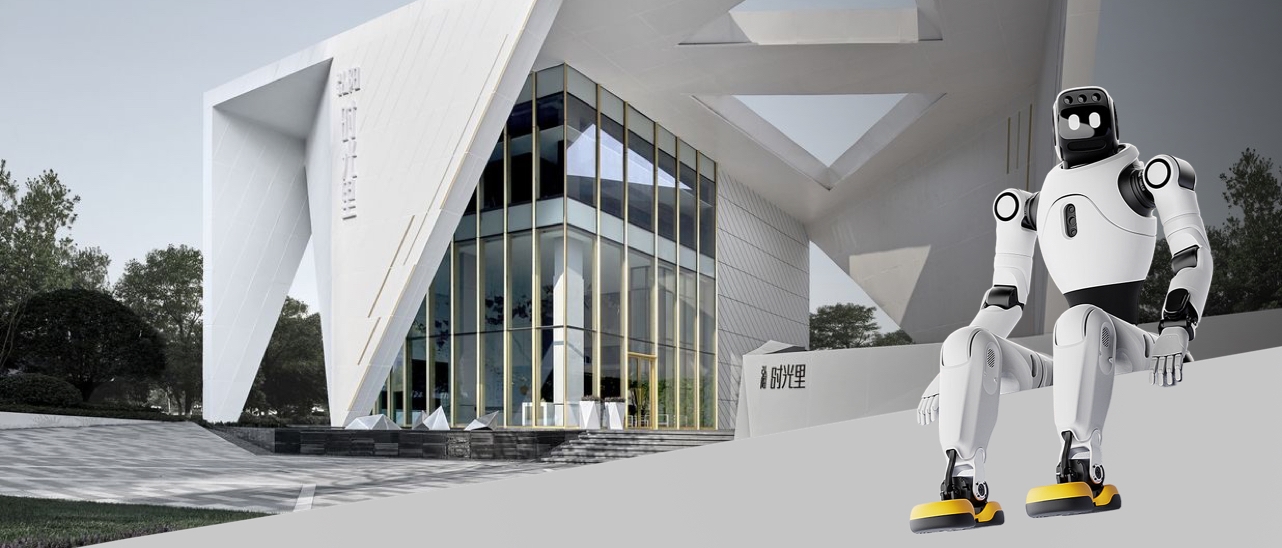
The AgiBot A3, the Expedition series performer unveiled in February 2026 and styled a silicon based stage star, is a 173 centimetre, 55 kilogramme full size humanoid built from magnesium, titanium and TPU to an industry leading 0.218 kilowatt per kilogramme power to weight ratio, landing aerial flying kicks, somersaults and cyclone spins without CGI, running up to 10 hours with 10 second hot swap batteries and synchronising up to 100 units through centimetre accurate UWB positioning.
AgiBot A3
Every era of machinery produces one machine built purely to be watched, and the humanoid era's is this one. The AgiBot A3, the performance model of AgiBot's Expedition line and styled by its maker a silicon based stage star, was unveiled in February 2026 as a full size humanoid engineered for the show itself: 173 centimetres and just 55 kilogrammes, built from magnesium, titanium and TPU to a power to weight ratio of 0.218 kilowatts per kilogramme, the highest in its class at launch, and spending that ratio on the repertoire that made it famous, aerial flying kicks, somersaults, cyclone spins and mid air manoeuvres performed in real conditions, filmed without CGI and confirmed as genuine by independent coverage.
The spectacle is backed by show business arithmetic. The A3 runs up to 10 hours, the longest endurance in AgiBot's bipedal lineup, and exchanges its hot swap battery in 10 seconds, a full performance day with a costume change's worth of downtime. Its ultra wideband positioning system knows every co performer's location to the centimetre, letting up to 100 units execute synchronised choreography in a shared space, and the commercial world has already booked the act: an April 2026 memorandum with Genting Malaysia commits humanoid deployment across Resorts World Genting, with a world first Robotics Gala Performance planned for early 2027 on exactly these capabilities. Above the performer, the A3 Ultra extends the A3 series into commercial service duty.
Within the wider humanoid and bipedal categories, the AgiBot A3 for sale can be explored through this page.
Background
Built light on purpose
The A3's construction reads like sports equipment because that is the design brief: magnesium and titanium structure with TPU where compliance helps, exoskeleton inspired legs that strip mass from the distal limbs for faster, more explosive movement, and a waist joint with full rotational and lateral range mirroring the human torso, the fluidity martial arts choreography demands. Fifty five kilogrammes at full adult height is the payoff, agility budgeted at the drawing board, and the class leading power to weight figure is simply that budget stated as a number.
The second generation of the Expedition
Within the A Series, the A3 plays a deliberate role: where the record setting, triple certified A2 family carries reception, guidance and industrial variants, the A3 generation takes the stage, engagement as athletics, with the A3 Ultra, unveiled at WAIC in July 2026, translating the generation into a long duration commercial service machine. Two siblings, one lineage: the performer and the professional.
Specifications
| Attribute | AgiBot A3 |
|---|---|
| Unveiled | February 2026 |
| Height / Weight | 1,730 mm / 55 kg |
| Construction | Magnesium, titanium, TPU; exoskeleton inspired legs |
| Power to weight | 0.218 kW/kg (class leading at launch) |
| Degrees of freedom | 31, incl. full range rotational and lateral waist |
| Signature motion | Aerial flying kicks, somersaults, cyclone spins, mid air manoeuvres |
| Endurance | Up to 10 h; hot swap battery exchange in 10 s |
| Swarm coordination | UWB centimetre accurate positioning, up to 100 synchronised units |
| Interaction | 360° multi array microphones, wake word free conversation; shoulder tactile sensors |
| Intelligence | WorkGPT multimodal model; Link-U OS; LinkSoul persistent personality and memory; GCFM generative motion; BFM single demonstration learning |
Figures follow published specifications; configurations are confirmed at quotation.
The A3 Ultra: The Commercial Sibling
The A3 Ultra, flagship of AgiBot's four product WAIC 2026 launch, carries the generation into service: 1.74 metres and 60 kilogrammes with 51 degrees of freedom, lifting 5 kilogrammes per arm through up to 8 hours of continuous operation on NVIDIA Thor computing. It navigates autonomously through fused 3D LiDAR, RGB-D, fisheye and binocular vision with GPS, RTK and UWB positioning, and replenishes three ways, direct charging, battery swapping or autonomous recharging, built, in co founder Peng Zhihui's stated philosophy, to be judged by reliable manufacture and integration rather than one impressive demonstration. Buyers choosing between the pair are choosing between briefs: the A3 for the audience, the A3 Ultra for the operation.
Which buyers does the A3 suit?
The A3 sells to whoever owns a crowd. Live entertainment producers and venues gain a headline act with 10 hour stamina and swarm scale choreography, the Genting commitment as precedent. Brands and agencies gain the activation audiences film voluntarily, aerial kicks over product launches. Retail showrooms and exhibition programmes gain a centrepiece that also converses, wake word free, from any direction, with LinkSoul's persistent personality returning visitors recognise. Hospitality resorts programme it across parks, leisure and shows in the Resorts World mould. And educational institutions gain the STEM demonstration students remember, embodied AI at its most legible. Deployments complete with performance and engagement software, RoboStage and RoboPromo class systems from the robot software catalogue.
Technology
Airborne balance as a solved problem
The A3's acrobatics run on continuous whole body control: real time balance algorithms adjusting joint torques and centre of mass through take off, flight and landing, coordinated across every joint including that human range waist, with the lightweight legs keeping rotational inertia low enough for mid air corrections, engineering that reads as showmanship and cashes out as robustness, since a machine that lands a cyclone spin shrugs off a stage bump.
Choreography from a sentence
The GCFM generative motion model converts direction into performance: new motion sequences generated from text, audio or video rather than joint level programming, with the BFM model adding new moves from a single demonstration, which collapses the skill barrier for choreographers and event designers, show content authored in creative language, translated to 31 degrees of freedom by the machine.
A hundred dancers, one clock
The swarm system is positioning made art: UWB radio measuring inter robot distances to the centimetre in real time, each unit's choreography manager knowing every other unit's location, formations of up to 100 robots holding synchronisation across a shared stage, the capability underwriting the planned Genting gala and the largest scale offer in humanoid entertainment.
A performer with a memory
Between shows, the A3 is company: WorkGPT understanding speech and context, the 360 degree microphone array catching questions from any direction without a wake word, shoulder tactile sensors turning touch into reaction, and the LinkSoul platform on Link-U OS keeping persistent personality and long term memory, an act that remembers its regulars.
What is the AgiBot A3 used for?
- Live entertainment and stage shows: headline performances and resort programmes across entertainment robotics, the Genting precedent leading.
- Brand activations and launches: the viral centrepiece for campaigns across commercial marketing.
- Exhibition and showroom engagement: performing, presenting and conversing across exhibition robotics.
- Synchronised swarm spectacles: multi unit choreography at scales up to 100 robots for galas and ceremonies.
- Hospitality engagement: theme park, leisure and show duties across hotel and resort estates.
- Education and public STEM engagement: embodied AI demonstrated at its most memorable across educational robotics.
Pricing and Availability
The AgiBot A3 is available for purchase across Europe and worldwide, from single performance units to synchronised multi robot show fleets, alongside the A3 Ultra and the wider humanoid catalogue on Robots Europa. AgiBot A3 price and cost vary by configuration, fleet scale, show tooling and support packages, so buyers seeking the A3 for sale should request a current quotation for their requirements, with European delivery, customs clearance and support arranged through Robots Europa. Purchasing enquiries, specification sheets and availability details for those looking to buy the AgiBot A3 can be found on this page.
Frequently Asked Questions
What is the AgiBot A3?
The AgiBot A3 is the performance humanoid of AgiBot's Expedition line: a 173 centimetre, 55 kilogramme full size robot built from magnesium, titanium and TPU, famous for genuine aerial kicks, somersaults and cyclone spins, running up to 10 hours with 10 second battery swaps and synchronising in groups of up to 100 units.
How does the AgiBot A3 work?
It moves on 31 degrees of freedom including a full range waist, under real time whole body balance control that manages airborne and landing phases, generates choreography from text, audio or video through the GCFM model, converses wake word free via 360 degree microphones and WorkGPT and coordinates swarms through centimetre accurate UWB positioning.
Why is the AgiBot A3 famous?
For doing on real stages what humanoids previously did in renders: its flying kicks and spinning manoeuvres were filmed in real conditions and confirmed genuine by independent coverage, whilst its class leading 0.218 kilowatt per kilogramme power to weight ratio and 10 hour endurance made the athleticism commercially bookable, culminating in the Resorts World Genting programme.
What is the difference between the A3 and the A3 Ultra?
The A3 is the stage machine, lightest, longest running, swarm choreographed; the A3 Ultra, unveiled at WAIC 2026, is the commercial service flagship, 60 kilogrammes with 51 degrees of freedom, 5 kilogramme arms, NVIDIA Thor computing, full autonomous navigation and 8 hour duty with autonomous recharging, the same generation aimed at operations rather than audiences.
What are the benefits of the AgiBot A3?
Key benefits include audience engagement no static installation matches, full day 10 hour endurance with near zero swap downtime, choreography authored in natural creative media rather than code, single demonstration motion learning, persistent personality and memory across encounters and swarm synchronisation to 100 units for productions at spectacle scale.
Can the A3 perform in synchronised groups?
Yes, at industry leading scale: ultra wideband positioning gives every unit centimetre accurate awareness of every other, supporting precisely coordinated formations of up to 100 robots, the capability at the technical foundation of the world first Robotics Gala Performance planned at Resorts World Genting.
Where can I buy the AgiBot A3 and what does it cost?
The AgiBot A3 is for sale through Robots Europa, serving the United Kingdom, the European Union and markets worldwide with delivery, customs clearance and support. Because cost varies by configuration and fleet scale, buyers should request a tailored quotation. Full purchasing details are available on this page.
Summary
The AgiBot A3 is what happens when a volume robotics leader builds for applause: 55 kilogrammes of magnesium and titanium at full adult height, a power to weight ratio that turns choreography into flight, batteries that swap faster than a scene change and positioning precise enough to keep a hundred of them in formation. It converses without wake words, remembers its audiences, learns new moves from a single demonstration, and has already signed its residency, Resorts World Genting, gala scheduled. Beside it, the A3 Ultra carries the generation into commercial service on NVIDIA Thor. As the stage star of the Expedition line, the AgiBot A3 stands as the humanoid era's definitive performer, and this page as the European starting point for booking it.
v3, August 9, 2026
What is the AgiBot Expedition A3 in Europe?
The AgiBot Expedition A3 is a full-size bipedal humanoid robot developed by AGIBOT Innovation Shanghai Technology Co., Ltd. and unveiled in February 2026. It stands 173 centimeters tall, weighs 55 kilograms, and is designed for high-engagement audience-facing environments including retail showrooms, live entertainment events, brand activations, and exhibitions. It is notable for performing aerial flying kicks, cyclone spinning movements, and mid-air maneuvers in real-world conditions without CGI, and for its 10-hour dual battery runtime and Ultra-Wideband positioning system enabling synchronized coordination across groups of up to 100 robots. In Europe, it is available through the BotShare rental platform (botsharing.eu) at EUR 899 per day and for purchase through store.agibot.com and authorized European distributor RH BOTS.
How does the AgiBot A3 generate its athletic movements?
The A3's athletic motion results from three integrated systems working together. Hardware-side, a flexible waist joint allows upper-body rotation independent of the hip assembly, generating the rotational momentum for spinning kicks and mid-air transitions. Lightweight exoskeleton-inspired legs reduce distal limb mass for faster and more explosive movement. Real-time balance correction algorithms, running on the GCFM AI model, adjust joint torques and center-of-mass position continuously through airborne and impact phases to maintain stability. Software-side, the GCFM model converts instructions from text, audio, or video into coordinated multi-joint motion sequences. The BFM adds new motions from single demonstrations. Together, these systems enable the A3 to perform dynamic sequences that other commercial humanoids cannot execute in real-world conditions.
Is the AgiBot A3 CE-certified for the European Union?
As of early 2026, specific EU CE safety certifications for the AgiBot A3 had not been publicly confirmed. This is an important distinction from the A2 Ultra, which achieved CE-MD (Machinery Directive) and CE-RED (Radio Equipment Directive) certification in May 2025. European buyers with strict CE compliance requirements for their deployment environment should verify the A3's current certification status directly with AgiBot's European team or their regional distributor before committing to a capital purchase. The BotShare rental pathway, which includes full technical support and operational management, provides a lower-commitment evaluation option while certification status is confirmed for specific deployment contexts.
Why is the AgiBot A3 important for European live events and entertainment?
The A3 addresses several limitations that have historically constrained humanoid robot deployment in European entertainment contexts. Most available humanoid robots have battery runtimes of two hours or less, preventing continuous presence across a full event day. The A3's 10-hour dual battery runtime and 10-second hot-swap capability eliminate this constraint. Most humanoid robots cannot coordinate with other units at the centimeter-level precision needed for large-group synchronized performance; the A3's UWB system enables this for up to 100 units simultaneously. And most humanoid robots require extensive programming to create new motion content; the A3's GCFM allows new sequences from video demonstration, dramatically reducing the creative skill barrier for European choreographers and event designers.
How does the AgiBot A3 compare to the Unitree G1 for European buyers?
Both the AgiBot A3 and Unitree G1 are agile humanoid robots available in Europe, but they serve different deployment scales and requirements. The G1 (approximately USD $21,600) has established European distribution, a lower price, and a strong developer community. It is well-suited for individual research use, small-scale demonstrations, and academic applications where budget is the primary constraint. The A3 (approximately USD $45,000) provides a 10-hour runtime versus the G1's shorter operational window, 100-unit UWB swarm coordination not available in the G1, and GCFM generative motion for real-time content creation. For European organizations planning event-scale or retail-scale deployments where extended runtime and coordinated multi-unit performance are operational requirements, the A3's technical specifications address use cases the G1 cannot fulfill.