Deep Robotics Lite Series
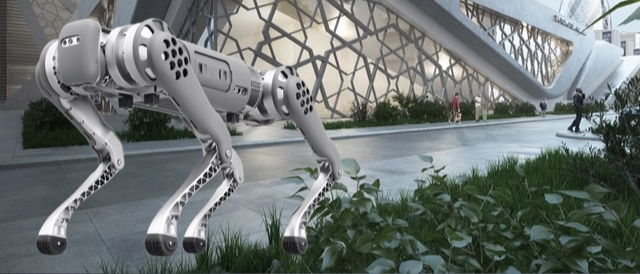
The Deep Robotics Lite Series is the compact research and education family of the Jueying quadruped line, centred on the Lite3: a 12 degree of freedom robot dog of 12 to 13.5 kilogrammes by variant, running to 4 metres per second, climbing 40 degree slopes and 15 to 18 centimetre steps for 1.5 to 2 hours per charge, offered in Basic, Venture, Pro and LiDAR builds with an RK3588 motion host, Jetson Xavier NX perception computing, ROS 1 and ROS 2 support and fully open motion and perception SDKs.
Deep Robotics Lite Series
The hardest part of quadruped research is the part that isn't research: making the machine stand up, balance, walk and survive the thousandth failed experiment before the interesting work can begin. The Deep Robotics Lite Series exists to make that part somebody else's solved problem. Centred on the Lite3, the compact family of Deep Robotics' Jueying line packs the company's grid proven locomotion engineering into 12 to 13.5 kilogrammes of laboratory scale robot dog, light enough to carry to a classroom, priced like equipment rather than infrastructure, and yet dynamic enough to front flip, jump, dance and recover from falls automatically, the launch party tricks that double as a syllabus in modern legged control. Beneath them sits the sober engineering: fifty per cent more joint torque and three times the computing of its predecessor generation, industrial grade real time control, and a four build ladder, Basic, Venture, Pro and LiDAR, that scales from pure locomotion platform to autonomous navigation testbed.
The openness is the product as much as the hardware. The Lite3 ships with motion and perception SDKs and APIs that reach down to individual joint control, ROS 1 and ROS 2 workflows, URDF models and MuJoCo simulation support, reinforcement learning packages and worked example code on GitHub, the full development surface a university course, a doctoral project or an embodied AI team actually consumes, on a platform whose consistent joints, precise sensing and protective behaviours are engineered to withstand iteration, failure and the enthusiasm of students.
Within the wider quadruped and standard quadruped categories, the Deep Robotics Lite Series for sale can be explored through this page.
Background
The gap it was built to fill
Below the Lite Series sit hobby class robot dogs too flimsy and closed for serious work; above it stand the industrial X Series machines sized and priced for utility estates. The Lite3 occupies the gap deliberately: a roughly 610 by 370 millimetre footprint standing 406 to 496 millimetres by configuration, around 11 kilogrammes of body with legs of barely over a kilogramme each, safe for classroom handling and bench work, yet carrying the same engineering culture, real time control, field grade robustness, honest specifications, that runs Deep Robotics' substation fleets.
A generation built for dynamics
The Lite3's headline gains over its predecessor were chosen for one purpose: making dynamic locomotion research honest. Fifty per cent more joint torque funds the jumps, flips and recovery behaviours that stress test controllers; tripled computing hosts the perception and learning workloads onboard; and the multi terrain gait system with flat and rugged modes gives experiments a competent baseline to beat, the platform demonstrating on day one the behaviours a research group will spend the year reimplementing, measuring and improving.
The Lite3 Builds
Lite3 Basic and Venture
The Basic opens the ladder as the pure locomotion platform, the full mechanical and control offer for gait research, teaching and development on external compute, with the Venture stepping the configuration up for programmes wanting more capability short of the Pro's perception host, exact build contents confirmed at quotation.
Lite3 Pro
The Pro is the perception development machine: a 12.9 kilogramme configuration adding an NVIDIA Jetson Xavier NX perception host beside the RK3588 motion computer, a depth camera joining the wide angle camera and dual ultrasonic sensing, and forward obstacle avoidance layered over the line's shared obstacle auto stop and visual person following, with USB 3.0, HDMI, Ethernet and 24, 12 and 5 volt external power feeding whatever sensors the project adds, around a 4 kilogramme payload.
Lite3 LiDAR
The LiDAR build completes the ladder as the autonomy testbed: laser scanning joined to the perception stack for SLAM, visual positioning, 3D scanning and autonomous navigation development, the configuration for programmes whose subject is not walking but wayfinding.
Specifications
| Attribute | Lite3 Platform |
|---|---|
| Degrees of freedom | 12 |
| Weight | 12–13.5 kg by build; ~11 kg body, ~1.12 kg per leg |
| Footprint | ~610 × 370 mm; 406–496 mm heights by configuration |
| Speed | Up to 4 m/s in its fastest modes |
| Terrain | 40° slopes; 15 cm steps, 18 cm in AI Motion Mode |
| Payload | ~4–5 kg |
| Endurance | 1.5–2 h, ~5 km per charge |
| Computing | RK3588 motion host; Jetson Xavier NX perception host (Pro/LiDAR) |
| Sensing | Wide angle camera, dual ultrasonic; depth camera (Pro); LiDAR (LiDAR build) |
| Behaviours | Obstacle auto stop, visual following, forward avoidance (Pro), jumps, front flips, automatic recovery |
| Interfaces | USB 3.0, HDMI, Ethernet, 24/12/5 V external power, expansion ports |
| Software | Open motion and perception SDK/API, ROS 1 and ROS 2, URDF, MuJoCo simulation, RL packages, GitHub examples |
Figures follow published specifications; builds and configurations are confirmed at quotation.
Which buyers does the Lite Series suit?
The Lite Series sells wherever legged robotics is studied rather than merely operated. Universities and engineering schools take the Basic and Pro as course platforms across educational robotics, the moderate mass making classroom deployment genuinely safe. Research groups in locomotion, reinforcement learning and SLAM take the Pro and LiDAR builds across research robotics, the per joint Motion SDK and simulation stack carrying the full experiment cycle from MuJoCo to hardware. Embodied AI teams take it as the affordable body for learning based control, developers prototyping inspection and light field applications take the payload interfaces and perception hosts, and enthusiasts take the platform's engaging side, the flips, dances and following behaviours the official materials themselves celebrate, with the industrial X Series and wheel legged LYNX Series above when projects graduate to estates, and mission software from the robot software catalogue completing builds.
Technology
Control you can reach into
The Lite3's Motion SDK exposes what most platforms seal: individual joint command, custom gait development and locomotion model testing against the industrial grade real time controller, so a controls course can descend from high level velocity commands to torque level experimentation on one machine, with the URDF and MuJoCo toolchain letting every idea fail safely in simulation first.
Two computers, two jobs
The split architecture assigns the work honestly: the RK3588 ARM host runs motion in real time, whilst the Pro and LiDAR builds' Jetson Xavier NX carries perception, SLAM, visual recognition and learned policy inference beside it, multi modal sensor fusion on the robot rather than tethered to a workstation, which is what makes untethered autonomy experiments possible at this scale.
Perception as a ladder
Sensing scales with the build: every Lite3 carries the wide angle camera and ultrasonic pair behind its auto stop and person following, the Pro adds depth vision and forward avoidance, and the LiDAR build completes the autonomy stack for mapping and navigation, so a department buys the perception its curriculum needs now and knows the next course up exists.
Built for the thousandth attempt
Research hardware earns its keep by surviving iteration: the Lite3's consistent joint performance, protective mechanisms and automatic recovery are engineered for failure as a daily working condition, low latency image transmission serves teleoperated experiments, and the documentation, examples and community resources shorten the distance from unboxing to first contribution.
What is the Deep Robotics Lite Series used for?
- University teaching: legged robotics, control and perception courses on classroom safe hardware across educational robotics.
- Locomotion and RL research: gait development, learned control and dynamics experiments through the per joint SDK across research robotics.
- SLAM and navigation development: mapping, visual positioning and autonomous wayfinding on the LiDAR build.
- Embodied AI prototyping: onboard policy inference and sensor fusion on the Pro's perception host.
- Light application development: inspection and field concept prototyping within the payload and interface envelope.
- Demonstration and engagement: the dynamic repertoire, flips, jumps, following, for open days, outreach and enthusiast ownership.
Pricing and Availability
The Deep Robotics Lite Series is available for purchase across Europe and worldwide, from single Lite3 Basic units to Pro and LiDAR laboratory fleets, alongside the wider quadruped catalogue on Robots Europa. Lite Series price and cost vary by build and configuration, so buyers seeking the Lite3 for sale should request a current quotation for their requirements, with European delivery, customs clearance and support arranged through Robots Europa. Purchasing enquiries, specification sheets and availability details for those looking to buy the Deep Robotics Lite Series can be found on this page.
Frequently Asked Questions
What is the Deep Robotics Lite Series?
The Lite Series is the compact research and education family of Deep Robotics' Jueying quadruped line, centred on the Lite3: a 12 degree of freedom robot dog of 12 to 13.5 kilogrammes in Basic, Venture, Pro and LiDAR builds, bridging hobby class robot dogs and the company's industrial machines.
How does the Lite3 work?
An RK3588 host runs industrial grade real time motion control across its 12 joints, with a Jetson Xavier NX perception computer on Pro and LiDAR builds fusing camera, ultrasonic, depth and laser sensing for avoidance, following and navigation, all opened to developers through motion and perception SDKs, ROS 1 and ROS 2, and simulation toolchains.
What is the difference between the Lite3 builds?
The Basic and Venture carry the locomotion platform for control research and teaching; the Pro adds the Xavier NX perception host, depth camera and forward obstacle avoidance for perception development; and the LiDAR build adds laser scanning for SLAM, 3D mapping and autonomous navigation work.
How capable is the Lite3's mobility?
Genuinely dynamic: up to 4 metres per second in its fastest modes, 40 degree slopes, 15 centimetre steps rising to 18 in AI Motion Mode, jumps, front flips and automatic fall recovery, on 50 per cent more joint torque than its predecessor generation, with 1.5 to 2 hours and around 5 kilometres per charge.
What are the benefits of the Lite Series?
Key benefits include the field's most accessible serious research quadruped economics, open control down to individual joints, a perception ladder from cameras to LiDAR, ROS 1 and ROS 2 with full simulation support, classroom safe scale with industrial engineering culture and a build range that grows with a programme's ambitions.
Is the Lite3 suitable for reinforcement learning research?
Directly so: Deep Robotics ships reinforcement learning packages, URDF models and MuJoCo simulation support alongside the Motion SDK, so policies can be trained in simulation and deployed to hardware whose torque, sensing and recovery behaviours were specified for exactly that workflow.
Where can I buy the Deep Robotics Lite Series and what does it cost?
The Lite Series is for sale through Robots Europa, serving the United Kingdom, the European Union and markets worldwide with delivery, customs clearance and support. Because cost varies by build and configuration, buyers should request a tailored quotation. Full purchasing details are available on this page.
Summary
The Deep Robotics Lite Series is quadruped research with the hard part pre solved: a 12 kilogramme class machine that stands, balances, flips and recovers on arrival, then hands over the keys, joint level control, open SDKs, ROS and simulation toolchains, and lets the laboratory get on with the work that is actually theirs. The four build ladder maps to ambition, Basic for locomotion, Pro for perception, LiDAR for autonomy, and the engineering beneath carries the same culture that runs the company's substation fleets, scaled to a classroom's bench and budget. As the accessible foundation of serious legged robotics, the Deep Robotics Lite Series stands where the next generation of quadruped work begins, and this page as the European starting point for beginning it.
v3, August 9, 2026