Noetix N2 Athlete
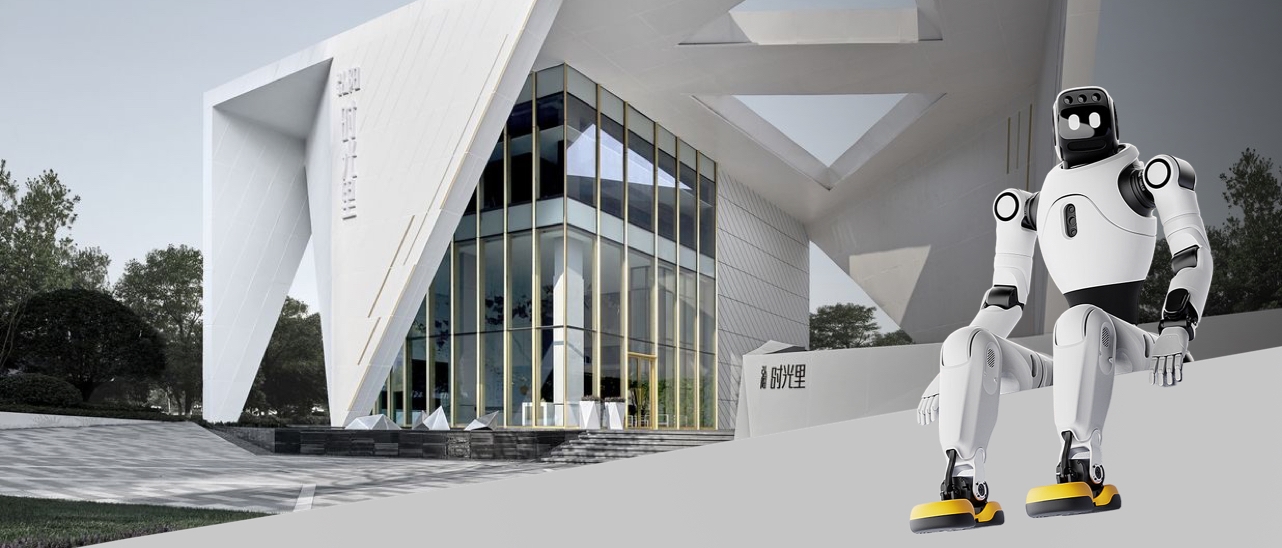
The Noetix N2 Athlete (officially listed by European distributors as the "Athlete N2 Universal Humanoid Robot") is a compact, 18-degree-of-freedom bipedal humanoid robot developed by Beijing Noetix Robotics Technology Co., Ltd.
Noetix N2 Athlete Europe: Complete Buyer's Guide for European Organizations
The N2 holds a position of particular significance in the European compact humanoid market because it has demonstrated performance in Europe specifically: in October 2025, the N2 became the first humanoid robot to walk a fashion show catwalk outside China, appearing at the UNESCO venue in Paris during Paris Fashion Week and performing acrobatic street demonstrations for public audiences. This European public appearance, covered by TIME Magazine and multiple European technology publications, established the N2 as a platform capable of sustained real-world performance in the kinds of high-profile public environments that European organizations considering humanoid robot deployment need verified evidence for.
Why European Buyers Are Evaluating the N2
The Compact Athletic Humanoid Market Gap in Europe
European university engineering departments, robotics research groups, technology companies, and educational institutions have historically faced a stark choice in the compact humanoid robot market: research-grade platforms from established manufacturers at EUR 50,000 to EUR 100,000 or more, or educational robots with limited capability for under EUR 5,000 that cannot support serious research. The N2, at approximately EUR 5,000 to EUR 8,500 depending on configuration and European distribution costs, occupies the middle ground that this market had largely been missing.
This price positioning is the product of Noetix's explicitly stated Xiaomi-style thin-margin strategy: making maximum technical capability accessible at minimum viable cost, enabled by a nearly 100-percent domestic Chinese supply chain and self-developed core components including joint actuators and motion control software. For European buyers, this means the N2's cost is not a reflection of specification compromise but of manufacturing economics, and the platform's verified performance record, including a second-place finish in a 21-kilometer humanoid half-marathon and a gold medal in floor exercise at an international competition, demonstrates that specification and performance are not diminished by the approach.
The Paris Fashion Week Validation
For European organizations evaluating the N2, the October 2025 Paris Fashion Week appearance provides a specific and locally relevant form of deployment validation. A robot that performs reliably in uncontrolled public environments in Paris, in front of international media, cultural industry professionals, and members of the public, is demonstrating operational readiness in a context that European buyers can directly assess.
The appearance was notable not only as a technology demonstration but as the robot's public interaction with European audiences. The N2 walked a formal catwalk with human models, modeled designer outfits, and performed street acrobatics for Parisian passersby, an environment that combined formal structured performance requirements with unpredictable public interaction. The robot completed all of this without technical failure documented in press coverage, providing European organizations with evidence that the platform functions in uncontrolled European deployment conditions.
Technical Specifications for European Buyers
Physical Dimensions and Weight
The N2's published dimensions are 118 by 47 by 29 centimeters (height by width by depth), confirmed by Europa Satellite's product documentation. The 30-kilogram mass and 118-centimeter height are consistent across multiple authorized distributor listings. As Europa Satellite notes, some early media reports cited different measurements due to the normal variation between prototype and production specifications; the 118 cm and 30 kg figures represent the production specification.
These dimensions are practical for European deployment environments: 118 centimeters is well below the 200-centimeter clearance of standard European commercial and institutional doorways, and 30 kilograms is within the manual handling limits specified by EU Manual Handling Directive 90/269/EEC for two-person lifts, enabling the robot to be deployed without specialized lifting equipment in most European commercial and educational settings.
Degrees of Freedom and Motion Range
Eighteen total degrees of freedom are distributed as five joints per leg (10 total) and four joints per arm (8 total). Europa Satellite's detailed product guide specifies that published joint range-of-motion figures for the N2's key axes include shoulder pitch at plus or minus 170 degrees, elbow pitch from negative 1 to 118 degrees, knee pitch from negative 5 to 140 degrees, and hip pitch from negative 50 to 110 degrees. These ranges are comparable to or exceed the functional joint ranges of many full-size humanoid robots and provide the full range of motion needed for natural bipedal walking, expressive arm gesture, and the dynamic maneuvers including backflips for which the N2 is certified.
Peak Torque and Speed
The 150 Newton-meter peak knee joint torque is the specification most directly responsible for the N2's athletic performance. This torque output enables the explosive push-off needed for jumping and backflip initiation, and the controlled deceleration needed during landing without collapse. The maximum movement speed of 3.2 meters per second (approximately 11.5 km/h, or 12.6 km/h in lab tests reported by humanoid.guide) places the N2 faster than a brisk human walking pace and comparable to a slow jogging pace, providing meaningful locomotion speed for both research and demonstration purposes.
Compute Configuration Options
The N2 is available in two distinct compute configurations that European buyers should consider carefully when selecting the appropriate variant:
Base Configuration (6 TOPS at 15W): Europa Satellite's product documentation confirms "Noetix lists base compute of 6 TOPS at 15W" as the standard configuration. This power-efficient compute level supports the essential AI functions for gait control, speech recognition, and basic visual interaction within a low thermal budget. Appropriate for most education and demonstration applications where the primary computing requirement is running the robot's existing locomotion and interaction stack.
Optional Jetson Orin Nano Super (up to 67 TOPS): RBTX confirms the N2 "offers edge AI computing up to 67 TOPS," corresponding to the NVIDIA Jetson Orin Nano Super upgrade. Europa Satellite specifically identifies this as "an optional higher-compute module for an education-oriented configuration." This upgrade enables European research groups to run demanding onboard AI models for computer vision, natural language processing, and simultaneous perception and planning tasks without cloud connectivity. For European institutions working on embodied AI research where network connectivity may be restricted or where data sovereignty requirements prevent cloud-based processing of sensor data, the onboard compute upgrade is the relevant selection.
Sensor System
Two depth cameras arranged in a forward-looking and downward-looking configuration provide the 3D visual perception that the N2 uses for obstacle detection, surface recognition, and depth-aware navigation. Four microphones provide multi-directional audio capture for noise-robust speech recognition in the noisy public and academic environments where European deployments typically occur. A speaker enables voice output for conversational interaction. The collision avoidance and emergency stop mechanisms built into the platform meet global industry standards, confirmed in RBTX's partner documentation.
Battery and Operational Endurance
The 48V, 7Ah quick-swap lithium-ion battery provides approximately two hours of continuous operation, equivalent to approximately 2.5 kilometers of sustained walking. Battery swap is completed in under five seconds without tools or power interruption, enabling continuous all-day operation through battery cycling. For European research groups running extended experiment sessions or organizations operating the N2 through a full demonstration shift, this hot-swap capability is operationally significant.
Software and Developer Interface
The N2 runs on a Linux-based control stack compatible with ROS, Python, and C++. RBTX's product listing confirms a "standard secondary development interface" providing both high-level and low-level motion control:
High-level interface: velocity and motion command control appropriate for application developers building interaction and demonstration scenarios.
Low-level interface: direct joint control and custom algorithm deployment appropriate for researchers developing custom gait controllers and reinforcement learning policies.
This dual-tier interface structure mirrors what European robotics research programs typically require: the ability to work at different levels of abstraction depending on the research question, without needing to build a complete low-level control stack from scratch.
Applications and Use Cases in European Markets
European University Robotics Research
European technical universities with programs in bipedal locomotion, reinforcement learning, human-robot interaction, and embodied AI represent the primary research market for the N2 in Europe. Leading programs at TU Munich, ETH Zürich, RWTH Aachen, Imperial College London, TU Delft, and KU Leuven operate at the frontier of academic bipedal robotics research, where a compact, affordable, and physically capable platform that researchers can use for real-world algorithm validation is valuable.
The N2's documented athletic performance, including continuous backflips and half-marathon completion, provides a physically demanding test environment for locomotion algorithms that entry-level compact humanoids cannot replicate. Its ROS compatibility and low-level joint control access integrate directly into the academic development toolchains and curriculum materials that European university robotics programs already use.
European STEM Education and Demonstration Programs
The N2's athletic demonstrations, particularly the backflip, create the kind of memorable and visually striking educational moment that motivates student interest in robotics and AI in ways that more limited platforms cannot replicate. For European STEM programs seeking demonstration hardware that communicates the current state of the art in robotics, the N2 provides a more compelling visual argument than any purely locomotion-restricted or remote-controlled robot.
The platform's Python and graphical programming compatibility, combined with the lower-level ROS interface available for advanced students, makes it useful across a range of student levels from introductory robotics courses through advanced research-oriented engineering programs.
European Human-Robot Interaction Research
For European psychology, communications, and social science departments studying human responses to humanoid robots, the N2 provides a platform with sufficient physical expressiveness (bipedal walking, arm gesture, dynamic motion) and conversational capability (LLM-powered speech interaction, multi-microphone audio capture) to serve as a research instrument in human-robot interaction studies. The N2's size, at 118 centimeters, occupies a scale that researchers can use for studies of human interaction with a physically present robot without the safety and logistical concerns associated with full-size humanoids.
European Corporate and Brand Technology Demonstrations
European technology companies, consultancies, and brand activation agencies seeking to demonstrate the current state of AI and robotics capability to clients and audiences can deploy the N2 for visual demonstrations that create lasting impressions. The N2's backflip demonstration and high-speed running create audience responses that screen-based AI demonstrations cannot match, making it a powerful tool for communicating technical capability to non-specialist audiences in corporate and public settings.
The Paris Fashion Week Appearance: European Cultural Context
The October 2025 Paris Fashion Week appearance deserves specific treatment in a European buyer's guide because it establishes something no other compact humanoid robot currently available to European buyers has established: real-world public performance evidence collected in Europe, in front of European audiences, in one of the most internationally visible public event contexts on the continent.
Paris Fashion Week is attended by editors, buyers, and creative directors from across Europe and globally. The event's audience is sophisticated, demanding, and highly attuned to the quality and authenticity of performance and presentation. A robot that walks a catwalk at the UNESCO venue and performs street acrobatics for Parisian pedestrians in this environment is not performing in a controlled laboratory: it is performing in the unpredictable, crowded, high-expectation environment of one of Europe's most prestigious cultural events. TIME Magazine's coverage of the event, and the resulting international press attention, provides independent third-party documentation that the N2 met the performance standard required.
For European organizations evaluating whether the N2 can perform reliably in their own European public and institutional contexts, the Paris Fashion Week documentation provides the most geographically and culturally relevant performance evidence available.
Advantages for European Buyers
European-based distributors with multilingual support: Europa Satellite provides product documentation in over 25 European languages and currencies, and RBTX serves professional European buyers through an established industrial automation marketplace. Both provide procurement pathways more familiar to European organizations than direct purchase from a Chinese manufacturer.
Verified European public deployment evidence: The Paris Fashion Week appearance at the UNESCO venue, covered by TIME Magazine and European media, is deployment documentation in a specific European context that European procurement teams can reference directly.
150 Nm knee torque at a EUR 5,000 to EUR 8,500 price equivalent: No other compact humanoid robot with this torque specification is currently available in Europe at a comparable price point. The combination of specified performance and competitive pricing is the core commercial case for the N2 in European markets.
Series B-backed manufacturer targeting Europe specifically: Noetix's March 2026 Series B of nearly USD $145 million, backed by CATL-affiliated institutional investors, combined with the company's explicit identification of Europe as one of five priority international markets and a target of 1,000 overseas units by Q2 2026, provides European buyers with evidence that Noetix is committed to European distribution and support as a business priority, not merely an opportunistic export.
Collision avoidance and emergency stop mechanisms meeting global standards: RBTX's documentation confirms the N2 includes built-in safety systems meeting global industry standards, an important consideration for European organizations evaluating whether the robot can be safely deployed in environments shared with people under European health and safety requirements.
90-day lead time with production scaling: The approximately 90-day lead time documented for early international orders reflects Noetix's production scaling from 10 robots per day in late 2025 toward 1,000 units per month. European buyers should confirm current lead times when ordering, as production capacity and order queue change over time.
Comparison with Competing Compact Humanoids in Europe
Noetix N2 vs. Unitree G1 (European Market)
The Unitree G1 is the most widely distributed compact agile humanoid in Europe, available through established distribution channels at approximately EUR 16,000 to EUR 21,600. For European buyers, the G1's advantages include a more mature European distribution network, a larger developer community with established open-source tools, and in some configurations a higher degree-of-freedom count for research applications. The N2's advantages are a significantly lower price at equivalent athletic performance (specifically the continuous backflip capability, which the G1 has not demonstrated at the same level), European performance documentation at Paris Fashion Week, and Noetix's explicit European market commitment backed by institutional financing. For European buyers where price is the dominant consideration and validated athletic performance is the primary research interest, the N2 is the more compelling option.
Noetix N2 vs. Noetix E1 for European Research Groups
European research groups choosing between the N2 and E1 within Noetix's product line should consider their primary research focus. The N2 (EUR 5,000 to EUR 8,500, 18 DOF, 150 Nm) is the better choice for groups primarily working on bipedal locomotion, dynamic motion research, reinforcement learning for gait control, and STEM demonstration. The E1 (similar entry price, 21-29 DOF, taller at 136 cm) is the better choice for groups primarily studying embodied AI interaction, elder care companion robots, museum and cultural venue guidance, and manipulation research with optional dexterous hands and LiDAR.
Summary
The Noetix N2 Athlete is the most cost-competitive and performance-validated compact athletic humanoid robot available to European buyers in 2026. Its documented European public performance at Paris Fashion Week, its 150 Nm knee joint torque enabling verified continuous backflips, its 12.6 km/h maximum speed, its dual compute tier from base 6 TOPS to optional 67 TOPS NVIDIA Jetson Orin Nano Super, its four-microphone sensor array for noise-robust voice interaction, and its 48V/7Ah quick-swap battery providing 2.5 kilometers of walking endurance collectively form a specification and performance profile that no directly competing platform available in Europe at its price range can currently match. For European universities, research groups, STEM education programs, and technology companies evaluating an accessible research-grade bipedal humanoid robot, the N2 is backed by a manufacturer with institutional financing exceeding USD $200 million, explicit European market expansion plans, and a product that has already demonstrated reliable operation in European public environments at Paris Fashion Week.
What is the Noetix N2 Athlete and where can it be bought in Europe?
The Noetix N2 Athlete (Athlete N2 Universal Humanoid Robot) is a compact bipedal humanoid robot developed by Beijing Noetix Robotics Technology Co., Ltd. It stands 118 centimeters tall, weighs 30 kilograms, features 18 degrees of freedom, a 150 Nm peak knee torque, and a maximum speed of 3.2 meters per second. In Europe, it is available through Europa Satellite (europasatellite.com) with multilingual documentation in over 25 European languages and currencies, through the RBTX industrial automation marketplace (rbtx.com), through Aifitlab (aifitlab.com) for international shipping, and through direct enterprise inquiry at en.noetixrobotics.com.
How does the Noetix N2 perform its continuous backflips?
The N2's backflip capability results from a bionic structural design that concentrates heavy joint actuators close to the robot's torso, minimizing the rotational inertia of the distal limbs and enabling faster mid-air repositioning with available motor output. The 150 Nm peak knee torque provides the explosive push-off needed for aerial initiation. Deep reinforcement learning motion control algorithms, trained through thousands of simulated backflip attempts, produce real-time balance corrections across all 18 joints that maintain controlled posture through the airborne and landing phases. The combination produces performance that is not limited to a single controlled environment: Noetix certifies the N2 as capable of continuous backflips in multiple scenarios including outdoors.
Why is the Noetix N2 relevant for European university research programs?
The N2 is relevant for European research programs because it provides a compact bipedal humanoid with physically demanding dynamic capabilities (continuous backflips, 12.6 km/h running) at a price accessible to university engineering department budgets. Its ROS-compatible Linux control stack, Python and C++ APIs, and low-level joint control access integrate directly into European academic robotics development workflows. The optional NVIDIA Jetson Orin Nano Super upgrade at 67 TOPS enables demanding onboard AI research without cloud dependency, which is important for European institutions with data sovereignty requirements. And the documented performance evidence, including the Global Humanoid Robotics Games gold medal in floor exercise and the Paris Fashion Week catwalk appearance, provides independent validation of the platform's real-world capabilities.
What are the differences between the N2's base compute and the Jetson Orin Nano Super option?
The base N2 compute configuration runs at 6 TOPS and 15 watts, providing an energy-efficient compute level appropriate for the robot's standard locomotion, speech, and basic visual interaction functions. The optional NVIDIA Jetson Orin Nano Super configuration provides up to 67 TOPS of AI inference, enabling researchers to run demanding onboard AI models for real-time object detection, visual language model inference, multi-modal perception, and simultaneous planning tasks without network connectivity. For European institutions with data privacy and sovereignty requirements that prevent cloud-based processing of sensor data, the onboard Jetson upgrade is particularly relevant, as it enables all AI processing to occur locally without any data leaving the device.
How does the Noetix N2 compare to the Unitree G1 for European buyers?
Both the Noetix N2 and Unitree G1 are compact agile humanoid robots available in European markets. The G1 (approximately EUR 16,000 to EUR 21,600) has a larger European developer community, more established distribution, and in some configurations a higher DOF count. The N2 (approximately EUR 5,000 to EUR 8,500) is priced three to four times lower at comparable athletic performance, with continuous backflip capability specifically documented in multiple real-world environments including outdoors. The N2 also has European-specific public performance documentation from Paris Fashion Week that the G1 does not currently have an equivalent for. For European buyers where price is the primary constraint and verified athletic locomotion performance is the primary research or demonstration requirement, the N2 provides meaningfully better value than the G1 in the current market.