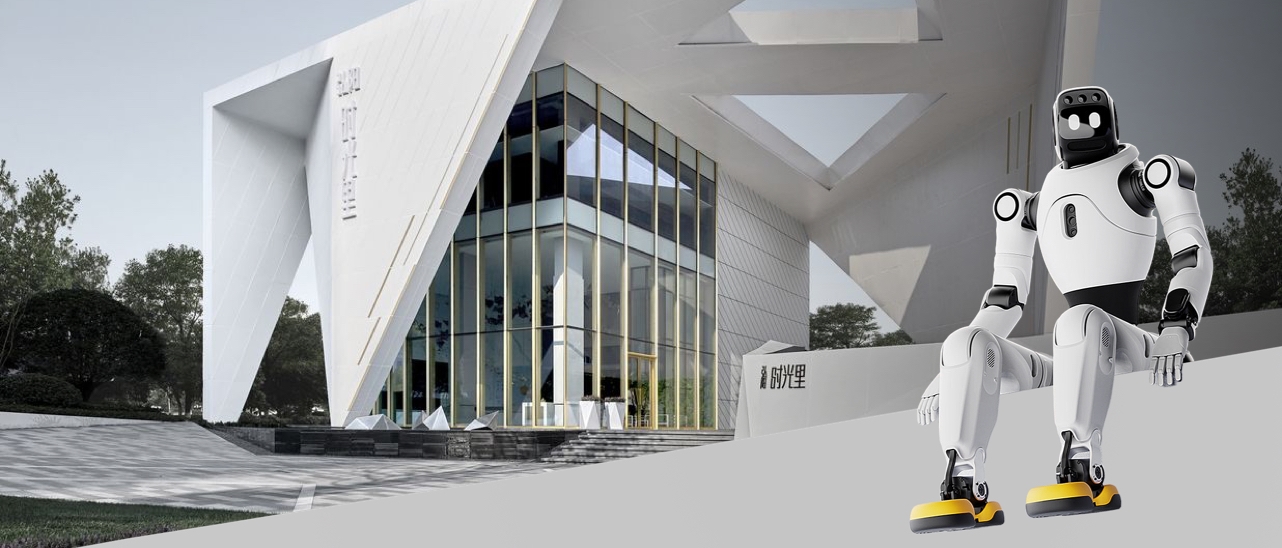
Apptronik APOLLO Humanoid Robot

In stock
- BRAND:
- APPTRONIK
- MODEL:
- APOLLO
- AVAILABILITY:
- SUBJECT TO AVAILABILITY
- SKU:
- Apptronik-APOLLO
Apptronik APOLLO Humanoid Robot
Most industrial robots earn their keep behind a fence, kept apart from the people whose work they share. The Apptronik APOLLO Humanoid Robot starts from the opposite premise: a machine of roughly human proportions that works alongside people, communicates through a face and a chest display, and swaps its battery instead of leaving the line to recharge. It is aimed at buildings and workflows already shaped around people, and Apptronik's ambition goes beyond the industrial workforce to improving the human experience more broadly.
Robots Europa, based in Dublin, supplies the Apptronik APOLLO Humanoid Robot to customers across the European Union and the DACH region. Our team prepares each quotation around the version and configuration you need and clarifies the documentation required for your destination country. Robots Europa also coordinates delivery and remains your point of contact for support once the robot is in service.
Background
From Valkyrie to Apollo
Apollo did not appear from a blank sheet. Apptronik developed it from its experience of building more than ten earlier robots, including NASA's Valkyrie humanoid. That lineage matters to buyers: a humanoid depends on actuation, balance and control software working together, and a team with a long record of building such machines brings lessons that are difficult to acquire any other way. Apptronik describes the original Apollo as the first commercial humanoid robot designed for friendly interaction, mass manufacturability, performance and safety, four goals that rarely sit comfortably together in a single machine.
The platform has since moved on. There are two versions: the Apollo unveiled in 2023, for which an alpha version was also described that year, and Apollo 2. The later version keeps the human-centred approach and adds a modular design, a broader software ecosystem and work on artificial intelligence with Google DeepMind and Gemini Robotics.
A collaborative-robot philosophy in human form
The key idea behind Apollo is borrowed from collaborative robotics rather than from conventional industrial automation. The 2023 Apollo uses a force control architecture that maintains safe operation around people, in the manner of a collaborative robot rather than a traditional industrial robot. Apollo 2 continues this thinking with defined safety zones: an impact zone designed to pause movement immediately when an object is detected within its defined radius, and a perimeter zone that can be configured. The result is a humanoid intended for shared spaces, which suits companies browsing our Humanoids range with collaborative work in mind.
Technical Specifications
| Specification | Apollo (2023 unveiling) | Alpha version (2023) | Apollo 2 |
|---|---|---|---|
| Height | 5 foot 8 inches | 1.7 metres | — |
| Weight | 160 pounds | 73 kilograms | — |
| Lift capacity / payload | 55 pounds | 25 kg maximum payload | — |
| Battery | Swappable batteries, each with a four-hour runtime | — | Swappable batteries helping to enable 7x22 operation |
| Charging | Battery change instead of plug-in charging | — | Opportunity charging and tethering |
| Mobility | — | — | Modular; bipedal and wheeled configurations |
| Actuators | — | — | Patented actuator technology designed for 90%+ energy efficiency |
| Interaction | Digital panels on face and chest | — | Expressive LED mouth, coordinated lighting, speech and listening, chest display |
| Safety | Force control architecture for safe operation around people | — | Impact zone and configurable perimeter zone |
| Software | — | — | Apptronik Artemis and Fleet Connect |
Specifications as published by the manufacturer; confirmed against the datasheet at quotation.
The manufacturer has not published the degrees of freedom, walking speed, battery capacity, compute platform, sensor suite, connectivity, ingress protection rating or the contents of the box, nor the height, weight and payload of Apollo 2; all of these are confirmed at quotation.
What does Apollo 2 change compared with the 2023 Apollo?
The 2023 Apollo set out the basic proposition: a robot of roughly human size with a force control architecture for safe work near people, digital panels on its face and chest for communication, and swappable batteries with a four-hour runtime each. Its battery approach answered a practical problem, since a robot that must be plugged in cannot complete its tasks while it charges, whereas a battery change lets it continue working.
Apollo 2 extends that thinking in several directions. Its modular design lets teams choose the mobility that suits the task, with bipedal and wheeled configurations. Swappable batteries help enable 7x22 operation, and charging is more flexible, with opportunity charging and tethering available to suit different tasks, facilities and deployments. The actuator platform, developed over years of engineering, is designed for 90%+ energy efficiency, simple maintainability, mass manufacturability and supply chain resiliency.
Interaction has also grown richer. Instead of panels alone, Apollo 2 combines an expressive LED mouth, coordinated lighting, speech and listening capabilities with a built-in chest display showing robot status, battery level, charging state and task progress. On the software side, it works with Apptronik Artemis, covering perception, planning, controls, safety and task execution, and with Fleet Connect, the operational layer for managing robots at scale.
How does Apollo work safely around people?
Safety is the reason a humanoid can be considered for shared workspaces at all. On the 2023 Apollo, the force control architecture is what allows it to behave more like a collaborative robot than a caged industrial arm. Apollo 2 adds explicit zones around the machine: the impact zone pauses movement as soon as an object is detected inside its defined radius, while the perimeter zone can be configured to fit the layout of a given site. Clear communication supports this, because people nearby can read the robot's status from its chest display and lighting rather than guessing what it will do next. Any deployment still requires a site-specific risk assessment, which Robots Europa can help you scope as part of the quotation.
Who is the Apptronik APOLLO Humanoid Robot for?
The platform suits organisations that want automation without rebuilding their premises around it. Manufacturers and logistics operators with workstations, aisles and processes designed for people are natural candidates, as are innovation teams evaluating humanoids for future roll-outs. Research groups and integrators with an interest in embodied artificial intelligence will note Apptronik's work with Google DeepMind and Gemini Robotics on Apollo 2.
For buyers planning continuous or multi-shift work, Apollo 2 is the natural choice, with swappable batteries helping to enable 7x22 operation and opportunity charging or tethering. Teams that need a walking robot for stairs, steps or cluttered floors can specify the bipedal configuration and compare it with other machines in our Bipedal Humanoids category, while sites with smooth, level floors may find the wheeled configuration a better fit. Organisations managing several units will benefit from Fleet Connect for fleet-level oversight.
What is the Apptronik APOLLO Humanoid Robot used for?
- Industrial handling: moving materials in workplaces laid out for human workers, without fencing off the robot.
- Multi-shift operations: keeping work going through battery swaps rather than charging pauses.
- Collaborative workstations: sharing space with staff, supported by force control and safety zones.
- Fleet deployments: running several robots across a site and overseeing them through Fleet Connect.
- Human-robot interaction studies: exploring how speech, lighting and displays shape cooperation with people.
- Embodied AI development: testing how advanced AI models perform on purpose-built humanoid hardware.
Pricing and Availability
Robots Europa supplies the Apptronik APOLLO Humanoid Robot on a quotation basis, as the version, mobility configuration, charging approach and software scope all shape the final specification. Please tell us about your site, the tasks you have in mind and the number of units you are considering, and we will prepare an offer that reflects them. Delivery, customs and support are arranged with the quotation. To begin, use the quotation request available on this page.
Frequently Asked Questions
How tall is the Apptronik APOLLO?
The 2023 Apollo is 5 foot 8 inches tall, and the alpha version described in 2023 stands 1.7 metres tall.
How much can Apollo lift?
The 2023 Apollo can lift 55 pounds, and the alpha version has a maximum payload of 25 kg.
How long does the battery last?
On the 2023 Apollo, each swappable battery has a four-hour runtime. On Apollo 2, swappable batteries help enable 7x22 operation, supported by opportunity charging and tethering.
Does Apollo walk or drive?
Apollo 2 has a modular design with bipedal and wheeled configurations, so teams can choose the mobility that suits the task.
What software does Apollo 2 use?
Apollo 2 works with Apptronik Artemis for perception, planning, controls, safety and task execution, and with Fleet Connect for managing robots at scale.
Is Apollo safe to use near people?
Apollo uses a force control architecture for safe operation around people, and Apollo 2 adds an impact zone that pauses movement plus a configurable perimeter zone. A site-specific risk assessment remains necessary for every deployment.
Where can I buy the Apptronik APOLLO Humanoid Robot and what does it cost?
You can buy it from Robots Europa, which supplies the EU and the DACH region from Dublin. The cost depends on version and configuration, so please request a quotation tailored to your project.
Summary
The Apptronik APOLLO Humanoid Robot answers a simple question: what if a robot could join the workforce without being fenced off from it? From the 2023 Apollo, with its force control architecture, face and chest panels and swappable four-hour batteries, to Apollo 2, with modular bipedal or wheeled mobility, energy-efficient actuators, configurable safety zones and the Artemis and Fleet Connect software, the platform has developed consistently around working beside people. Built on Apptronik's experience with more than ten earlier robots, including NASA's Valkyrie, it is a serious option for organisations exploring humanoid automation. Robots Europa quotes, delivers and supports it across the EU and the DACH region, and for your project this page is the starting point.