
SIASUN Instrument Panel Line Assisted Assembly Mobile Robot (Instrument Panel Line Assisted Assembly Mobile Robot)
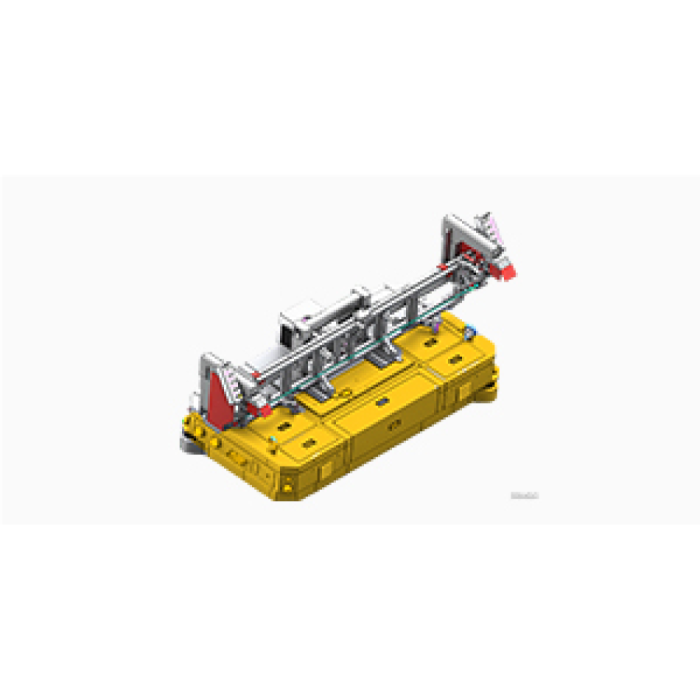
In stock
- BRAND:
- SIASUN
- MODEL:
- Instrument Panel Line Assisted Assembly Mobile Robot
- PART #:
- Instrument Panel Line Assisted Assembly Mobile Robot
- ORIGIN:
- China
- Warranty:
- 12 MONTHS
- AVAILABILITY:
- SUBJECT TO AVAILABILITY
- SKU:
- SIASUN-Instrument-Panel-Line-Assembly-Mobile-Robot
SIASUN Instrument Panel Line Assisted Assembly Mobile Robot (Instrument Panel Line Assisted Assembly Mobile Robot)
Few moments on a vehicle assembly line ask as much of people as the cockpit fit. A complete instrument panel is bulky and awkward, it has to pass through a door aperture that leaves little room, and it must arrive at its mounting points within a few millimetres, cycle after cycle, shift after shift. The SIASUN Instrument Panel Line Assisted Assembly Mobile Robot was built for exactly that tension: a heavy part that must be handled gently, delivered precisely and brought to the vehicle in a space that rarely allows a generous approach.
Robots Europa, based in Dublin, supplies this SIASUN mobile robot to automotive manufacturers and system integrators across the European Union and the DACH region. Robots Europa prepares the quotation, coordinates delivery to your plant and remains your point of contact for technical questions and support once the robot is on the line.
Background
SIASUN and its automation lineage
SIASUN is a Chinese robotics and automation manufacturer whose portfolio covers industrial robots, mobile robots and complete factory automation systems. Its mobile robot range spans light assembly-assist vehicles such as this one through to heavy-duty platforms for large loads, and the company has long worked with the automotive sector, where automated guided vehicles and mobile robots are a familiar part of body, paint and final assembly operations. The wider family can be explored in our Mobile Robots category.
A mobile robot designed around one process
Rather than a general-purpose transport platform, this robot is developed for instrument panel assembly processes in automotive manufacturing. It combines a 250 kg payload with high-precision lifting capability and integrates multiple mechanisms so that it can operate flexibly in tight spaces while keeping instrument panel assembly stable and consistent. A screw drive powers the lift for stable assembly, the design is optimised for 250 kg instrument panels, and the robot supports fast switching between multiple vehicle models. Wireless charging and intelligent interaction features complete the package, raising the level of automation and intelligence in the instrument panel assembly section.
Technical Specifications
| Specification | Value |
|---|---|
| Payload capacity | 250 kg |
| Drive system | 2 drive wheels + 4 caster wheels |
| Navigation method | Colour tape + QR code tape; magnetic strip optional |
| Positioning accuracy | ±5 mm |
| Navigation accuracy | ±10 mm |
| Braking system | Servo motor + mechanical brake |
| Lift drive | Screw drive |
| Charging | Wireless charging |
| Application area | Automotive manufacturing |
Specifications are as published by the manufacturer and are confirmed against the datasheet at quotation.
The manufacturer has not published the dimensions, the weight, the battery capacity, the runtime, the travel speed, the lifting height, the safety sensors, the IP rating, the power supply voltage or the contents of the delivery; all of these are confirmed at quotation.
What makes an assembly-assist mobile robot different from a standard AGV?
A conventional automated guided vehicle is judged mainly on how reliably it carries a load from one point to another. An assembly-assist robot is judged on what happens at the end of the journey. Here, the robot does not merely deliver an instrument panel to the line; it has to present the panel to the vehicle at the right height and in the right position, so that operators or downstream equipment can complete the fit without wrestling the part into place.
That is why the SIASUN design pairs its navigation with a dedicated lifting function. The screw-driven lift is chosen for stability, which matters when a large, heavy module is raised close to painted surfaces and trim. The positioning accuracy of ±5 mm describes how closely the robot holds its stopping point, while the navigation accuracy of ±10 mm describes how faithfully it follows its route. For a cockpit fit, the tighter figure at the point of assembly is the one that counts.
Braking is handled by a servo motor combined with a mechanical brake. In practice, this pairing gives controlled deceleration in normal operation and a mechanical hold when the robot is stationary, an important consideration when a heavy part is being presented beside a moving or indexed vehicle body. Finally, the ability to switch quickly between multiple vehicle models reflects the reality of mixed-model lines, where consecutive bodies may need different instrument panels and different presentation positions.
How does colour tape and QR code navigation suit an instrument panel line?
The robot follows colour tape on the floor and reads QR code tape for position references, with magnetic strip guidance available as an option. Tape-based guidance is a well-established approach in automotive plants: routes are fixed, repeatable and easy to see, and the QR codes provide discrete reference points where the robot confirms exactly where it is, for instance at a loading station or at the assembly position beside the line.
For an assembly section, that predictability is an advantage. The route between the instrument panel supply point and the vehicle rarely changes from one shift to the next, and a visible guide path makes it straightforward for production staff to understand where the robot will travel. Where floor conditions or plant standards favour magnetic guidance, the optional magnetic strip offers an alternative. Wireless charging fits the same philosophy: the robot can top up its energy at defined points without an operator plugging in a cable, which helps keep a repetitive cycle running.
Who is the SIASUN Instrument Panel Line Assisted Assembly Mobile Robot for?
The primary buyers are automotive manufacturers operating final assembly lines on which instrument panels or cockpit modules are installed. Plant engineers looking to reduce manual handling of a heavy, awkward module, and to make the fit more consistent from vehicle to vehicle, will find that this robot addresses the process directly rather than treating it as a generic transport task.
System integrators building automated cockpit installation cells form a second group. The combination of tape and QR code navigation, a screw-driven lift and quick model changeover gives them a mobile platform designed for this specific station, around which fixtures, tooling and line controls can be engineered.
Tier-one suppliers that pre-assemble cockpit modules and deliver them to the vehicle manufacturer may also take an interest, particularly where module handling and presentation happen in confined areas. Buyers whose loads are well beyond the instrument panel class, or who need general material handling across the plant, are better served by looking through SIASUN's heavier platforms in our Mobile Robots range or the wider selection of Factory Robots.
What is the SIASUN Instrument Panel Line Assisted Assembly Mobile Robot used for?
- Instrument panel installation: carrying the panel to the vehicle and presenting it for fitting in the assembly section.
- Cockpit module presentation: lifting the module with screw-driven stability so operators can complete the fit.
- Mixed-model production: switching quickly between instrument panels for multiple vehicle models on the same line.
- Confined-space handling: manoeuvring a heavy module in the tight areas around a vehicle body.
- Line-side logistics: shuttling panels along a fixed tape-guided route between supply point and assembly station.
- Automation upgrades: raising the level of automation in an existing instrument panel assembly section.
Pricing and Availability
This robot is supplied on a quotation basis, because the right configuration depends on your line layout, vehicle models, navigation preference and integration requirements. Robots Europa reviews your application and prepares an offer that reflects your project. Delivery, customs and support are arranged together with the quotation. To begin, please send us details of your assembly process using the quotation request available on this page.
Frequently Asked Questions
What payload does the robot handle?
The robot has a payload capacity of 250 kg, and its design is optimised for 250 kg instrument panels.
How accurately does it position the instrument panel?
The positioning accuracy is ±5 mm and the navigation accuracy is ±10 mm.
Which navigation methods are supported?
The robot navigates using colour tape together with QR code tape. Magnetic strip guidance is available as an option.
How is the lift driven?
The lift uses a screw drive, which keeps the instrument panel stable during assembly.
Can it handle several vehicle models?
Yes. The robot is designed for fast switching between multiple vehicle models, which suits mixed-model assembly lines.
How is the robot charged?
It uses wireless charging, so it can replenish its energy at defined points without anyone plugging in a cable.
Where can I buy the SIASUN Instrument Panel Line Assisted Assembly Mobile Robot and what does it cost?
Robots Europa supplies the robot across the EU and the DACH region. The cost depends on configuration and integration scope, so it is provided in a tailored quotation that you can request from this page.
Summary
The instrument panel fit brings together weight, bulk and a narrow tolerance in a confined space, and the SIASUN Instrument Panel Line Assisted Assembly Mobile Robot is shaped around that challenge. A 250 kg payload, a screw-driven lift, ±5 mm positioning, tape and QR code guidance, servo and mechanical braking, wireless charging and quick model changeover combine into a robot that treats cockpit installation as a process rather than a delivery run. For automotive plants and integrators planning to automate this station with Robots Europa as their supplier, this page is the starting point.


