
SIASUN P-T1500D (P-T1500D)
In stock
- BRAND:
- SIASUN
- MODEL:
- P-T1500D
- PART #:
- P-T1500D
- ORIGIN:
- China
- Warranty:
- 12 MONTHS
- AVAILABILITY:
- SUBJECT TO AVAILABILITY
- SKU:
- SIASUN-P-T1500D
SIASUN P-T1500D (P-T1500D)
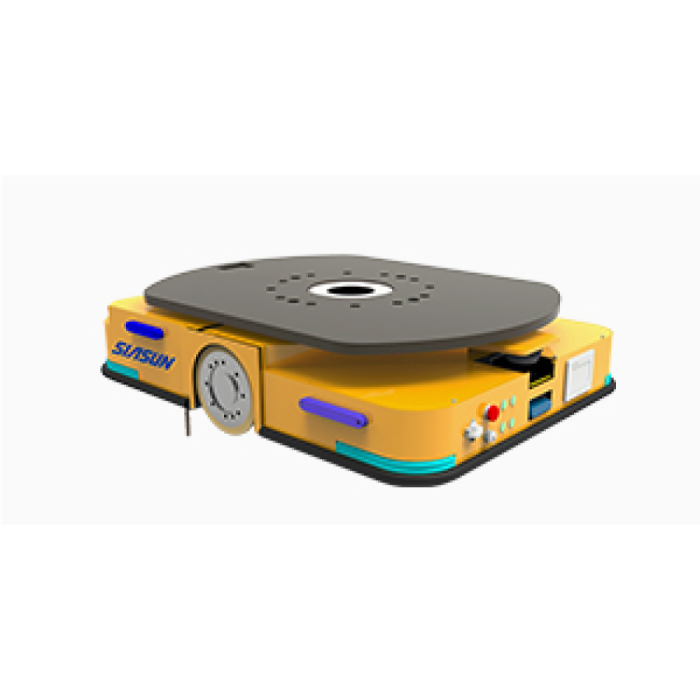
Picture a production hall in which the racks and carts appear to move by themselves: a shelf of components glides from the goods-in area to an assembly cell, pauses, and settles exactly where the operator expects it. The machine doing the work is almost invisible, tucked beneath the load it carries. That is the idea behind the SIASUN P-T1500D (P-T1500D), an under-ride lift mobile robot that slips under a rack or cart, raises it clear of the floor and delivers it autonomously. Where forklifts need aisles, drivers and a great deal of attention, an under-ride robot turns the load itself into the vehicle, with nothing in the way of the people working around it.
Robots Europa, based in Dublin, supplies the SIASUN P-T1500D to customers across the European Union and the DACH region. Robots Europa prepares the quotation, coordinates delivery to your site and remains your point of contact for support once the robot is in service, so that the specification, the integration questions and the after-sales care sit with one European partner.
Background
SIASUN and its robotics lineage
SIASUN is a Chinese robotics and automation company with its roots in the country's scientific research community, and it has built a broad portfolio ranging from industrial manipulators to mobile robots and complete intralogistics systems. Its mobile robot family covers several transport principles, including lifting robots and under-ride vehicles, and the company designs these machines to work as part of a coordinated system rather than as isolated units. The P-T1500D belongs to SIASUN's under-ride lift line, which the manufacturer offers as a series of versions: the SIASUN P-T600D (P-T600D), the SIASUN P-T1000D (P-T1000D), the P-T1500D itself, the SIASUN 2000 Kg Under-ride Lift Mobile Robot (P-T2000D) and the SIASUN P-T3000D (P-T3000D). The full family is presented in our Under-ride Lift Mobile Robots category.
The under-ride principle and fleet control
An under-ride lift robot, sometimes called a latent lifting AGV, drives beneath a purpose-built rack, shelf or trolley, lifts it with a top plate and carries it to its destination. Because the robot travels underneath rather than in front of the load, the transported unit keeps its own footprint and the floor around it stays free for people and other traffic. The P-T1500D combines this principle with SLAM + QR Code navigation and with SIASUN's IMRS 2.0 platform, which handles multi-robot dispatching, route optimisation, data analytics and digital twins. In practice, the robot is one element of an orchestrated logistics system rather than a stand-alone vehicle.
Technical Specifications
| Specification | Value |
|---|---|
| Navigation method | SLAM + QR Code / QR Code |
| Positioning accuracy | ± 10 mm/±1° |
| Rated operating time | 6–8 hours |
| Lifting height | 60 mm |
| Overall dimensions | 1200/820/280 mm |
| Fleet scheduling platform | IMRS 2.0 (multi-robot dispatching, route optimisation, data analytics, digital twins) |
Specifications are as published by the manufacturer and are confirmed against the datasheet at quotation.
The manufacturer has not published the weight, battery type and capacity, charging time, travel speed, drive type, safety sensors, IP rating, operating temperature or package contents; these, together with the rated load for this version, are confirmed at quotation.
What does SLAM + QR Code navigation mean for the P-T1500D?
The P-T1500D is listed with two navigation options: SLAM combined with QR Code, or QR Code alone. SLAM, short for simultaneous localisation and mapping, lets a robot build and use a map of its surroundings, so it can orient itself from the features of the building without relying entirely on markers laid into the floor. QR codes, by contrast, are fixed reference points: the robot reads them as it passes and corrects its position against a known grid.
Combining the two gives planners a choice. A QR Code layout suits areas where routes are fixed and the floor can be prepared, such as a dedicated transport lane or a buffer zone in front of production cells. Adding SLAM brings flexibility where layouts change or where marking every square metre of floor would be impractical. In both cases the positioning accuracy of ± 10 mm/±1° is what matters at the pick-up point: an under-ride robot has to arrive precisely beneath the rack before lifting, and an angular deviation of a single degree keeps the load aligned when it is set down at a workstation or a docking position.
Which approach is right for a given site depends on the floor, the routes and how often the layout changes. Robots Europa discusses these conditions with you before quotation, so that the navigation set-up matches the building rather than the other way round.
How does the P-T1500D fit into a multi-robot fleet?
A single robot moving racks is useful; a fleet of robots coordinated by software is what changes a logistics flow. SIASUN supports its under-ride solutions with the IMRS 2.0 platform, which dispatches tasks across several robots, optimises their routes, analyses operating data and provides digital twins of the system. For a planner, that means traffic at junctions, priorities between orders and the distribution of work among vehicles are handled centrally instead of being programmed robot by robot.
The digital twin capability is particularly relevant during planning and expansion. A virtual model of the installation allows routes and capacities to be examined before changes are made on the shop floor, while the data analytics show where vehicles wait, where routes are congested and where additional robots would pay their way. The rated operating time of 6–8 hours is the other figure to place in this picture: shift patterns, charging strategy and fleet size are planned together, and Robots Europa works through that calculation with you as part of the project.
Who is the SIASUN P-T1500D for?
The P-T1500D is aimed at manufacturers who move materials between storage, preparation and assembly on repeatable routes, and who want those movements automated without redesigning their entire hall around conveyors. Automotive suppliers, electronics plants and machinery builders with line-side supply processes are typical examples, as are contract logistics providers who transport racks or trolleys between zones of a warehouse.
It also suits operations already planning a fleet: because dispatching, route optimisation and analytics run through IMRS 2.0, sites that expect to add robots over time can start with a small group and grow it. Companies whose loads differ from those this version is configured for should compare it with the other members of the series, such as the P-T1000D or the P-T2000D linked above; Robots Europa helps you choose the version that matches your racks, loads and routes.
What is the SIASUN P-T1500D used for?
- Line-side supply: delivering racks of components from a supermarket area to assembly stations on a fixed cycle.
- Work-in-progress transfer: moving trolleys of semi-finished parts between production steps without manual pushing.
- Goods-in to storage: carrying incoming material from the receiving area to buffer or storage zones.
- Goods-to-person picking: bringing shelving units to picking stations so that operators stay at their workplace.
- Finished-goods dispatch: taking completed loads from the end of the line to packing or shipping areas.
- Multi-robot intralogistics: forming part of a coordinated fleet scheduled and monitored through IMRS 2.0.
Pricing and Availability
The SIASUN P-T1500D is supplied on a quotation basis, because the right configuration depends on your loads, your floor, your navigation set-up and the size of the fleet. Request a quotation from Robots Europa with a brief description of your application, and we will prepare an offer tailored to your site. Delivery, customs and support are arranged with the quotation. The quotation form for the SIASUN P-T1500D is available on this page.
Frequently Asked Questions
How does the P-T1500D navigate?
The robot is offered with SLAM + QR Code navigation or with QR Code navigation only. The choice depends on how fixed your routes are and how the floor can be prepared.
How precisely does it position itself?
The positioning accuracy is ± 10 mm/±1°. This precision matters when the robot drives beneath a rack and when it sets the load down at a station.
How high does it lift a load?
The lifting height is 60 mm, enough to raise a suitable rack or trolley clear of the floor for transport.
How long does it run per working period?
The rated operating time is 6–8 hours, which forms the basis for planning shifts and charging across the fleet.
Can several robots work together?
Yes. SIASUN's IMRS 2.0 platform provides multi-robot dispatching, route optimisation, data analytics and digital twins for the whole fleet.
What are the overall dimensions of the P-T1500D?
The overall dimensions are 1200/820/280 mm. The low build is what allows the robot to drive beneath racks and trolleys designed for under-ride transport.
Where can I buy the SIASUN P-T1500D and what does it cost?
You can buy the SIASUN P-T1500D from Robots Europa, which supplies customers across the EU and the DACH region. The cost depends on configuration and fleet size, so it is set out in an individual quotation that you can request on this page.
Summary
The SIASUN P-T1500D works best when nobody notices it: the rack arrives, the operator takes what is needed, and the robot has already moved on beneath the next load. Its SLAM + QR Code or QR Code navigation, its positioning accuracy of ± 10 mm/±1°, its 60 mm lifting height and its rated operating time of 6–8 hours give it the precision and endurance for repeatable intralogistics, while IMRS 2.0 turns individual robots into a coordinated fleet. For manufacturers and logistics operators in Europe who want their materials to move quietly and reliably, with Robots Europa handling the quotation, delivery and support, this page is the starting point.


