Sanctuary AI Phoenix Humanoid Robot

In stock
- BRAND:
- SANCTUARY AI
- MODEL:
- PHOENIX
- ORIGIN:
- Canada
- AVAILABILITY:
- SUBJECT TO AVAILABILITY
- SKU:
- Sanctuary-AI-Phoenix
Sanctuary AI Phoenix Humanoid Robot
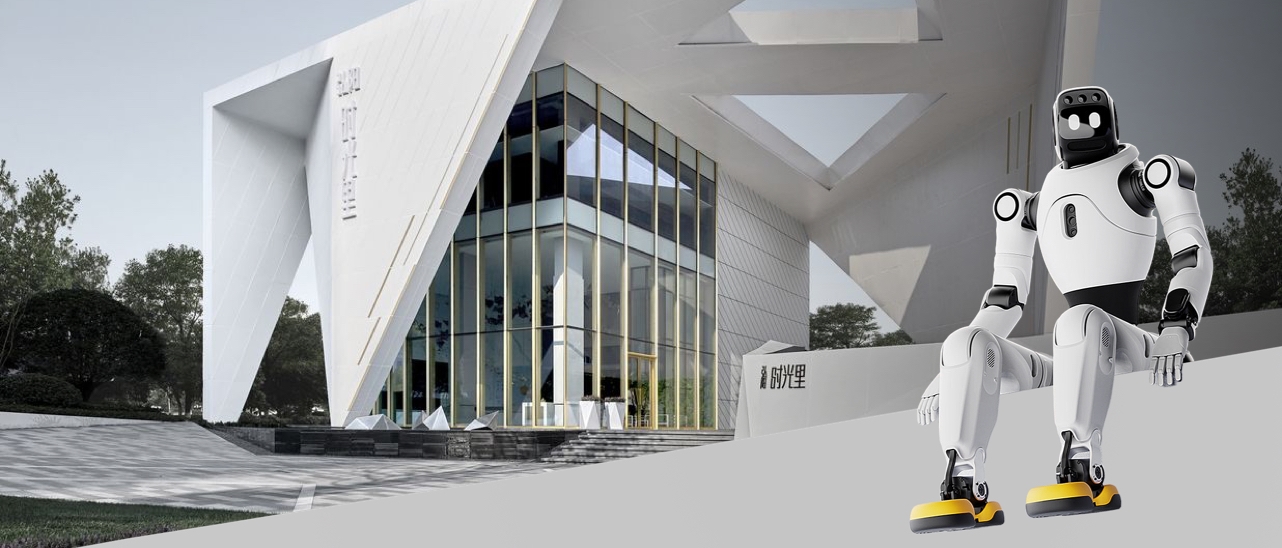
Most humanoid robots are judged by their legs: how far they walk and how well they balance. The Sanctuary AI Phoenix Humanoid Robot asks to be judged by its hands. Sanctuary AI designed Phoenix as a bipedal humanoid for manual work, in the literal sense of work that depends on the hands, and at its launch the robot was not walking at all. It moved on a small wheeled autonomous base while its upper body handled the tasks. That choice says a great deal about the machine. Phoenix puts manipulation and cognition first and leaves locomotion for later, on the reasoning that a robot is only useful in a human workplace if it can do what human hands do there.
Robots Europa, based in Dublin, supplies the Sanctuary AI Phoenix to organisations across the European Union and the DACH region. Robots Europa prepares each quotation, coordinates delivery into the EU, Germany, Austria and Switzerland, and remains the point of contact for support once the robot is in service. Enquiries from research institutions, integrators and industrial operators are handled in the same way, with the scope of the project discussed in detail before any order is placed.
Background
Sanctuary AI and its mission
Phoenix is built by Sanctuary Cognitive Systems Corp., which trades as Sanctuary AI and is based in Vancouver, British Columbia. The company describes its purpose plainly: it is on a mission to create the world’s-first humanlike intelligence in general-purpose robots. That ambition shapes the hardware. Sanctuary AI designed Phoenix to have human-like intelligence and to carry out a wide range of tasks, rather than a single repetitive operation on a fixed cell. Phoenix is a sixth-generation, general-purpose robot. The number matters, because it shows that this machine follows several earlier iterations rather than being a first prototype.
Carbon: the control system behind the hands
The intelligence in Phoenix comes from Carbon, Sanctuary AI’s cognitive architecture and software platform for humanoid general-purpose robots. Carbon integrates modern AI technologies to translate natural language into action in the real world, so an instruction phrased as a person would phrase it can become a sequence of physical movements. It uses deep learning and reinforcement learning. Around this sits the operational layer that a deployment actually depends on: human-in-the-loop supervision, teleoperation and fleet management. In practice this means a person can oversee the robot, step in and guide it directly when needed, and manage several units as a group. For organisations new to humanoids, that supervisory model is often what makes a first deployment manageable, because responsibility for difficult or unfamiliar tasks never rests on the software alone.
Technical Specifications
| Specification | Value (Sixth generation, 2023) |
|---|---|
| Generation | Sixth-generation, general-purpose robot |
| Form | Bipedal humanoid robot designed for manual (hand-dependent) labour |
| Height | 5’ 7” |
| Weight | 155 pounds (70.3 kilograms) |
| Maximum payload | 55 pounds (24.9 kg) |
| Maximum speed | 3 miles per hour (4.8 kilometres per hour) |
| Hand degrees of freedom | 20 in total, with proprietary haptic technology that mimics the sense of touch |
| Locomotion at launch | Not walking; mobile on a small wheeled autonomous base |
| Control system | Carbon cognitive architecture and software platform |
| AI methods | Deep learning and reinforcement learning; natural language translated into real-world action |
| Operation | Human-in-the-loop supervision, teleoperation and fleet management |
Specifications are as published by the manufacturer and are confirmed against the datasheet at quotation.
The manufacturer has not published the battery capacity, runtime, charging time, connectivity, sensor list, IP rating, operating temperature, the contents of the box, a software SDK or any dimensions other than height; Robots Europa confirms these at quotation.
Does the Sanctuary AI Phoenix walk?
Phoenix is a bipedal humanoid by design, with a humanlike form at 5’ 7” and 155 pounds. At its unveiling in 2023, however, Phoenix was not walking. It was mobile thanks to a small wheeled autonomous base, and its maximum speed is 3 miles per hour. For a buyer this distinction is practical rather than academic. The wheeled base determines the kind of floor the robot needs, how it moves between workstations and how the site should be prepared. Anyone planning around legged locomotion should raise the point directly with Robots Europa at the outset of the project.
There is a logic to the order in which Sanctuary AI has developed the machine. A great deal of manual work in warehouses, back rooms and workshops happens at a bench, a shelf or a table, where the decisive question is whether the robot can grasp, place, sort and manipulate objects reliably. By prioritising the hands and the Carbon control system, Sanctuary AI has concentrated on the part of the problem that decides whether a humanoid earns its place in such spaces.
What makes the hands of Phoenix different?
The robotic hands on Phoenix have 20 degrees of freedom in total, and Sanctuary AI built them to rival human dexterity and fine manipulation. They also carry proprietary haptic technology that mimics the sense of touch. The combination is the core of the product. Many robotic grippers can close on an object; far fewer can adjust their grip as they feel the object respond, which is what allows a person to pick up a soft package, turn a part to find its orientation or seat a component without forcing it.
Dexterity on its own is not enough, which is why the hands and Carbon belong together. Carbon’s ability to turn natural-language instructions into action, supported by deep learning and reinforcement learning, gives the hands something to act on. Human-in-the-loop supervision and teleoperation then provide a route for an operator to demonstrate or correct a task when the robot meets something new. With a maximum payload of 55 pounds, Phoenix is aimed at the broad middle ground of manual handling rather than at heavy lifting.
Who is the Sanctuary AI Phoenix Humanoid Robot for?
Phoenix suits organisations that want to explore general-purpose humanoids for hand-dependent tasks in environments built for people. Industrial operators and logistics teams evaluating whether a humanoid can take on manual handling, sorting or assembly support will find its emphasis on dexterity directly relevant. Research groups and universities working on embodied AI, manipulation or human-robot collaboration can use the Carbon platform and its teleoperation capability as a basis for study. System integrators assessing humanoids for their clients will value the fleet management and supervision model, which reflects how such robots are introduced on real sites.
Buyers whose priority is fully legged locomotion over uneven ground should compare Phoenix with other machines in our Bipedal Humanoids category, given its wheeled base at launch. The wider Humanoids category offers further platforms for side-by-side evaluation. The fact sheet names only one version of Phoenix, so no alternative trim is offered within this product line.
What is the Sanctuary AI Phoenix Humanoid Robot used for?
- Manual handling: picking, placing and moving objects within its payload in spaces designed for human workers.
- Sorting and stocking: arranging items on shelves or in containers where fine grip and touch matter.
- Assembly support: handling parts and components at a workbench under human supervision.
- Teleoperated tasks: letting a remote operator guide the robot through work that the software has not yet mastered.
- Embodied AI research: studying how natural-language instructions become physical action through the Carbon platform.
- Fleet pilots: trialling several supervised units together to assess humanoid automation before wider rollout.
Pricing and Availability
Robots Europa supplies the Sanctuary AI Phoenix on quotation, so that the configuration and the supervision and teleoperation arrangements can be matched to your application before an order is placed. Delivery, customs clearance and ongoing support are arranged together with the quotation. Tell us about the tasks, the site and the timescale you have in mind, and we will prepare a proposal for your organisation. A quotation request for the Sanctuary AI Phoenix Humanoid Robot is available on this page.
Frequently Asked Questions
Who manufactures Phoenix?
Phoenix is made by Sanctuary Cognitive Systems Corp., known as Sanctuary AI, a company based in Vancouver, British Columbia. Phoenix is its sixth-generation, general-purpose robot.
What is Carbon?
Carbon is Sanctuary AI’s cognitive architecture and software platform for humanoid general-purpose robots. It translates natural language into real-world action and uses deep learning and reinforcement learning.
How much can Phoenix carry?
Phoenix has a maximum payload of 55 pounds (24.9 kg), which places it in the range of everyday manual handling rather than heavy lifting.
How dexterous are the hands?
The hands have 20 degrees of freedom in total and use proprietary haptic technology that mimics the sense of touch. Sanctuary AI designed them for fine manipulation comparable to human hands.
Can a person control Phoenix remotely?
Yes. Phoenix supports human-in-the-loop supervision and teleoperation, and several units can be managed through fleet management.
What is the battery life of Phoenix?
Battery capacity, runtime and charging time are not among the published figures for Phoenix. Please raise them with Robots Europa when you request your quotation.
Where can I buy the Sanctuary AI Phoenix Humanoid Robot and what does it cost?
You can buy Phoenix from Robots Europa, which supplies it across the EU and the DACH region. The cost depends on configuration and project scope and is set out in a quotation, which you can request on this page.
Summary
Phoenix reverses the usual priorities of humanoid robotics. Instead of leading with legs, Sanctuary AI has led with hands, with 20 degrees of freedom and a haptic sense of touch, and with Carbon, a control system that turns spoken instructions into physical work under human supervision. The wheeled base at launch is the visible sign of that choice: the robot concentrates on what happens at the bench and the shelf, where manual labour actually takes place. For organisations in the EU and the DACH region weighing a humanoid for hand-dependent tasks, Robots Europa provides the quotation, the delivery and the support, and this page is the starting point.