
Unitree R1 Battery
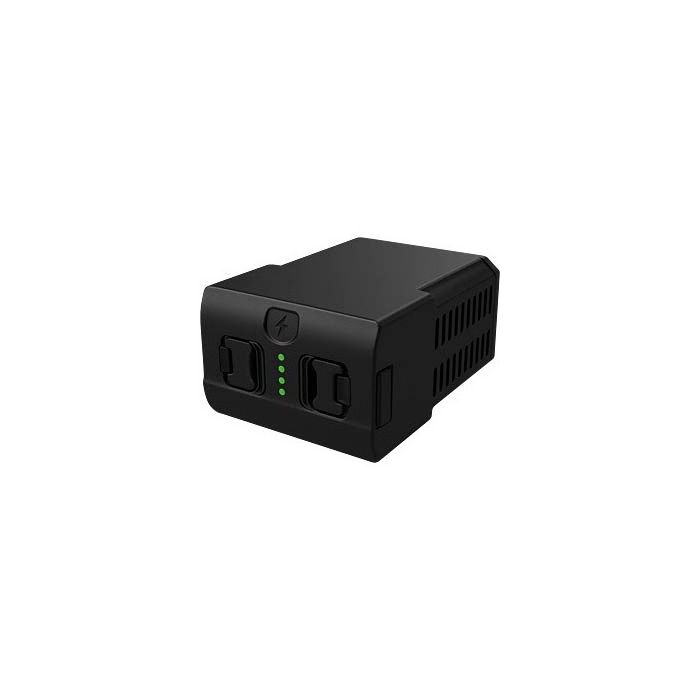
In stock
- BRAND:
- UNITREE ROBOTICS
- PART #:
- R1 Battery
- ORIGIN:
- China
- AVAILABILITY:
- SUBJECT TO AVAILABILITY
- SKU:
- Unitree-R1-Battery
Unitree R1 Battery
Every humanoid demonstration has a moment nobody films: the pause while the robot waits for power. On a research bench that pause costs an afternoon. At a trade fair or in a lecture theatre it can cost the audience. The Unitree R1 Battery is the pack that closes that gap for the R1 robot. It is the dedicated energy source Unitree designed for the platform, governed by the company's own Battery Management System and enclosed in a casing intended to withstand the knocks that come with handling a walking machine. With a second pack charged and waiting, a battery change becomes a routine step rather than the end of the session.
Robots Europa, based in Dublin, sells the Unitree R1 Battery to universities, research institutes, schools, system integrators and companies across the European Union and the DACH region. Each order is quoted individually. Robots Europa then arranges delivery to your site and remains your point of contact for questions about the pack once it has arrived, whether you are ordering a first spare for a single R1 or equipping several robots for a teaching or exhibition programme.
Background
Unitree Robotics and its move into humanoids
Unitree Robotics, headquartered in Hangzhou, China, built its reputation on quadruped robots before extending its range to humanoid platforms such as the H1, G1 and R1. Across these families the company develops many core components itself, including actuators, control electronics and power systems, rather than relying entirely on third-party parts. Its batteries reflect that approach. Each robot family has its own dedicated pack, designed around that platform's electrical architecture and mechanical layout, so buyers should always order the pack named for the robot they operate. For the R1, that pack is the one described on this page.
A pack built around Unitree's own BMS
The R1 Battery uses next-generation battery technology, managed by Unitree's proprietary advanced Battery Management System (BMS) to deliver powerful electricity to the R1 robot. In any modern rechargeable pack, the BMS is the supervising electronics: it monitors how the cells behave, keeps them in balance during charging and steps in when conditions leave safe limits. On the R1 pack, this system underpins seven levels of safety, covering battery load detection, balanced charge, overcharge, charging temperature, charging current, short circuit and over-discharge protection. Around the cells sits an ultra-high-strength engineering plastic casing that protects them from impact in the event of an accidental drop, a practical consideration for a component that is lifted in and out of a robot many times over its working life.
Technical Specifications
| Specification | Value |
|---|---|
| Intended robot | Unitree R1 |
| Rated voltage | 33.12V |
| Capacity | 6000mAh, 199Wh |
| Rated capacity | 5.5A |
| Size | 93.9mm * 90.3mm * 159mm |
| Battery management | Unitree proprietary advanced Battery Management System (BMS) |
| Safety protections | 7 levels: battery load detection, balanced charge, overcharge, charging temperature, charging current, short circuit, over-discharge |
| Casing | Ultra-high-strength engineering plastic, protecting the cells from impact in accidental drops |
Specifications are as published by the manufacturer and are confirmed against the datasheet at quotation.
Unitree has not published the weight, the cell chemistry, the charge time, the runtime per charge, the operating temperature range, the cycle life, the connector type or whether a charger is included; Robots Europa confirms these points at quotation.
What do the seven levels of protection on the Unitree R1 Battery cover?
The seven protections divide into two groups: those that guard the pack while it is being charged, and those that guard it while it is powering the robot. On the charging side, balanced charge keeps the individual cells at matching levels so that no single cell is pushed harder than the rest. Overcharge protection stops charging once the pack is full. Charging temperature protection prevents charging when the cells are outside a safe thermal window, and charging current protection limits how much current flows in. Together these address the conditions under which rechargeable packs are most commonly stressed.
On the discharge side, battery load detection allows the BMS to recognise the demand the robot is placing on the pack. Short-circuit protection cuts the output if a fault creates an unintended path for current, and over-discharge protection prevents the cells from being drained below the level at which they can be harmed. For a humanoid, whose motors can draw sharply varying loads as it stands, walks and recovers its balance, supervision of this kind matters. For an operator, it means the pack itself contributes to safe handling rather than relying solely on user discipline.
The casing adds a mechanical layer to this electronic protection. Batteries are carried between charging stations and robots, set down on benches and occasionally dropped. Unitree's ultra-high-strength engineering plastic shell is intended to shield the cells from impact in exactly those moments.
Why keep a spare Unitree R1 Battery?
A humanoid robot is only as available as its power supply. When a single pack is in use, every recharge takes the robot out of service, and sessions have to be planned around the charger rather than around the work. A second Unitree R1 Battery changes that arithmetic: one pack powers the robot while the other charges, and the swap takes place at a natural break in the schedule.
This matters most in settings where time with the robot is shared or limited. In a university laboratory, several research groups may book the same R1 across a day. In a school or training centre, a lesson cannot wait for a recharge. At an exhibition stand, the robot needs to keep performing through opening hours. In each case the spare pack is less an accessory than a way of protecting the time already invested in the platform. It also provides continuity if a pack has to be taken out of rotation for inspection, so the robot is not grounded while that happens.
Robots Europa discusses your expected usage pattern at quotation so that you can decide how many packs your programme realistically needs.
Who is the Unitree R1 Battery for?
The pack is intended for organisations that already operate, or are about to receive, a Unitree R1 robot. Research laboratories working on locomotion, manipulation or human–robot interaction are an obvious group: their experiments benefit from uninterrupted run time and from a battery with documented protection features. Universities and schools using the R1 for teaching form a second group, where several cohorts may use one robot in a single day and a ready spare keeps lessons on schedule.
System integrators and solution providers who build demonstrations or pilot projects around the R1 are a third segment. For them, a spare pack is part of a dependable deployment, and a replacement held in reserve reduces the risk of a stalled installation. Event organisers, museums and companies that present the R1 at fairs and showrooms make up a fourth, where the robot's visible uptime is the whole point of the exercise.
Buyers who operate other Unitree humanoids need the pack designed for their platform. Owners of a G1 should look at the Unitree G1 Rechargable Lithium-ion Battery (BT2-36), while H2 operators will find the Unitree H2 Battery — Single Unit and the matching Unitree H2 Battery Charger. The full range of packs is gathered in the Batteries category, and further parts for humanoid platforms are listed under Humanoid Accessories.
What is the Unitree R1 Battery used for?
- Hot-swapping in the lab: one pack powers the R1 while a second charges, keeping experiments running across a full day.
- Replacing a worn pack: restoring the robot's power supply with the pack Unitree designed for the R1.
- Teaching sessions: keeping a classroom R1 available for consecutive groups without waiting for a recharge.
- Exhibitions and showrooms: sustaining demonstrations through opening hours with a charged spare on hand.
- Integration and pilot projects: giving integrators a reserve pack so that on-site testing is not halted by power.
- Fleet operation: equipping several R1 robots with enough packs to rotate charging and keep units in service.
Pricing and Availability
Robots Europa supplies the Unitree R1 Battery on a quotation basis, so the offer reflects the quantity you need and your delivery location within the EU or the DACH region. When you request a quotation, please let us know how many R1 robots you operate and how you use them; this helps us tailor the offer to your programme. Delivery, customs and support are arranged together with the quotation. The quotation request for the Unitree R1 Battery is available on this page.
Frequently Asked Questions
Which robot does the Unitree R1 Battery power?
The pack is designed to deliver power to the Unitree R1 robot. Operators of other Unitree humanoids should choose the battery made for their own platform.
What are the rated voltage and capacity?
The rated voltage is 33.12V and the capacity is 6000mAh, which corresponds to 199Wh. The rated capacity figure is given as 5.5A.
How large is the pack?
The battery measures 93.9mm * 90.3mm * 159mm.
What safety protections does it include?
Unitree's proprietary BMS provides seven levels of safety: battery load detection, balanced charge, overcharge, charging temperature, charging current, short circuit and over-discharge protection.
Will the battery survive being dropped?
The cells are enclosed in an ultra-high-strength engineering plastic casing that protects them from impact in the event of an accidental drop. As with any battery, careful handling is still advisable.
Why should I keep more than one pack?
With a second pack, one battery powers the R1 while the other charges, so the robot stays in service through lab sessions, lessons and demonstrations. Robots Europa can help you work out how many packs suit your schedule.
Where can I buy the Unitree R1 Battery and what does it cost?
You can buy the Unitree R1 Battery from Robots Europa, which supplies customers across the EU and the DACH region. The cost depends on quantity and delivery details, so it is provided in an individual quotation that you can request on this page.
Summary
The pause while a robot waits for power is the least visible part of operating a humanoid, yet it shapes how much useful work the robot actually does. The Unitree R1 Battery addresses that pause directly: a dedicated 33.12V, 199Wh pack for the R1, supervised by Unitree's own Battery Management System with seven levels of protection and housed in an impact-resistant engineering plastic case. Held as a spare, it lets laboratories, classrooms, integrators and exhibitors keep their R1 working while the other pack charges. Robots Europa quotes, delivers and supports the pack across the EU and the DACH region. For anyone who wants their R1 to spend less time waiting and more time working, this page is the starting point.


