
Kepler Robotics K1 Humanoid Robot
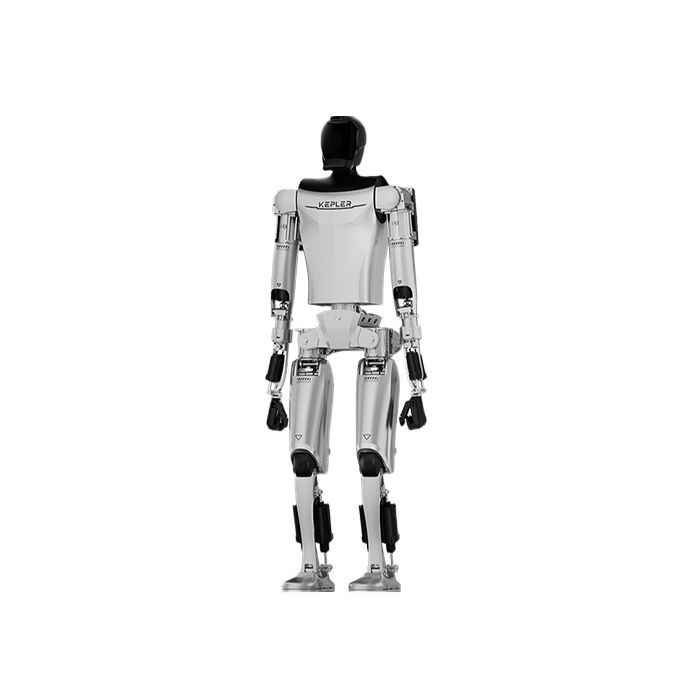
Out of stock
- BRAND:
- KEPLER
- MODEL:
- K1
- ORIGIN:
- China
- AVAILABILITY:
- SUBJECT TO AVAILABILITY
- SKU:
- Kepler-Robotics-K1
Kepler Robotics K1 Humanoid Robot
Most automation projects begin by changing the building: conveyors are bolted down, cells are fenced off, shelving is rearranged around a machine that cannot adapt. The Kepler Robotics K1 Humanoid Robot starts from the opposite premise. It stands 178 cm tall and weighs 85 kg, close to the proportions of the people who already work in a factory hall or a warehouse aisle, and it is built to fit into spaces designed for them rather than to demand new ones. With a 40 DoF body, hands offering 12 degrees of freedom each and an 8-hour battery endurance, the K1 is Kepler's answer to a question many operations managers now ask: can a robot take on human work without the site being rebuilt around it?
Robots Europa, based in Dublin, supplies the Kepler Robotics K1 Humanoid Robot to customers across the European Union and the DACH region. We prepare quotations for industrial, logistics, educational and research buyers, coordinate delivery to your site, and remain your point of contact for support after the robot arrives. Every enquiry is handled individually, so that the configuration, documentation and import arrangements match your organisation and the country in which the robot will operate.
Background
Kepler and the Forerunner lineage
Kepler is a robotics company based in Shanghai, and the K1 is the product of three years of intensive research and four product iterations. It was launched in November 2023 under the Forerunner name; the original Forerunner is now called the K1. The Forerunner series comprises three distinct models, the K1, S1 and D1, and the K1 is the model that set out the platform's core ideas: proprietary AI at its centre, human-like hands packed with sensors for grasping objects, and an in-house approach to the actuators that move the body. Kepler has since continued the line with a later K2 generation, which buyers can compare on its own pages.
The company's decision to develop key components itself is worth noting. Rather than assembling a humanoid from off-the-shelf drives, Kepler designed roller-screw actuators for the arms and legs and custom rotary actuators for the waist and shoulder joints. For a buyer, this means the motion system is a matter of the manufacturer's own engineering, which is a relevant point when planning maintenance and spare parts.
Positioning: a general-purpose worker with a split intelligence
The K1 is positioned as a general-purpose humanoid for manufacturing, logistics, education, research and inspection tasks. Its key technology is the NEBULA system, into which Kepler integrates a motherboard with a processor delivering 100 TOPS of computing performance. This enables four primary functions: visual recognition, visual SLAM (Simultaneous Localisation and Mapping), multimodal interaction and hand-eye coordination.
Kepler pairs that on-board computing with a two-tier AI arrangement. A cloud-based multimodal large model provides broad reasoning and interaction capability, while a smaller, industry-specific model runs on the robot itself for quicker response times. The design acknowledges a practical tension in humanoid robotics: the most capable models are too large to run locally, yet a robot handling objects next to people cannot wait on a network round trip for every decision.
Technical Specifications
| Specification | Value |
|---|---|
| Manufacturer | Kepler (Shanghai) |
| Series | Forerunner (models K1, S1 and D1) |
| Launch | November 2023 |
| Height | 178 cm (5 ft 10 in) |
| Weight | 85 kg (187 lb) |
| Body degrees of freedom | 40 DoF |
| Hand degrees of freedom | 12 degrees of freedom |
| Arm and leg actuators | In-house roller-screw actuators; linear actuators for the legs |
| Waist and shoulder actuators | Custom rotary actuators |
| Computing performance | 100 TOPS, integrated into the NEBULA system |
| Primary functions | Visual recognition, visual SLAM, multimodal interaction, hand-eye coordination |
| AI models | Cloud-based multimodal large model plus a smaller industry-specific model on the robot |
| Total payload | Up to 25 kg (55 lb) |
| Battery endurance | 8 hours |
| Development | Three years of research, four product iterations |
Specifications are as published by the manufacturer and are confirmed against the datasheet at quotation.
Kepler has not published the battery capacity, walking speed, charging time, IP rating, operating temperature range, connectivity, included accessories, software SDK, camera and sensor models or operating system for the K1; Robots Europa confirms these details with the quotation.
How does the K1 balance on-board and cloud intelligence?
A humanoid that only reasons in the cloud is fluent but slow; one that only reasons locally is quick but narrow. The K1 addresses this by dividing the work. The smaller industry-specific model deployed on the robot handles the decisions that must happen at once, such as reacting to what the cameras see while the hands close around an object. The cloud-based multimodal large model supplies the broader understanding needed for interaction and for interpreting less structured situations.
The 100 TOPS processor in the NEBULA system is what makes the local half of this arrangement practical. Visual SLAM lets the robot build and update a map of its surroundings while it moves, visual recognition identifies what is in front of it, and hand-eye coordination links the two so that a detected item can be reached and gripped. Multimodal interaction completes the picture, allowing the robot to respond to people working alongside it. For a site considering the K1, the practical question to raise is how the cloud component will be connected and governed within your own IT and data-protection policies.
What does the K1's actuator design mean for real handling work?
Payload and endurance are the two figures that decide whether a humanoid can do a shift's worth of useful work. The K1 handles total payloads of up to 25 kg (55 lb) and offers 8-hour battery endurance, which places it within reach of the repetitive carrying, picking and placing tasks that fill much of a working day in logistics and manufacturing.
Those figures follow from the mechanical choices. Roller-screw actuators are a linear drive technology, and Kepler uses them in the arms and legs, with linear actuators driving the legs in particular. The waist and shoulder joints, which need rotation rather than extension, use custom rotary actuators. Combined with a 40 DoF body and hands with 12 degrees of freedom, this gives the K1 both the strength to carry a load and the articulation to adjust its posture and grip around awkward shapes. The sensor-packed hands are meant for grasping objects in the way a person would, which matters wherever items arrive in varied sizes rather than in uniform totes.
Who is the Kepler Robotics K1 Humanoid Robot for?
Manufacturers exploring humanoid automation are an obvious audience. Production lines and assembly areas are full of tasks sized for human reach and human strength, and a robot of human proportions can be trialled at an existing workstation rather than in a purpose-built cell. Logistics and warehousing operators form a second group: the K1's payload and endurance figures speak directly to the movement of goods between shelves, carts and stations.
Universities, research institutes and corporate innovation teams are a third segment. Kepler names education and research among the K1's intended applications, and a full-size humanoid with a substantial on-board computer and a cloud-plus-edge AI architecture is a useful platform for work on perception, manipulation and human-robot interaction. Organisations responsible for inspection tasks, finally, may value a robot that can walk routes designed for people and observe equipment with its vision system.
Buyers who want to compare the K1 with Kepler's later generation can review the Kepler K2 Hornet Humanoid Robot and, where a wheeled base suits the site better than legs, the Kepler K2 Hornet Wheeled Humanoid Robot. A wider overview of comparable platforms is available in our Bipedal Humanoids and Humanoids categories.
What is the Kepler Robotics K1 Humanoid Robot used for?
- Manufacturing support — handling parts and components at workstations laid out for human operators.
- Logistics and material handling — carrying loads between shelves, carts and stations within its rated payload.
- Inspection rounds — walking facility routes and using visual recognition to observe equipment and surroundings.
- Research in embodied AI — studying perception, visual SLAM and manipulation on a full-size humanoid platform.
- Education and training — giving students and engineers hands-on experience with a modern humanoid architecture.
- Human-robot interaction studies — exploring multimodal interaction between the robot and the people who work beside it.
Pricing and Availability
Robots Europa supplies the Kepler Robotics K1 Humanoid Robot on a quotation basis, because the right offer depends on your application, your site and the documentation your organisation requires. Delivery, customs and support are arranged with the quotation, so that the offer you receive covers the robot's route to your premises and the assistance you will need once it is in service. To begin, tell us about your intended use and location, and our team in Dublin will respond with a tailored proposal; the quotation request form is available on this page.
Frequently Asked Questions
How tall and how heavy is the K1?
The K1 stands 178 cm (5 ft 10 in) tall and weighs 85 kg (187 lb). These proportions are close to those of an adult worker, which helps it operate in spaces designed for people.
How much can the K1 carry?
The K1 works with total payloads of up to 25 kg (55 lb). Its sensor-packed, human-like hands are designed for grasping objects.
How long does the battery last?
The K1 offers 8-hour battery endurance. That figure is the key one when planning shift-length handling tasks.
What computing power does the K1 have?
The K1 integrates a processor delivering 100 TOPS of computing performance into Kepler's NEBULA system. This supports visual recognition, visual SLAM, multimodal interaction and hand-eye coordination.
Does the K1 depend on a cloud connection?
Kepler combines a cloud-based multimodal large model with a smaller industry-specific model running on the robot. The on-robot model provides quicker response times, while the cloud model adds broader multimodal capability.
How is the K1 related to the S1 and D1?
The K1, S1 and D1 are the three models of Kepler's Forerunner series, and the K1 is the original Forerunner. Robots Europa can advise on the differences between the models when you request a quotation.
Where can I buy the Kepler Robotics K1 Humanoid Robot and what does it cost?
You can buy the K1 from Robots Europa, which supplies customers across the EU and the DACH region from Dublin. Pricing is provided by individual quotation, prepared to reflect your application, delivery location and support requirements.
Summary
The K1 reverses the usual logic of automation: instead of reshaping the workplace around a machine, it brings a machine shaped like a person into the workplace as it already stands. Kepler supports that idea with substance — a 40 DoF body, dexterous hands, in-house roller-screw and rotary actuators, a payload of up to 25 kg and 8-hour battery endurance, all guided by 100 TOPS of on-board computing and a split between cloud and on-robot AI. For manufacturers, logistics operators, inspection teams and research groups in Europe who want to test whether a humanoid can take on human-sized work, Robots Europa provides the quotation, delivery and support, and this page is the starting point.


