
BWSENSING Cost-Effective Single-Axis CAN Output Inclinometer (BWM415)
In stock
- BRAND:
- BWSENSING
- PART #:
- BWM415
- ORIGIN:
- China
- AVAILABILITY:
- SUBJECT TO AVAILABILITY
- SKU:
- BWSENSING-BWM415
BWSENSING Cost-Effective Single-Axis CAN Output Inclinometer (BWM415)
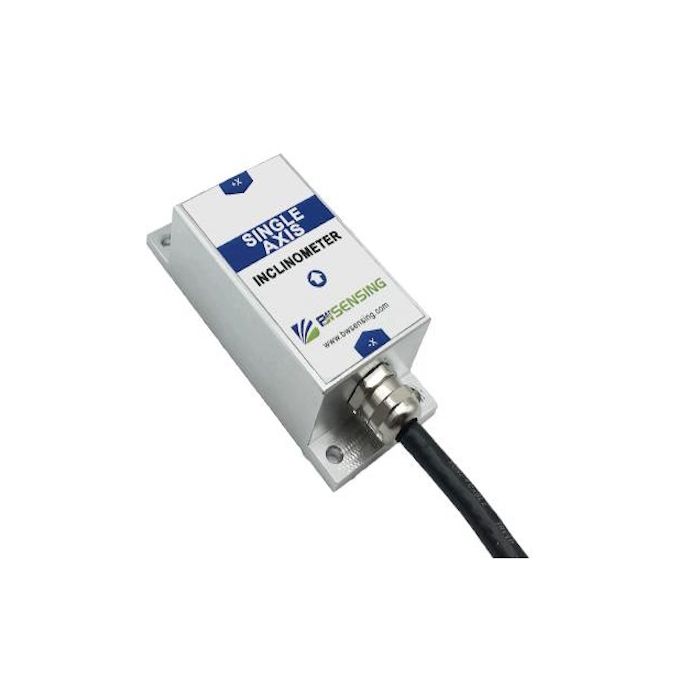
Below ground, a drilling crew cannot look at the tool they are steering. The bore head travels through soil and rock out of sight, and the only honest account of its attitude comes from the sensors riding with it. That is the job the BWSENSING Cost-Effective Single-Axis CAN Output Inclinometer (BWM415) is built for: a sealed, compact tilt sensor that reports a single inclination angle over a CAN network, and one that is especially suitable for underground trenchless machines. Where a surface crew depends on an angle they cannot verify by eye, the quality of that angle decides the quality of the bore.
Robots Europa, based in Dublin, supplies the BWM415 to machine builders, integrators and contractors throughout the European Union and the DACH region. We prepare each quotation, coordinate delivery to your site or workshop and provide technical support during integration and in service, so that one partner remains responsible for the sensor from the first enquiry onwards.
Background
BWSENSING and its cost-effective inclinometer range
BWSENSING offers a family of inclinometers under its cost-effective label, and the BWM415 sits within that family as its single-axis model with CAN output. Alongside it, the range includes single-axis and dual-axis variants with other digital interfaces, among them Modbus. This structure matters to buyers: rather than adapting one generic sensor to every project, an integrator can select the axis count and the communication interface that suit the machine, and keep a consistent supplier and form of documentation across a fleet. The whole range can be explored in our BWSensing collection.
Positioning: a networked tilt sensor for rugged machinery
Inclinometers measure angle relative to gravity, and they are used wherever a machine, structure or tool must hold, reach or report a particular attitude. The BWM415 is positioned at the rugged end of that field. Its IP67 protection level, its metal joint connector and its impact resistance figure point to installations that are wet, dusty and subject to shock, while its CAN output places it naturally on the vehicle and machine networks used across mobile and construction equipment. The full measuring range of ±180° means the sensor reports the angle through a complete rotation about its axis, rather than only a narrow band either side of level.
Technical Specifications
| Specification | Value |
|---|---|
| Axes | Single axis inclination measurement |
| Range | ±180° |
| Highest accuracy | 0.01° |
| Resolution | 0.001° |
| Zero bias (°/℃, -40~85℃) | ±0.008 |
| Output | CAN |
| Output frequency | 5-100Hz adjustable, up to 100 |
| Start-up time | <3s |
| Power supply | 9-36V |
| Protection level | IP67 |
| Impact resistance | 2000g,0.5ms,3 times/axis |
| Insulation resistance | ≥100 MΩ |
| MTBF | ≥90000h |
| Connector and cable | Metal Joint(Cable 1.5m) |
| Dimensions | L90*W40.5*H26(mm) |
Specifications are as published by the manufacturer and are confirmed against the datasheet at quotation.
The manufacturer has not published the weight, the frequency response, the contents of the box, the cable wiring colours or the available baud rate options; we confirm these with you at quotation.
Why does CAN output matter for an inclinometer?
An angle reading is only useful once it reaches the controller that acts on it, and the route it takes shapes the whole integration. CAN was conceived for machines: it is a differential, multi-node bus, which means several devices share one pair of signal lines and the controller addresses each of them in turn. For a machine builder this generally means fewer cable runs, a cleaner harness and a sensor that can sit alongside engine, hydraulic and operator-display electronics on an existing network.
The BWM415 adds two practical details to that picture. Its output frequency is adjustable from 5 to 100Hz, so an integrator can choose a slow update rate to keep bus traffic light on a busy network, or raise it to 100Hz where the control loop needs fresher data. And its 9-36V power supply range covers the supply voltages commonly found on machinery, which simplifies wiring on both lighter and heavier equipment. Together with a start-up time of under three seconds, these details let the sensor join a machine network with little ceremony.
How does the BWM415 compare with the BWM417?
Within the same cost-effective family, the BWSENSING Cost-Effective Single-Axis Digital Output With Modbus Inclinometer (BWM417) is the closest relative: also a single-axis sensor, but with a Modbus digital output. The choice between them is therefore mainly a question of interface. Where the host system is a CAN-based machine controller, as is usual on mobile and construction equipment, the BWM415 fits directly. Where the sensor reports to a PLC or a monitoring system built around Modbus, the BWM417 is the more natural candidate. Its datasheet is available from us on request if you are weighing the two side by side.
Who is the BWM415 for?
The first audience is clear from the sensor's intended application: builders and operators of underground trenchless machines, for whom a robust, networked angle reading is part of steering and recording the bore. Contractors retrofitting or maintaining such equipment belong to the same group, since a sealed sensor with a metal joint connector and a defined start-up time of under three seconds suits machinery that is powered up and down repeatedly on site.
A second audience is the wider community of OEMs and system integrators building CAN-networked machinery that needs one axis of tilt feedback: boom and mast angle, chassis pitch or tool attitude. For these engineers the adjustable output frequency, the wide supply range and the reliability figures, including an MTBF of at least 90000h, are the practical selection criteria.
Buyers who need to measure tilt in two directions at once should look instead at the dual-axis models in the range, such as the BWSENSING Cost-Effective Dual-Axis Inclinometer (BWM427) or the BWSENSING Cost-Effective Dual-Axis Digital Output With Modbus Inclinometer (BWN427). Our broader Sensors category covers further sensing options for robotic and automated systems.
What is the BWM415 used for?
- Trenchless drilling machines: the application the sensor is especially suited to, where the angle of the machine or tool must be known underground.
- Bore path recording: logging inclination along a bore to document the installed route for the asset owner.
- Machine set-up and alignment: checking the attitude of a drill rig or frame before work begins.
- Boom and mast angle feedback: reporting the angle of a moving arm to a CAN-based machine controller.
- Chassis pitch monitoring: giving mobile machinery a warning signal when it approaches an unsafe slope.
- Fleet standardisation: fitting one networked tilt sensor type across several CAN-equipped machines to simplify spares and service.
Pricing and Availability
Robots Europa supplies the BWM415 on quotation, so that the sensor, its configuration and the paperwork match your project from the outset. Please tell us about your application, the quantity required and your CAN network details, and we will prepare an offer to suit. Delivery, customs and support are arranged together with your quotation. To begin, use the quotation request available on this page.
Frequently Asked Questions
How many axes does the BWM415 measure?
The BWM415 measures inclination about a single axis. For two-axis measurement, the dual-axis models in the BWSENSING cost-effective range are the appropriate choice.
What accuracy and resolution does it offer?
The highest accuracy is 0.01° and the resolution is 0.001°, across a measuring range of ±180°.
Is the BWM415 suitable for wet or dusty sites?
Yes, it carries an IP67 protection level and is fitted with a metal joint connector with a 1.5m cable.
What supply voltage does it need?
The sensor operates from a power supply of 9-36V.
How quickly does it deliver data?
Start-up time is under three seconds, and the output frequency is adjustable from 5 to 100Hz.
How robust is the BWM415?
It withstands impacts of 2000g,0.5ms,3 times/axis, has an insulation resistance of at least 100 MΩ and an MTBF of at least 90000h.
Where can I buy the BWSENSING BWM415 and what does it cost?
You can buy the BWM415 from Robots Europa, which supplies customers across the EU and the DACH region. Prices are given on quotation, prepared to your quantity and delivery requirements.
Summary
When the tool is out of sight, the angle on the screen is the whole story, and the BWM415 is designed to tell it reliably. It combines a full ±180° range, a resolution of 0.001° and a highest accuracy of 0.01° with IP67 sealing, a 9-36V supply range and a CAN output that slots into machine networks, all in a housing of L90*W40.5*H26(mm). For trenchless contractors and builders of CAN-equipped machinery who need one dependable axis of tilt feedback, with Robots Europa handling quotation, delivery and support, this page is the starting point.


