
Humanoid Robots
Humanoid robots have crossed from demonstration to deployment, with more than 13,000 units shipped worldwide in 2025, mass production lines running at UBTECH and AgiBot, Walker S2 humanoids working inside Airbus aviation manufacturing and EU certified platforms arriving in Europe, across a market spanning full size and compact bipeds, wheeled industrial humanoids, dual arm platforms and hyper bionic machines from Unitree, AgiBot, UBTECH, EngineAI, Booster and Noetix.
Humanoid Robots
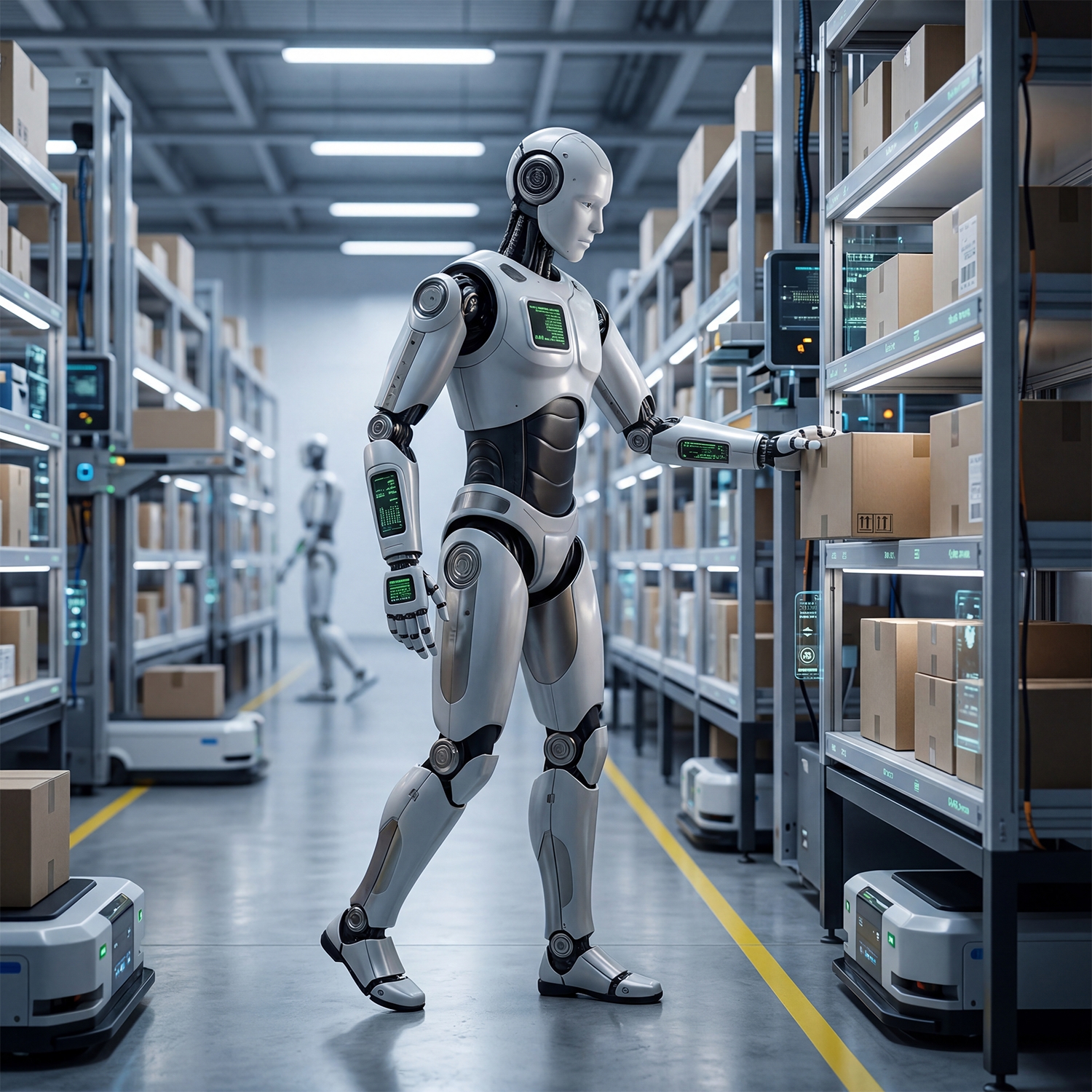
The question about humanoid robots changed in a single year. Through 2025, global shipments reached roughly 13,000 units, the two volume leaders alone exceeded 10,000 between them, UBTECH's Walker S2 entered true mass production and rolled its thousandth unit off the line by December, and by January 2026 humanoids were working inside Airbus aviation manufacturing under a formal service agreement, European aerospace, staffed in part by machines. The question is no longer whether humanoids will work; it is which one suits the job, and this category exists to answer it across every form the market now offers.
The market's structure favours the buyer who understands its map. Chinese manufacturers accounted for approximately 90 per cent of 2025's shipments, led by AgiBot, first worldwide per Omdia at 5,168 units and past 15,000 cumulative robots by mid 2026, and Unitree, whose July 2026 STAR Market listing approval crowned the field's deepest ecosystem, with UBTECH's industrial order book approaching 1.4 billion yuan behind them. For Europe specifically, the era's markers have arrived: EU certification on AgiBot's flagship A2, the Airbus deployment, and distribution, through Robots Europa, that brings the whole landscape within a single quotation.
Spanning bipedal, wheeled, upper body and bionic forms, the full range of humanoid robots for sale can be explored through this page.
Background
The year humanoids industrialised
The 2025 to 2026 inflection will be studied for decades: UBTECH converting a decade of Walker development into a Liuzhou production ramp targeting 5,000 units in 2026 and 10,000 in 2027, with autonomous three minute battery swaps solving industrial uptime; AgiBot compressing founding to five figure production into three years, setting a Guinness record with a 106 kilometre autonomous walk; Unitree collapsing entry prices until schools and households joined the customer base; and the capital markets ratifying all of it through listings and order books. Demonstrations became deliveries, and the category's literature moved from laboratories to procurement departments.
Why the form factors multiplied
The market's answer to real work was diversification: full size bipeds where human presence and human spaces define the job, compact bipeds where affordability and safety open education and research, wheeled humanoids where flat industrial floors reward trading legs for stability and endurance, legless dual arm platforms where the job is purely manipulation, and hyper bionic machines where lifelike presence is itself the product, one question, which constraints matter, generating five families of answers.
The Humanoid Landscape
Full Size Bipedal Humanoids
The category's flagships stand at human scale: Unitree's H2 family, 1.82 metres of record lineage with the first bionic face from a volume maker; the UBTECH Walker series, whose S2 defines industrial humanoid deployment from automotive plants to Airbus; AgiBot's EU certified Yuanzheng A2 and ten hour A3; and EngineAI's naturally gaited bipeds, the machines for work built around the human body.
Compact and Entry Bipeds
Beneath them, the accessible tier that built the field's talent base: Unitree's G1, the most common research humanoid on earth, and its entry R1; AgiBot's bicycle riding Lingxi X2 family with its modular X2 Edu; Booster Robotics' athletic K1 class platforms and Noetix's charismatic compact machines, the tier where classrooms, laboratories and first deployments begin.
Wheeled Industrial Humanoids
The format winning factory mathematics: wheeled humanoids trade stairs nobody needed for stability, payload and shift endurance, led by Unitree's H2-D with dual 7 kilogram arms and floor to 2 metre reach, AgiBot's sub millimetre Jingling G2 with 2,070 TFLOPS of onboard computing, the six hour G1-D data platform and UBTECH's wheeled service veterans, the tier European manufacturers are specifying first.
Upper Body and Dual Arm Platforms
Where the mission is purely hands: upper body humanoids from Unitree's R1-D family, benchtop dual arms from roughly 11 kilograms with ±0.1 millimetre precision, to station scale manipulation platforms, the tier that made two armed robotics a classroom and data economy commodity.
Hyper Bionic and Presence Machines
The frontier where the robot's humanity is the specification: bionic humanoids led by UWORLD's U1 series, launched June 2026 as the first full size hyper bionic humanoids built for mass production, more than 13,000 orders on launch day, alongside expressive faced flagships, the tier for brand, cultural and experience deployments.
The Makers at a Glance
| Manufacturer | Signature Platforms | Scale Proof |
|---|---|---|
| AgiBot | Yuanzheng A2/A3, Lingxi X2, Jingling G2 | No.1 in 2025 shipments; 15,000th unit June 2026; A2 EU certified |
| Unitree | R1, G1, H1, H2 families | ~5,000 humanoids in 2025; largest ecosystem; STAR Market IPO approved |
| UBTECH | Walker S2/C/X, Cruzr, U1 partnership | 1,000+ S2 built; ~¥1.4bn order book; Airbus agreement |
| EngineAI | SE01, T800 class bipeds | The field's most natural walking gait |
| Booster Robotics | K1 class athletes | Competition proven compact platforms |
| Noetix | N2 Athlete, BUMI | Accessible expressive humanoids |
| UWORLD | U1 hyper bionic series | 13,000+ launch day orders, June 2026 |
Figures follow published reporting and manufacturer disclosures; configurations are confirmed at quotation.
Which humanoid robot suits which buyer?
The decision tree runs on constraints. European manufacturers wanting certified, deployable labour look first to the EU certified AgiBot A2, the Airbus proven Walker S2 and the wheeled industrial tier of H2-D and G2 class machines across industrial and warehouse missions. Research programmes standardise on the G1 and its EDU peers; education begins at the R1, X2 Edu and compact tier across educational robotics. Customer facing venues weigh presence: full size bionic faced flagships for commercial and hotel floors, hyper bionic U1 machines where lifelike is the brief, compact performers for exhibition work. Pure manipulation buys the dual arm tier, and every path can be quoted as robot plus software, with mission systems from the robot software catalogue completing the deployment.
Technology
The shared mechanical revolution
Beneath every brand runs the same enabling advance: high torque density electric joint actuators, increasingly self manufactured, driven by reinforcement learning trained whole body control developed in simulation and transferred to hardware, the pipeline that produced backflips, kung fu, 3.3 metre per second sprints and, more importantly, the shove recovery and fall tolerance real deployment demands, improving fleet wide through over the air updates.
The intelligence layer arriving
The era's software is converging on embodied foundation models: vision language action systems, AgiBot's benchmark leading GO-1, Unitree's open sourced UnifoLM-VLA-0, NVIDIA's Isaac GR00T programme with the H2 Plus as first reference humanoid, trained on demonstration data now harvested industrially, the data economy in which many humanoids earn their keep twice, working and teaching simultaneously.
Hands, power and the deployment stack
The supporting frontiers decide working value: dexterous hands from tactile three finger units to visuotactile five finger designs across the robot hands ecosystem, power architectures from quick swap packs to UBTECH's three minute autonomous exchange, and turnkey deployment platforms, BrainNet, app stores, RaaS fleets, that deliver capability rather than integration projects.
What are humanoid robots used for?
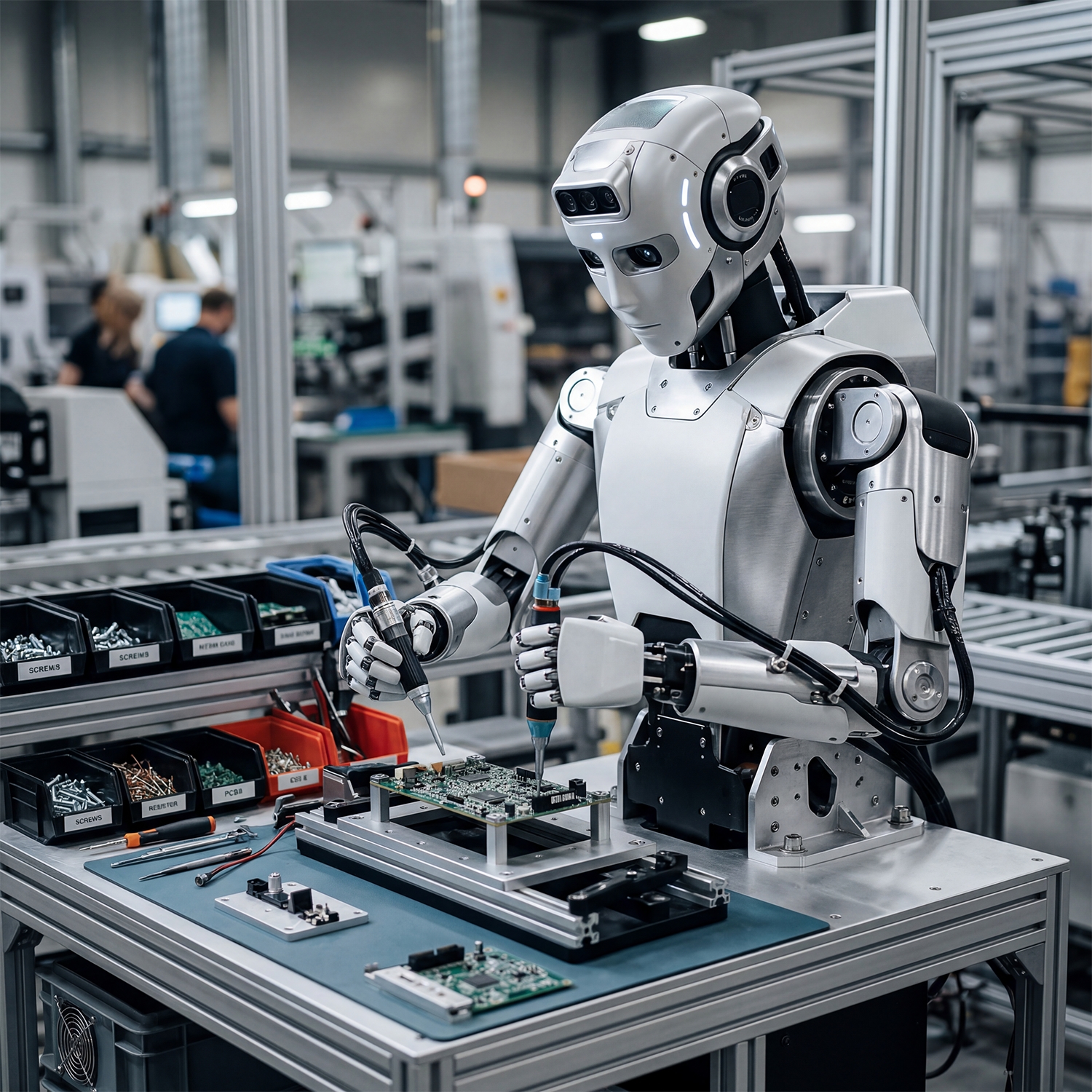
- Industrial manufacturing: assembly, tending and material work from automotive plants to Airbus aviation lines across industrial robotics.
- Warehouse and logistics operations: sorting, tote and station missions across the warehouse humanoid frontier.
- Research and embodied AI: the G1 to H2 EDU tiers as the default hardware of research robotics worldwide.
- Education: entry and modular platforms training the field's next generation across educational robotics.
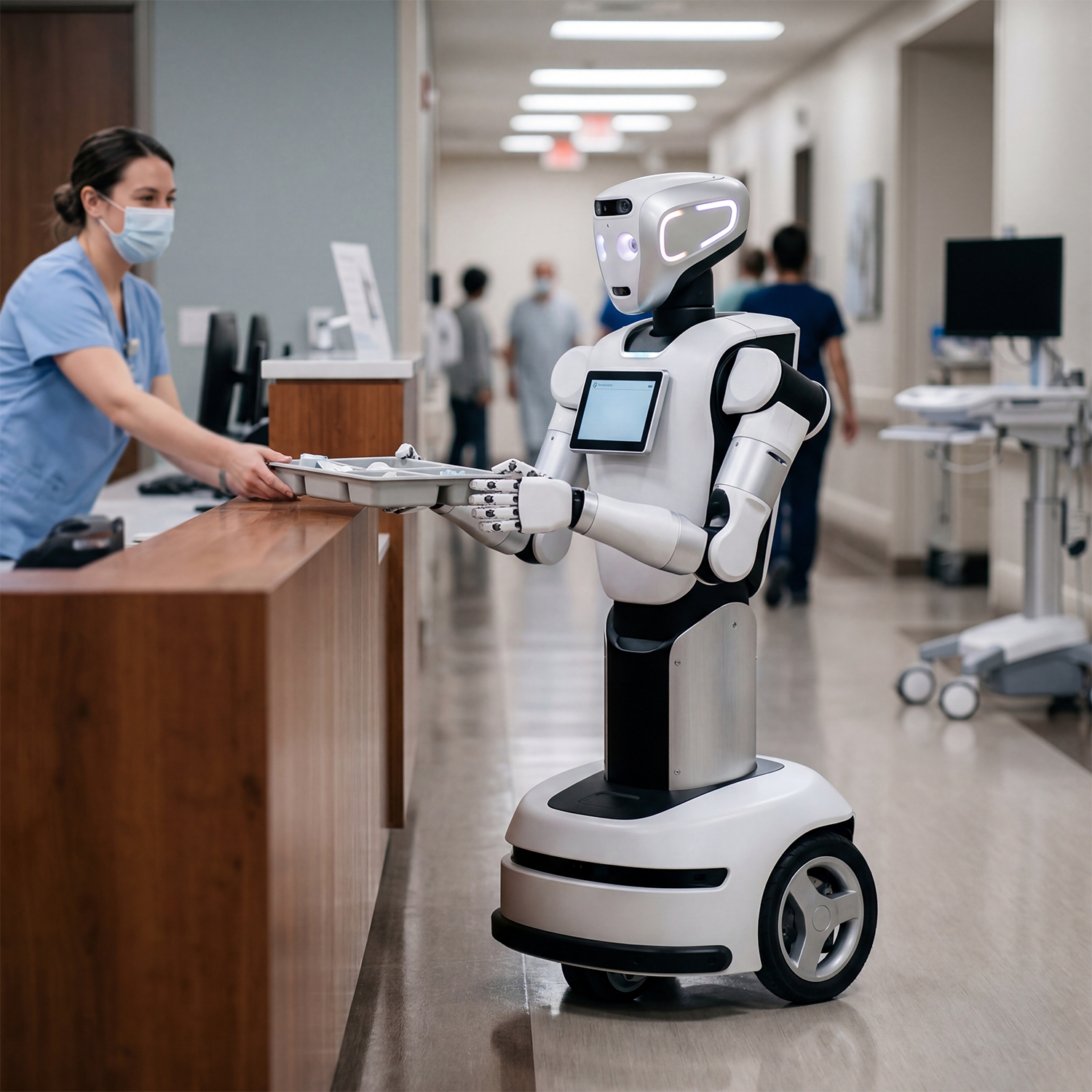
- Commercial service and reception: bionic faced and service humanoids across commercial and hospitality floors.
- Events, entertainment and sport: performing, presenting and competing machines across exhibition and entertainment bookings.
- Data collection: teleoperated demonstration capture feeding the imitation learning economy on every tier.
- Brand and cultural experiences: hyper bionic presence machines where the encounter itself is the deliverable.
Pricing and Availability
Humanoid robots are available for purchase across Europe and worldwide at every tier, from entry compact bipeds to certified industrial fleets, with the complete landscape browsable through the brand and category pages on Robots Europa. Humanoid robot price and cost vary enormously by manufacturer, form factor, size and configuration, so buyers seeking humanoid robots for sale should request a current quotation for their requirements, with European delivery, customs clearance and support arranged through Robots Europa, and robot plus software packages quoted together. Purchasing enquiries, specification sheets and availability details for those looking to buy humanoid robots can be found on this page.
Frequently Asked Questions
What are humanoid robots?
Humanoid robots are machines built around the human form, full size and compact bipeds, wheeled humanoids, dual arm upper body platforms and hyper bionic designs, developed by manufacturers including AgiBot, Unitree, UBTECH, EngineAI, Booster and Noetix, now shipping in the thousands annually.
How do humanoid robots work?
Modern humanoids combine high torque density electric actuators with reinforcement learning trained whole body control transferred from simulation, perceive through LiDAR, depth and camera systems, increasingly run embodied vision language action models onboard and improve continuously through over the air updates, with dexterous hands and swap based power completing the working package.
Why are humanoid robots important now?
Because 2025 industrialised them: roughly 13,000 global shipments, genuine mass production at UBTECH and AgiBot, billion yuan class order books, EU certification and deployments reaching Airbus aviation manufacturing, the transition from demonstration to labour that makes humanoids a current procurement question for European organisations.
What are the benefits of humanoid robots?
Key benefits include compatibility with spaces, tools and stations built for people, redeployability across changing tasks where fixed automation cannot follow, a form factor spanning entry education to certified industrial fleets, continuous fleet wide software improvement and, increasingly, double duty as working machines and training data generators.
How much do humanoid robots cost?
The range spans orders of magnitude, from entry compact bipeds accessible to schools and individuals through research standards to full size certified industrial platforms, with configuration, hands, compute and software defining final cost, which is why serious buyers proceed by quotation against their specific mission.
Which humanoid robots can be deployed in Europe today?
The European ready tier is led by AgiBot's triple certified Yuanzheng A2, the Airbus proven UBTECH Walker S2 and the wheeled industrial platforms specified for factory deployment, with compact and research tiers already common across European universities and venues, and Robots Europa arranging delivery, customs and support throughout.
Where can I buy humanoid robots and what do they cost?
Humanoid robots are for sale through Robots Europa, serving the United Kingdom, the European Union and markets worldwide with delivery, customs clearance and support. Because cost varies enormously by platform and configuration, buyers should request a tailored quotation. Full purchasing details are available on this page.
Summary
Humanoid robots have completed the oldest journey in technology, from marvel to catalogue item: thirteen thousand shipped in a year, production lines running in the thousands, a Guinness record walked between two cities, EU certificates filed, and Walker S2 units clocking in at Airbus, whilst the market sorted itself into the five forms real work demands, full size presence, compact accessibility, wheeled endurance, pure manipulation and lifelike encounter. The buyer's task is now selection, and the map above is how Europe reads it. As the defining machine category of the decade, humanoid robots stand ready for deployment, and this page as the definitive European starting point.
v3, August 9, 2026