
Linkerbot Linker Hand L10 Standard Version
In stock
- BRAND:
- LINKERBOT
- PART #:
- Linker Hand L10
- ORIGIN:
- China
- AVAILABILITY:
- SUBJECT TO AVAILABILITY
- SKU:
- Linkerbot-Linker-Hand-L10
Linkerbot Linker Hand L10 Standard Version
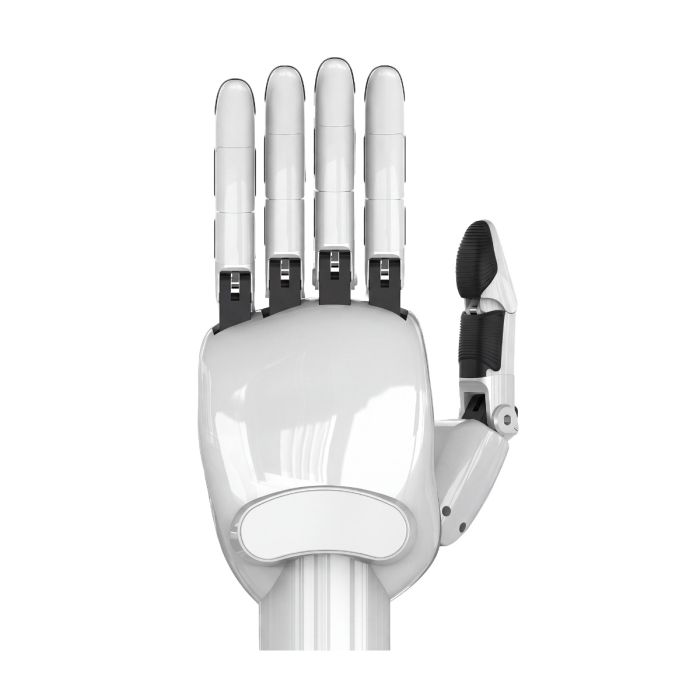
Every dexterous robot hand is a compromise between delicacy and strength. Fingers fine enough to set a part down precisely are rarely the ones an engineer would trust with a heavy object, and a hand strong enough to lift real loads usually burdens the arm that carries it. The Linkerbot Linker Hand L10 Standard Version narrows that gap. It weighs 800g, carries a maximum load of 25kg, returns to a taught position with a repeat positioning accuracy of < +/-0.2mm, and does all of this through ten degrees of freedom driven by a worm gear transmission. For a research group or an integrator who wants human-like grasping without giving up payload, the combination deserves a careful look.
Robots Europa, based in Dublin, sells and supplies the Linker Hand L10 Standard Version to universities, research institutes, system integrators and industrial users throughout the European Union and the DACH region. Robots Europa prepares each quotation, arranges delivery to your site and provides the support that follows, so your project has one point of contact from the first technical question to the commissioning of the hand on your arm.
Background
Linkerbot and the Linker Hand range
Linkerbot develops dexterous end effectors for robotics research and automation, and the Linker Hand family covers several architectures, from compact hands to industrial-grade designs. The Linker Hand L10B product manual names Linkerbot Beijing Technology co., Ltd as the manufacturer. Within that range, the L10 occupies a practical middle ground: enough degrees of freedom for anthropomorphic grasping, packaged with the interfaces and accessories needed to put the hand to work quickly. Buyers who wish to compare it with the other members of the family can browse the full Linkerbot range.
Active and passive joints driven by worm gears
The L10 has 20 joints in total, of which 10 are active and 10 are passive. The active joints are driven directly, while the passive joints follow their motion, which allows the fingers to curl in a natural way without a separate motor for every joint. This arrangement gives the hand 10 degrees of freedom while keeping its weight at 800g. Power reaches the fingers through a worm gear transmission. In general engineering terms, worm gear drives are chosen where a compact package must deliver a high reduction ratio, and they are a common choice in hands that are expected to apply firm grasping forces from small actuators.
Technical Specifications
| Specification | Value |
|---|---|
| Degrees of freedom | 10 |
| Number of joints | 20 (10 Active + 10 Passive) |
| Transmission | Worm Gear Transmission |
| Control interface | CAN/RS485 |
| Weight | 800g |
| Maximum load | 25kg |
| Operating voltage | DC24V+/-10% |
| Maximum current | 3A |
| Repeat positioning accuracy | < +/-0.2mm |
| Opening/closing time | 1.2s |
| Maximum five-finger grasping force | 80N |
| Maximum thumb fingertip force | 15N |
| Control modes | Position control, speed control, haptic feedback (force control) via fingertip sensors, online firmware upgrade |
| Supported robotic arms | UR, Franka, XArm, RealMan, AgileX |
| Supported simulators | Pybullet, Isaac, MuJoCo |
| In the box | Linker Hand L10 x1; USB-to-CAN Debugging Cable x1; Connector Cable XT30 (2+2) x1; Power Adapter x1; Power Cable x1 |
Specifications are as published by the manufacturer and are confirmed against the datasheet at quotation.
The manufacturer has not published the dimensions, the IP rating, the operating temperature range or the service life of the hand; Robots Europa confirms these with you at quotation.
How does the Linker Hand L10 balance grip strength and precision?
The figures describe a hand built for real objects rather than demonstrations. A maximum five-finger grasping force of 80N lets the L10 close firmly around tools, housings and containers, while the maximum thumb fingertip force of 15N gives the opposing thumb enough authority for pinch grasps and for pressing against an object to stabilise it. The maximum load of 25kg indicates how much the hand can carry once a grasp is established.
Precision comes from two directions. Mechanically, the repeat positioning accuracy of < +/-0.2mm means that a grasp taught once can be reproduced reliably, which matters in pick-and-place work and in data collection where repeatability is the whole point. In control terms, the hand offers position control and speed control, and adds haptic feedback (force control) through its fingertip sensors. Force control is what allows a hand to treat a soft or fragile object differently from a rigid one, closing until contact is detected rather than simply driving the fingers to a fixed angle. With an opening/closing time of 1.2s, the L10 moves quickly enough for cyclic tasks without the abruptness that would make delicate handling difficult.
How does the Linker Hand L10 fit into an existing robot setup?
Integration is often where a dexterous hand project stalls, so the practical details carry weight. The L10 communicates over CAN/RS485, two fieldbus options that are familiar in both laboratory and industrial environments. It runs on DC24V+/-10% with a maximum current of 3A, a supply level that matches what many robot cells already provide. The box contains a USB-to-CAN Debugging Cable, a Connector Cable XT30 (2+2), a Power Adapter and a Power Cable, so the hand can be powered and addressed from a workstation on the first day.
On the robot side, the L10 supports arms from UR, Franka, XArm, RealMan and AgileX. On the software side, the hand is supported in the Pybullet, Isaac and MuJoCo simulators, which allows teams to develop grasping policies in simulation before transferring them to hardware. Online firmware upgrade means the hand can receive updates in the field without being returned. For teams working on learning-based manipulation, that pairing of simulator support and physical repeatability is one of the strongest arguments for the L10.
Who is the Linker Hand L10 Standard Version for?
The first group is academic and institutional research: robotics laboratories studying grasping, manipulation and embodied AI, where a ten-degree-of-freedom hand with force control and simulator support provides a credible platform for experiments and publications. The second group is the humanoid and mobile manipulation community, which needs an anthropomorphic end effector that is light enough for the arm it sits on yet capable of handling everyday objects. The third group is system integrators and industrial engineering teams evaluating whether a dexterous hand can replace a set of specialised grippers in a cell that handles varied parts.
Teams that are still deciding between architectures, for instance between a ten-degree-of-freedom hand and a simpler gripper or a more highly articulated design, can compare the alternatives in the Robot Hands category, and Robots Europa will advise on which design suits a given application.
What is the Linker Hand L10 Standard Version used for?
- Manipulation research: studying multi-finger grasping and in-hand control on a repeatable, sensor-equipped platform.
- Embodied AI and learning: training grasping policies in Pybullet, Isaac or MuJoCo and transferring them to the physical hand.
- Humanoid robots: giving humanoid platforms an anthropomorphic hand that keeps arm loading moderate.
- Teleoperation and data collection: recording human-like grasps for demonstration datasets.
- Flexible automation: handling varied parts in a cell where a single fixed gripper would need frequent changeover.
- Teaching and demonstration: introducing students to dexterous robotics, fieldbus control and force feedback.
Pricing and Availability
Robots Europa supplies the Linker Hand L10 Standard Version on quotation, so that the configuration, the supported arm and the intended application can be reviewed before an order is placed. Delivery, customs and support are arranged together with the quotation. To start the process, send your project details through the quotation request available on this page.
Frequently Asked Questions
How many degrees of freedom does the Linker Hand L10 have?
The hand has 10 degrees of freedom. It has 20 joints in total, 10 active and 10 passive.
Which robotic arms can the L10 be used with?
The L10 supports UR, Franka, XArm, RealMan and AgileX arms. Robots Europa discusses the mounting and integration details for your specific arm as part of the quotation.
Which communication interfaces does the hand offer?
The L10 is controlled over CAN/RS485. A USB-to-CAN Debugging Cable is included for connection to a computer.
Does the hand support force control?
Yes. Alongside position control and speed control, it offers haptic feedback (force control) via its fingertip sensors.
Can I develop in simulation before using the hardware?
The hand is supported in Pybullet, Isaac and MuJoCo. This allows grasping strategies to be developed and tested virtually first.
What power supply does the L10 require?
It operates at DC24V+/-10% with a maximum current of 3A. A Power Adapter and a Power Cable are supplied in the box.
Where can I buy the Linker Hand L10 Standard Version and what does it cost?
Robots Europa supplies the hand throughout the EU and the DACH region on the basis of an individual quotation. Request a quotation on this page and the offer will include delivery, customs and support.
Summary
The Linkerbot Linker Hand L10 Standard Version addresses the old conflict between dexterity and strength with a coherent set of figures: 800g of weight against a maximum load of 25kg, 80N of five-finger grasping force alongside a repeat positioning accuracy of < +/-0.2mm, and ten degrees of freedom delivered through a worm gear transmission. Force control through fingertip sensors, CAN/RS485 connectivity, support for widely used arms and simulators, and a box that contains everything needed for a first connection make it a practical choice for research and integration alike. For anyone planning a manipulation project with Robots Europa, this page is the starting point.


