
Pudu PUDU T300 Tray (PUDU T300 Tray)
In stock
- BRAND:
- PUDU ROBOTICS
- PART #:
- PUDU T300 Tray
- ORIGIN:
- China
- AVAILABILITY:
- SUBJECT TO AVAILABILITY
- SKU:
- Pudu-PUDU-T300-Tray
Pudu PUDU T300 Tray (PUDU T300 Tray)
A shelving rack holds goods, but it does not take them anywhere. The Pudu PUDU T300 Tray (PUDU T300 Tray) closes that gap by putting adjustable shelves on an autonomous chassis. The rack travels from the point where goods are loaded to the point where they are needed. Staff fill each layer by hand, the robot finds its own way through the building, and the tray module comes off without tools when the shelf arrangement no longer suits the work. Many operations move a steady stream of small and medium items rather than single heavy pallets. For them, this is a different approach to internal transport from the push trolley or the forklift.
Robots Europa, based in Dublin, supplies the Pudu PUDU T300 Tray to customers throughout the European Union and the DACH region. Robots Europa prepares each quotation and arranges delivery to the site. It also provides the support that follows, from the first mapping of the building to questions that arise once the robot is in daily use.
Background
Pudu Robotics and the T300 Series
PUDU ROBOTICS is widely known for service robots in hospitality, retail and commercial cleaning. The T300 Series takes that experience into industrial and facility logistics. The series includes the Standard, Lifting, Conveyor, Tray and Towing versions, which together form a lineup of transport robots built on a common platform. Each version adapts that platform to a particular way of handling loads. Buyers can therefore match the robot to their material flow rather than reorganise the flow around the robot.
A tray structure built for switching tasks
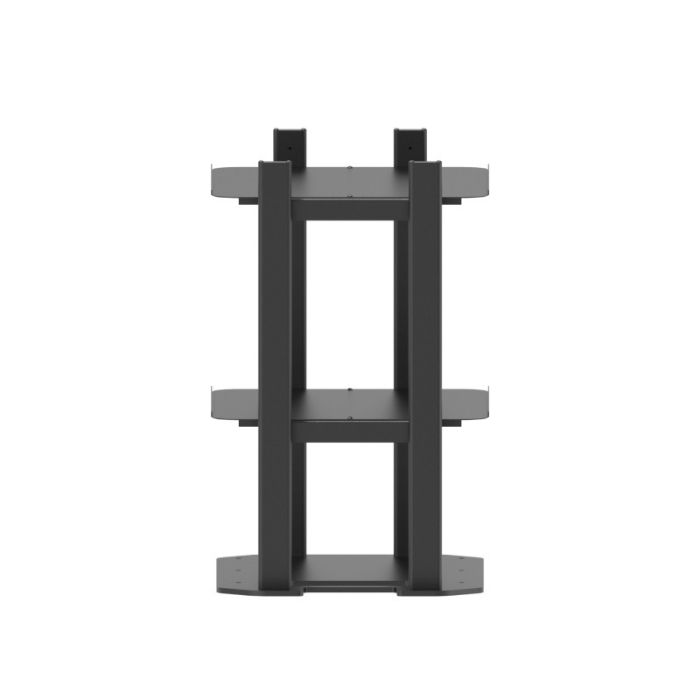
The tray version has a multi-layer adjustable structure that makes better use of its load capacity. The load is spread across several shelves instead of sitting on a single deck. Mixed consignments can be separated by layer, such as components on one shelf, packaging on another and tools on a third. Each layer is reached directly without unstacking the others. The design is modular, so the tray can be installed and removed without tools. This meets a practical need in facilities where the same robot must change between scenarios quickly, perhaps from a shift-start supply round to an afternoon task with a different load profile.
Technical Specifications
| Specification | Value |
|---|---|
| Machine weight | 103kg |
| Loading capacity | 300kg |
| Total maximum load | 300 kg (661 lbs) (including the tray) |
| Maximum load per layer | 100 kg (220 lbs) |
| Load space dimensions | 620 mm × 500 mm (24.4 in × 19.7 in) |
| Layer height (from bottom to top) | 300 mm (11.8 in) / 400 mm (15.7 in) / 400 mm (15.7 in) |
| Maximum speed | 1.2m/s |
| Path clearance | ≥60cm |
| Threshold overcoming height | 20mm |
| Run-time (full load) | 8h |
| Charging time (T300 Series) | 2h (0% to 90%) |
| Navigation methods (T300 Series) | VSLAM & Lidar SLAM |
| Multi-robot scheduling | Up to 20 robots in one environment |
| IoT integration | Elevator control, e-gate access, pagers, app-based calling, software API interfaces |
Specifications are as published by the manufacturer and are confirmed against the datasheet at quotation.
The manufacturer has not published the material grade of the tray body, the operating temperature range, the IP rating, the connectivity standards, the noise level or the contents of the box; these are confirmed at quotation.
How does the tray version differ from the other T300 versions?
All five T300 versions share the same platform, so the question is how each one handles its load. The tray version is the shelved option in the series. It offers three layers at the heights listed above, each with a load space of 620 mm × 500 mm. Each layer carries up to 100 kg (220 lbs), and the total maximum load is 300 kg (661 lbs) including the tray. In practice, a heavy item belongs on a lower shelf, and lighter, more varied goods can be spread across the layers above it.
The other versions follow different principles, as their names suggest. The Lifting, Towing and Conveyor versions handle racks, carts and conveyor transfer. The Conveyor version is offered in single-layer and double-layer forms. The Tray version suits work where people load and unload by hand and where it helps to keep items apart. It also suits sites where the same robot may be needed for a different job next month, because the tray module can be removed without tools. The robot's own figures belong to this version: a machine weight of 103kg, a maximum speed of 1.2m/s and a run-time of 8h at full load. Figures for sibling versions should be read from their own specifications rather than taken from this page.
Can the PUDU T300 Tray work with lifts, doors and other robots?
A transport robot is only as useful as the building lets it be. Multi-storey sites, secured corridors and shared aisles are where many deployments meet difficulties. The PUDU T300 Tray has IoT capabilities that include elevator control and e-gate access, so routes can cross floors and controlled doors. Pagers and app-based calling let staff summon the robot from where they work. Software API interfaces allow the robot to be tied into existing systems.
Navigation combines VSLAM and Lidar SLAM, an approach that pairs visual and laser-based mapping to localise the robot in changing surroundings. The robot needs a path clearance of ≥60cm and crosses thresholds of up to 20mm. Both points are worth checking during a site survey, particularly at older door frames and transitions between floor coverings. Larger sites can dispatch up to 20 robots in one environment. A first robot can therefore become part of a coordinated fleet without a separate system being introduced later.
Who is the PUDU T300 Tray for?
The clearest fit is the manufacturing operation that supplies production lines with parts, consumables and kits in mixed quantities. On these routes a shelved carrier saves sorting at the destination. Warehouses and distribution centres with short, repeated internal transfers are a second segment. Examples include runs from goods-in to a picking area, or from packing to dispatch, where staff currently walk the same route many times a shift.
Facility operators form a third group. Large campuses, laboratories and service areas of commercial buildings use lifts and access-controlled doors, and the integration options matter more there than the shelves. Organisations that expect their processes to change also benefit, because the modular tray means the investment is not tied to a single task. Where the load is mainly carts, racks or conveyor transfer rather than hand-loaded items, another version of the T300 Series may suit better. Robots Europa can compare the options as part of the quotation. The wider range is listed in the Pudu category.
What is the PUDU T300 Tray used for?
- Line-side supply: carrying parts and consumables from stores to production cells on a repeating schedule.
- Kitting runs: moving prepared kits with components kept separate on different layers.
- Goods-in transfers: taking received cartons from the receiving area to stockrooms or picking zones.
- Multi-floor logistics: using elevator control to move materials between storeys without an escort.
- Tool and equipment rounds: bringing tools, spares and maintenance supplies to workstations on call via pager or app.
- Fleet operations: running alongside other robots under shared scheduling in larger facilities.
Pricing and Availability
Robots Europa supplies the PUDU T300 Tray on a quotation basis, so that the configuration, integration requirements and number of units match the site. Delivery, customs and support are arranged together with the quotation. To begin, please share a short description of your routes, loads and building, and request your quotation using the enquiry option available on this page.
Frequently Asked Questions
How much can each layer of the PUDU T300 Tray carry?
Each layer carries up to 100 kg (220 lbs). The total maximum load is 300 kg (661 lbs), including the tray.
How large is the load space on each layer?
The load space measures 620 mm × 500 mm (24.4 in × 19.7 in). The layer heights from bottom to top are 300 mm (11.8 in), 400 mm (15.7 in) and 400 mm (15.7 in).
Do I need tools to fit or remove the tray?
No. The modular design allows the tray to be installed and removed without tools, which supports quick changes between scenarios.
How long does the robot run on one charge?
The tray version runs for 8h at full load. For the T300 Series, charging from 0% to 90% takes 2h.
Can the robot use lifts and pass through access-controlled doors?
Yes. It supports elevator control and e-gate access, as well as calling by pager or app and software API interfaces.
How narrow can the aisles be?
The robot requires a path clearance of ≥60cm and crosses thresholds of up to 20mm. Robots Europa recommends checking both during a site survey.
Where can I buy the PUDU T300 Tray and what does it cost?
Robots Europa supplies the PUDU T300 Tray across the EU and the DACH region. The cost depends on the configuration and the project, so it is set out in a written quotation, which you can request from this page.
Summary
The PUDU T300 Tray is, in effect, a set of shelves that knows its way around the building. Three adjustable layers keep mixed loads apart, and the tray module can be removed without tools when tasks change. VSLAM and Lidar SLAM navigation, together with lift, door and calling integration, let the robot work through real facilities rather than only open floors. Fleet scheduling allows a single unit to grow into a coordinated operation. Robots Europa supplies, delivers and supports it across Europe, and for anyone weighing it against trolleys, forklifts or other T300 versions, this page is the starting point.


