
SIASUN Interior & Finishing Line Assisted Assembly Mobile Robot (Interior & Finishing Line Assisted Assembly Mobile Robot)
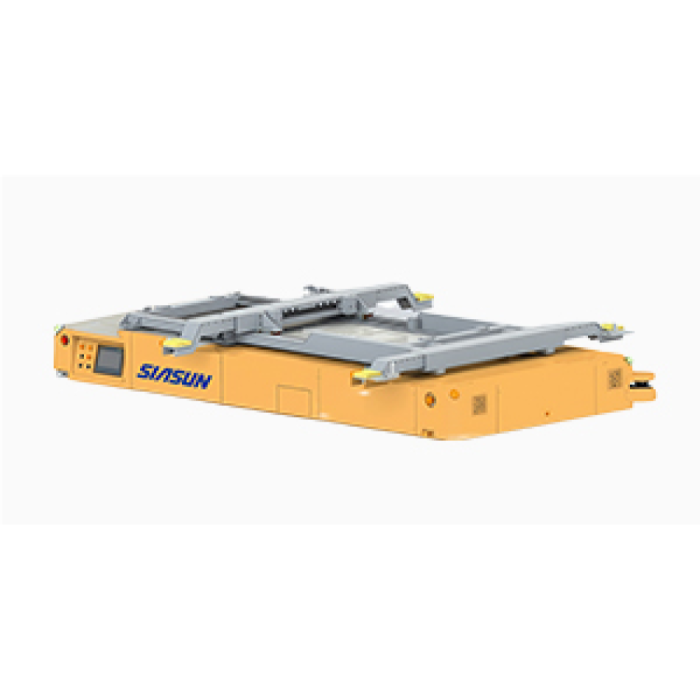
In stock
- BRAND:
- SIASUN
- MODEL:
- Interior & Finishing Line Assisted Assembly Mobile Robot
- PART #:
- Interior & Finishing Line Assisted Assembly Mobile Robot
- ORIGIN:
- China
- Warranty:
- 12 MONTHS
- AVAILABILITY:
- SUBJECT TO AVAILABILITY
- SKU:
- SIASUN-Interior-Finishing-Assembly-Mobile-Robot
SIASUN Interior & Finishing Line Assisted Assembly Mobile Robot (Interior & Finishing Line Assisted Assembly Mobile Robot)
An automotive finishing line rarely stays the same for long. Trim levels multiply, a new model enters the mix and the station layout that suited last year's programme starts to get in the way. Fixed conveyors and hard-mounted fixtures resist that kind of change. The SIASUN Interior & Finishing Line Assisted Assembly Mobile Robot takes the opposite approach: a differential-drive platform that follows tape-based guidance, docks complex components to within millimetres, charges wirelessly and can be refitted with new modules when the line is reorganised.
Robots Europa, based in Dublin, supplies this SIASUN robot to manufacturers across the European Union and the DACH region. Robots Europa prepares the quotation, coordinates delivery to your plant and remains your point of contact for support once the robot is working on the line.
Background
SIASUN and its mobile robot range
SIASUN builds mobile robots for industrial material flow, from assisted assembly platforms such as this one to a heavy-duty series intended for moving large loads around the factory floor. The assisted assembly model belongs to a family designed around the same principle: an automated guided platform that replaces fixed transport with a vehicle that can be redirected when production requirements change. You can view the wider range in our Mobile Robots category.
Flexible docking instead of fixed conveyors
This robot is designed specifically for interior and finishing-line processes in automotive manufacturing. Rather than carrying parts to a single fixed point, it can be equipped with various modules that handle the automated transport and precise docking of complex components. Guidance is provided by colour tape combined with QR code tape, with magnetic strip available as an option, and the robot can switch between QR code and magnetic tape navigation. Together with wireless charging and a modular design, this allows the platform to be reconfigured as the line evolves, so that assembly efficiency and production agility are not lost with each model change.
Technical Specifications
| Specification | Value |
|---|---|
| Intended use | Interior and finishing-line processes in automotive manufacturing |
| Payload capacity | 2,500–3,500 kg |
| Drive system | Differential drive |
| Navigation method | Colour tape + QR code tape; magnetic strip optional |
| Navigation modes | QR code and magnetic tape switching |
| Positioning accuracy | ±5 mm |
| Navigation accuracy | ±10 mm |
| Braking system | Servo motor + mechanical brake |
| Charging | Wireless charging |
| Configuration | Modular design; various modules for transport and docking; customisation supported |
Specifications are as published by the manufacturer and are confirmed against the datasheet at quotation.
The manufacturer has not published the dimensions, weight, battery capacity, travel speed, runtime, charging time, safety sensors, IP rating, power supply voltage, operating temperature or package contents; Robots Europa confirms these at quotation.
How does the robot achieve millimetre-level docking?
Two figures describe how precisely the robot works. Navigation accuracy of ±10 mm refers to how closely it follows its guided path as it travels between stations. Positioning accuracy of ±5 mm refers to where it comes to rest at its destination, which is the figure that matters when a component has to be presented or docked at an assembly point. The tighter tolerance at the stop is exactly what an assisted assembly task requires: the module carrying the part must arrive where the station and the operator expect it.
The guidance system supports this. Colour tape provides the path, while QR code tape gives the robot defined reference points along the route. Where a plant prefers magnetic strip, it is available as an option, and the robot can switch between QR code and magnetic tape navigation. The braking system combines a servo motor with a mechanical brake, so the platform is held by the drive when stopping and secured mechanically once it has stopped. With a payload capacity of 2,500–3,500 kg, the platform is built to carry substantial assemblies and fixtures to the station while maintaining that millimetre-level accuracy.
How does it cope with line upgrades and model changes?
Adaptability is central to the design. The robot supports customisation and is designed to adapt quickly to line upgrades and model changes. In practice, this flexibility comes from three features working together. First, the modular design means the top structure, which carries and docks the component, can be selected for the task and changed when the task changes. Second, tape-based guidance can be re-laid on the floor far more easily than conveyors or fixed tracks can be moved, which is what gives the robot its trackless flexibility. Third, wireless charging removes the need for cable connections or manual battery handling at fixed points, so charging positions can be planned around the new layout rather than the other way round.
For a plant manager, this means that the investment is not tied to one vehicle programme. When the next model arrives, the route, the docking positions and the modules can be revised while the platform itself remains in service.
Who is the SIASUN Interior & Finishing Line Assisted Assembly Mobile Robot for?
The primary buyers are automotive manufacturers and their tier-one suppliers operating interior and finishing lines, where many components of varying shape must be brought to the vehicle in sequence. Production engineers looking to replace fixed conveyor sections with something they can reroute will find the modular, tape-guided concept particularly relevant, as will plants that run several models or variants on the same line.
System integrators building assembly cells for automotive customers are a second group: the robot's support for customisation and its range of modules give them a platform they can adapt to a specific station design. Manufacturing engineering teams planning a staged move towards smart manufacturing may also use it as a first step, automating component delivery and docking before broader changes are made to the line.
Where the task is pure heavy-load transport rather than assisted assembly, SIASUN's heavy-duty series may be a better fit, for instance the SIASUN 5T Heavy-Duty Mobile Robot or the SIASUN 10,000 Kg Heavy-Duty Mobile Robot; Robots Europa can compare the options against your application. Further automation equipment for production environments is listed under Factory Robots.
What is the SIASUN Interior & Finishing Line Assisted Assembly Mobile Robot used for?
- Interior component docking: bringing complex interior assemblies to the station and positioning them precisely for fitting.
- Finishing-line material flow: automated transport of parts between stations on the finishing line without fixed conveyors.
- Mixed-model production: supporting lines that build several models or variants by changing modules and routes rather than infrastructure.
- Line reconfiguration: keeping component delivery running through line upgrades by re-laying tape guidance and adjusting docking points.
- Fixture and assembly transport: moving heavy fixtures and part assemblies within the robot's payload range.
- Smart manufacturing projects: serving as a guided, wirelessly charged platform within a wider programme of factory automation.
Pricing and Availability
The price of this robot depends on the configuration: the modules fitted, the navigation option chosen and any customisation for your line all affect the specification. For that reason, Robots Europa provides each robot on the basis of a quotation prepared for your project. Delivery, customs clearance and support are arranged together with the quotation, so you receive a single, complete offer. To start the process, share your line layout and the components to be handled with us, using the quotation request available on this page.
Frequently Asked Questions
What payload can the robot carry?
The robot has a payload capacity of 2,500–3,500 kg, enough for substantial assemblies and fixtures on the finishing line.
How accurate is the positioning?
Positioning accuracy is ±5 mm and navigation accuracy is ±10 mm, which gives the millimetre-level precision needed for reliable docking at assembly stations.
Which navigation methods does it use?
It navigates using colour tape combined with QR code tape, with magnetic strip available as an option. The robot can switch between QR code and magnetic tape navigation.
How is the robot charged?
The robot uses wireless charging, so no cable connections or manual battery handling are needed at the charging point.
Can it be adapted to our line?
Yes. The robot supports customisation, can be equipped with various modules for transport and docking, and its modular design is intended to adapt to line upgrades and model changes.
What braking system does it use?
The robot combines a servo motor with a mechanical brake. The drive slows the platform and the mechanical brake holds it in position once it has stopped.
Where can I buy the SIASUN Interior & Finishing Line Assisted Assembly Mobile Robot and what does it cost?
You can buy it from Robots Europa, which supplies the EU and the DACH region from Dublin. The cost depends on your configuration and is set out in a quotation, which you can request on this page.
Summary
Finishing lines change faster than the fixed equipment that serves them, and this SIASUN robot is designed for that reality. A differential-drive platform with a 2,500–3,500 kg payload, tape and QR code guidance with an optional magnetic strip, ±5 mm positioning accuracy, servo and mechanical braking and wireless charging gives it the precision to dock complex components and the flexibility to be rerouted when the line moves on. Its modular, customisable design means that the next model change becomes a matter of reconfiguration rather than replacement. If you are planning that kind of adaptable assembly support, this page is the starting point.


