RobotEra Star1 Humanoid Robot

Out of stock
- BRAND:
- ROBOTERA
- PART #:
- Star1
- Warranty:
- 12 MONTHS
- AVAILABILITY:
- SUBJECT TO AVAILABILITY
- SKU:
- RobotEra-Star1
RobotEra Star1 Humanoid Robot
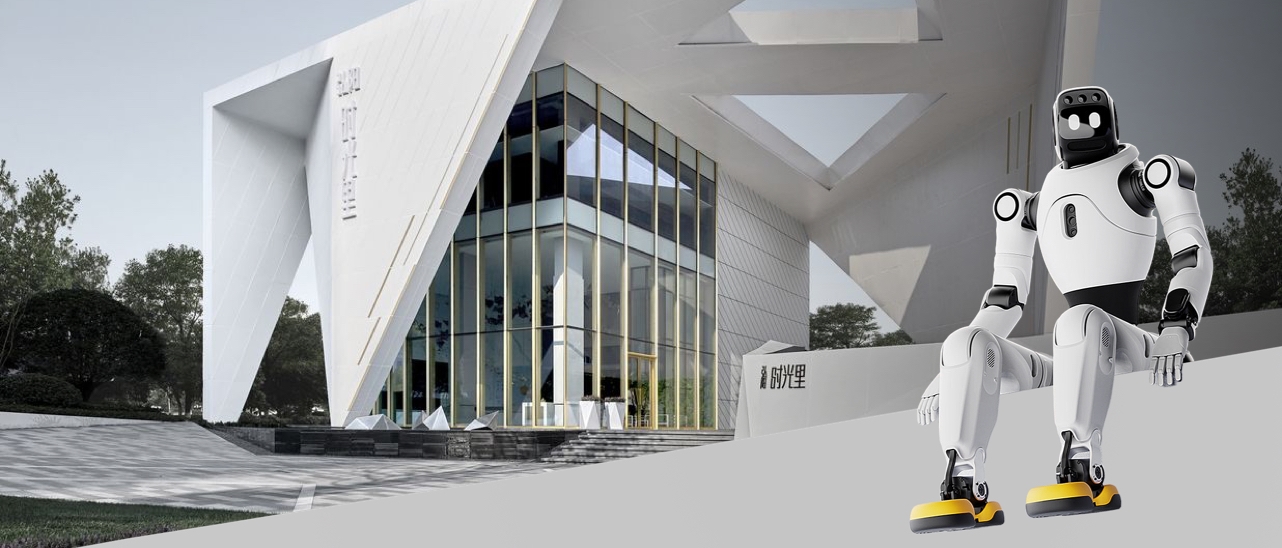
Most factories were laid out for people: benches at elbow height, parts bins within arm's reach, aisles wide enough for a person to walk through. Automating such a floor has traditionally meant rebuilding it around the machine. The RobotEra Star1 Humanoid Robot reverses that logic. It is a full-size biped built to the proportions of a person, so it can step into the space a worker occupies rather than demanding a new one. Its pair of 7-DOF arms ends in dexterous hands with full direct drive, and an end-to-end AI model governs how it walks, runs and jumps over difficult ground.
Robots Europa, based in Dublin, supplies the RobotEra Star1 Humanoid Robot to customers across the European Union and the DACH region. Our team prepares each quotation, arranges delivery to your site and remains your point of contact for support once the robot is in service, whether you are running an industrial pilot or a university laboratory.
Background
ROBOTERA: a young company with full-stack ambitions
ROBOTERA was founded in August 2023 and has, from the outset, built both the software and the hardware of its robots in-house. That end-to-end approach shapes the Star1: the company develops its own native embodied foundation model, ERA-42, alongside a new AI-defined hardware platform. Rather than integrating a third-party controller onto a bought-in body, ROBOTERA designs the intelligence and the mechanism together, which is a significant choice in a field where the boundary between perception, planning and motor control is increasingly blurred. The Star1 sits within a wider ROBOTERA range that includes bipedal and wheeled humanoids as well as the XHAND1 family of dexterous hands, all available through the Humanoids category.
Positioning: a humanoid for dynamic work
Many humanoid platforms are designed primarily to stand and manipulate. The Star1 is positioned as a robot that moves with purpose as well as handling objects. Its joints reach up to 400 Nm of torque and peak rotational speeds of 25 rad/s, and in real-world outdoor conditions it reaches a top running speed of 3.6 m/s. Those locomotion capabilities are paired with an upper body intended for skilled work: two 7-DOF arms, each fitted with the ROBOTERA XHAND1, a five-fingered hand with 12 active degrees of freedom. The result is a single platform that addresses both getting to the task and carrying it out.
Technical Specifications
| Specification | Value |
|---|---|
| Height | 171 cm |
| Weight | 63 kg |
| Degrees of freedom (overall) | 55 |
| Leg degrees of freedom | 12 DOF |
| Waist degrees of freedom | 3 DOF |
| Neck degrees of freedom | 2 DOF |
| Arms | Dual bionic arms, 7 DOF each |
| Hands | ROBOTERA XHAND1, five-fingered, 12 active DOF, full direct drive |
| Joint torque | Up to 400 Nm |
| Peak joint rotational speed | 25 rad/s |
| Top running speed | 3.6 m/s (real-world outdoor conditions) |
| Arm lifting capacity | 20 kg in total (both arms) |
| Runtime per charge | 4 hours |
| AI model | ERA-42, ROBOTERA's proprietary end-to-end AI model |
Specifications are as published by the manufacturer and are confirmed against the datasheet at quotation.
ROBOTERA has not published a formal payload rating beyond the combined arm lifting figure, nor the IP rating, battery capacity, charging time, connectivity, sensors and cameras, operating system, onboard compute platform, operating temperature or the contents of the box; all of these are confirmed at quotation.
How does the Star1 reach 55 degrees of freedom?
The overall figure of 55 degrees of freedom is distributed across the body in a way that reflects what each region has to do. The legs account for 12 DOF, giving the robot the range of motion it needs for walking, running and jumping. The waist adds 3 DOF, which matters more than it might first appear: a flexible torso lets a humanoid lean, twist and shift its centre of mass, improving both stability and reach when it works at a bench or bends towards a container.
The neck contributes 2 DOF, allowing the head to be positioned naturally for tasks that depend on precise orientation, such as looking down at a part during assembly or scanning a workstation during an inspection. Each arm offers 7 DOF, the same number as a human arm from shoulder to wrist, which gives the robot redundancy to approach an object from several angles and to work around obstacles.
The largest share sits in the hands. Each XHAND1 provides 12 active degrees of freedom with full direct drive, so two hands contribute 24 of the total. This weighting towards the hands signals ROBOTERA's intention: the Star1 is meant to grasp, turn and manipulate, not merely to carry.
What does the ERA-42 AI model bring to the Star1?
ERA-42 is ROBOTERA's proprietary end-to-end AI model, and on the Star1 it enables the robot to walk, run and jump stably over a variety of challenging terrains. In general terms, an end-to-end model learns a direct mapping from what the robot perceives to how it should act, rather than relying on a long chain of hand-tuned modules. For buyers, the practical interest of such an approach is adaptability: a learned controller can, in principle, be extended to new behaviours through training rather than through rewriting control code.
Because ROBOTERA builds both the model and the hardware, ERA-42 is developed with the Star1's joints, torque and speed capabilities in mind. For research groups studying embodied intelligence, this pairing of a native foundation model with an AI-defined hardware platform is a central reason to consider the robot. Questions about the development tools, interfaces and access to the model for a particular configuration are best raised with our team when you request a quotation.
Who is the RobotEra Star1 Humanoid Robot for?
The Star1 suits organisations that want a humanoid capable of both dynamic locomotion and dexterous manipulation in one body. Manufacturers in automotive assembly and 3C electronics are an obvious audience, since ROBOTERA identifies precision assembly, quality checks, packaging and material transport in those sectors as tasks the robot can handle. Engineering teams running pilot projects can use it to test how a humanoid fits into an existing line before committing to wider deployment.
Universities and research institutes form a second segment. A full-size biped with 55 degrees of freedom, direct-drive hands and an end-to-end AI model offers a broad platform for work on locomotion, whole-body control and manipulation learning. Technology integrators who build demonstrators for clients may also find the Star1 a strong showcase of what current humanoids can do.
Not every site needs legs. Where floors are flat and the work is concentrated at the upper body, a wheeled design may be the more practical choice; the RobotEra M7 Upper Body Wheeled Humanoid Robot and the RobotEra Q5 Wheeled Humanoid Service Robot are worth comparing for such environments. Buyers who want to stay with a legged platform can also review the RobotEra L7 Bipedal Humanoid Robot and the wider Bipedal Humanoids range, and our team will help you match the platform to the task.
What is the RobotEra Star1 Humanoid Robot used for?
- Precision assembly – fitting components on automotive and 3C production lines with dexterous, direct-drive hands.
- Quality checks – inspecting parts and assemblies, using the articulated neck to position the head precisely.
- Packaging – placing and arranging products in containers at workstations designed for people.
- Material transport – carrying parts between stations, with both arms sharing a combined lifting capacity of 20 kg.
- Embodied AI research – studying end-to-end learned control on a full-size humanoid driven by ERA-42.
- Locomotion development – exploring walking, running and jumping over challenging terrain in laboratory and outdoor trials.
Pricing and Availability
Robots Europa supplies the Star1 on quotation, so that the configuration, documentation and service arrangements reflect your project rather than a standard catalogue listing. When you request a quotation, please tell us about your intended application, your site and your timetable, and we will prepare the safety and conformity documentation required for operation in the EU. Delivery, customs clearance and support are arranged together with the quotation. To begin, request your quotation for the RobotEra Star1 Humanoid Robot using the form available on this page.
Frequently Asked Questions
How tall is the RobotEra Star1 and how much does it weigh?
The Star1 stands 171 cm tall and weighs 63 kg, proportions close to those of an adult person.
How fast can the Star1 run?
In real-world outdoor conditions, the Star1 reaches a top running speed of 3.6 m/s. Its joints deliver up to 400 Nm of torque and peak rotational speeds of 25 rad/s.
Which hands does the Star1 use?
Each arm is fitted with the ROBOTERA XHAND1, a five-fingered dexterous hand with 12 active degrees of freedom and full direct drive.
How much can the Star1 lift?
Its dual 7-DOF bionic arms can lift 20 kg in total. This combined figure applies to both arms working together.
How long does the Star1 run on one charge?
The runtime per charge is 4 hours, which our team can plan around your shift pattern when preparing your quotation.
What is ERA-42?
ERA-42 is ROBOTERA's proprietary end-to-end AI model and its native embodied foundation model. On the Star1, it enables stable walking, running and jumping across a variety of challenging terrains.
Where can I buy the RobotEra Star1 Humanoid Robot and what does it cost?
You can buy the Star1 from Robots Europa, which supplies customers across the EU and the DACH region from Dublin. The cost depends on configuration and project requirements, so we provide it in a personal quotation that you can request on this page.
Summary
The case for the RobotEra Star1 Humanoid Robot rests on a simple idea: if the workplace was built for people, a robot shaped like a person can work there with fewer changes. At 171 cm tall with 55 degrees of freedom, the Star1 combines legs capable of running and jumping, a flexible waist, an articulated neck and two 7-DOF arms ending in XHAND1 direct-drive hands. ROBOTERA's end-to-end ERA-42 model ties those capabilities together, reflecting a company that has designed hardware and intelligence side by side since its founding in August 2023. For manufacturers exploring humanoids on assembly, inspection, packaging and transport tasks, and for researchers working on embodied AI, the Star1 is a serious candidate. Robots Europa will arrange delivery and support with your quotation; for your next step, this page is the starting point.