
Unitree H1-2 Universal Humanoid Robot
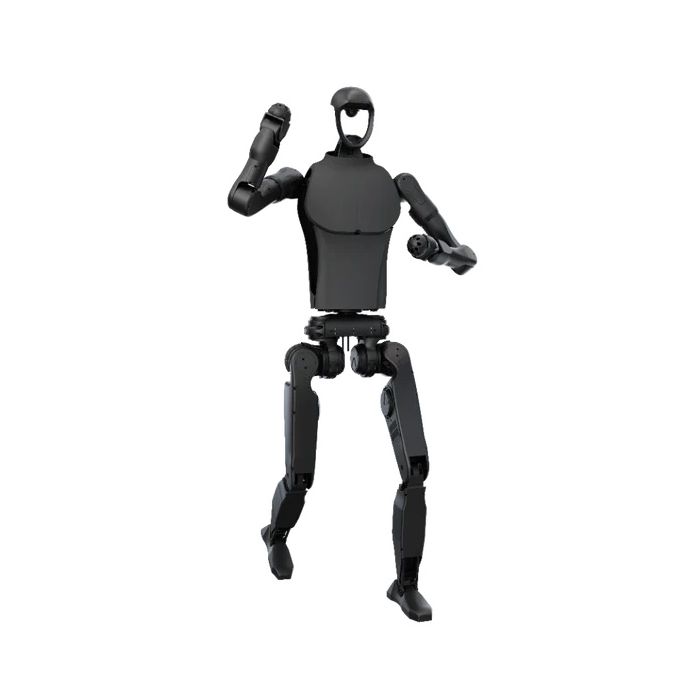
In stock
- BRAND:
- UNITREE ROBOTICS
- PART #:
- H1-2
- ORIGIN:
- China
- AVAILABILITY:
- SUBJECT TO AVAILABILITY
- SKU:
- Unitree-H1-2
Unitree H1-2 Universal Humanoid Robot
Every corridor, workbench and stair rail in a laboratory or factory hall was dimensioned around a human body, and most robots spend their working lives asking those spaces to be rebuilt for them. The Unitree H1-2 Universal Humanoid Robot takes the opposite route. It stands at roughly human height, walks on two legs and reaches with two arms that each carry seven joints, so the environment can stay exactly as it is while the experiment, the pilot cell or the demonstration moves in. For teams who want to find out what a general-purpose body can achieve among existing tools, shelves and fixtures, that fit with the human world is the purpose of the platform rather than a side effect.
Robots Europa, based in Dublin, supplies the H1-2 to universities, research institutes, system integrators and corporate innovation teams throughout the European Union and the DACH region. We prepare each quotation around the configuration you actually need, including the choice of hand, and we remain your point of contact for delivery, documentation and after-sales support once the robot is on site.
Background
Unitree Robotics and its humanoid line
Unitree Robotics, whose registered name is Yushu Technology Co., Ltd., became widely known for agile legged robots before extending its range to full-size bipedal humanoids. The company designs its own actuators and motion-control software, an approach that lets it refine a platform over successive releases rather than treating each model as a finished object. The H1 opened its full-size humanoid family, and the H1-2 is the version presented on this page. Unitree supports the H1-2 with continuous OTA software upgrades and updates, which means the robot that arrives in your laboratory is the beginning of a development path rather than a fixed snapshot.
Joints built for load and precision
A humanoid is only as capable as the joints that carry it. On the H1-2, the joint outputs run on industrial-grade crossed roller bearings, a bearing type chosen for high precision and high load capacity because it holds radial, axial and tilting loads within a single compact ring. Unitree states a peak torque density of 189N.m/Kg, a measure of how much turning force the drive system delivers relative to its mass. For a walking machine that matters directly: every gram saved in a leg is a gram the hips do not have to swing, and every additional newton-metre is margin for balance recovery, lifting and controlled contact with the world.
Technical Specifications
| Specification | Value |
|---|---|
| Product type | Full-size universal humanoid robot |
| Height | About 178CM |
| Weight | About 70kg |
| Key dimensions | (1503+285)mm × 510mm × 287mm |
| Thigh and calf length | 400mm × 2 |
| DOF of each leg | 6 (Hip x 3 + Knee x 1 + Ankle x 2) |
| DOF of each arm | 7 (Shoulder x 3 + Elbow x 1 + Wrist x 3) |
| Arm load | Peak: About 21Kg; Rated: About 7Kg |
| Moving speed | <2m/s |
| Battery | Battery capacity 15Ah (0.864KWh), Max Voltage 67.2V |
| Sensor configuration | 3D LIDAR + Depth Camera |
| Joint output bearing | Industrial grade crossed roller bearings (high precision, high load capacity) |
| Peak torque density | 189N.m/Kg |
| Dexterous hand | Optional Dex5-1 or other ambidextrous hands |
| Software updates | Continuous OTA Software Upgrade and Update |
| Manufacturer | Yushu Technology Co., Ltd. (Unitree Robotics) |
Specifications are as published by the manufacturer and are confirmed against the datasheet at quotation.
Unitree has not published the runtime per charge, the IP rating, the operating system, the wireless connectivity, the operating temperature range or the contents of the box; Robots Europa confirms each of these with you at quotation.
What can the H1-2 do with seven degrees of freedom in each arm?
Each arm of the H1-2 is built from three shoulder joints, one elbow joint and three wrist joints. That arrangement mirrors the human arm closely, and the practical consequence is that the hand can be positioned and oriented independently: the robot can hold a tool at a fixed angle while moving it along a path, or approach the same object from several directions to avoid an obstacle. The seventh joint gives the arm redundancy, so the controller can choose among several elbow positions for one hand pose, which is exactly the freedom researchers need when they study whole-body manipulation or teach a policy to work around clutter.
Strength is stated in two figures. The rated arm load is about 7Kg, the figure to plan sustained handling around, while the peak arm load of about 21Kg describes short bursts such as lifting, bracing or recovering a slipping object. At the end of the arm, Unitree offers the optional Dex5-1 or other ambidextrous hands, so the same body can serve a grasping study one term and a tool-use experiment the next. Because the hand defines much of what the robot can touch and manipulate, Robots Europa treats the hand choice as a central part of every quotation.
How does the H1-2 perceive and move through its surroundings?
The H1-2 combines a 3D LIDAR with a depth camera. The LIDAR builds a geometric picture of the room for mapping, localisation and obstacle detection at distance, while the depth camera supplies dense close-range data for footstep placement and for locating objects within reach of the hands. Pairing the two is a common pattern in mobile robotics because each covers the other's weaker ranges.
Below the waist, each leg has six degrees of freedom, with three at the hip, one at the knee and two at the ankle, and the thigh and calf each measure 400mm. The two-axis ankle is what allows the foot to adapt to small slopes and uneven floor tiles rather than meeting them flat. Unitree gives the moving speed as below 2m/s, and energy comes from a battery with a capacity of 15Ah (0.864KWh) and a maximum voltage of 67.2V. Together these figures describe a machine intended to walk confidently through ordinary indoor spaces, not merely to stand and gesture.
Who is the Unitree H1-2 Universal Humanoid Robot for?
The clearest fit is the research laboratory working on embodied intelligence, locomotion or manipulation, where a full-size body with dexterous arms and onboard perception removes the need to assemble a platform from separate components. University departments of robotics, mechanical engineering and computer science will find a system on which students can move from simulation to real hardware with a body that matches human-scaled test environments.
System integrators and industrial innovation teams form a second group. Before committing to humanoids in logistics, inspection or assembly support, they need a platform on which to run feasibility studies in their own halls, and the H1-2's arm load figures and sensor suite give them concrete parameters for those trials. Technology centres, science museums and corporate showrooms are a third audience, for whom a walking, reaching humanoid is a powerful way to communicate what automation is becoming.
Buyers who are still deciding between generations of the line can compare the earlier Unitree H1 Humanoid Robot - Fastest Robot in the World with the H1-2, or review both together in the Unitree H1 / H1-2 category. For a wider view of two-legged platforms from several sizes and price classes, our Bipedal Humanoids category gathers the alternatives in one place, and Robots Europa is happy to advise on which suits your programme.
What is the Unitree H1-2 Universal Humanoid Robot used for?
- Embodied AI research – training and testing learned control policies on a full-size body in real environments.
- Manipulation studies – exploring grasping, tool use and bimanual tasks with seven-joint arms and an optional dexterous hand.
- Locomotion and balance control – developing gait, footstep planning and disturbance recovery on a bipedal platform.
- Industrial feasibility trials – evaluating humanoid support for handling, inspection or line-side tasks before wider deployment.
- Teaching and curricula – giving students hands-on work with perception, kinematics and control on real hardware.
- Exhibitions and demonstrations – presenting advanced robotics to visitors, partners and the public in showrooms and at trade fairs.
Pricing and Availability
Robots Europa does not publish a fixed price for the H1-2, because the final configuration, above all the hand option and any accessories or development tools, shapes the offer. Tell us your intended application, the delivery country and the hand you have in mind, and we will prepare a written quotation for your organisation. Delivery, customs and support are arranged with the quotation, so the offer you receive covers the whole route from the manufacturer to your site. To begin, please use the quotation request available on this page.
Frequently Asked Questions
How tall and heavy is the Unitree H1-2?
The H1-2 stands about 178CM tall and weighs about 70kg. Its key dimensions are (1503+285)mm × 510mm × 287mm.
How many degrees of freedom does the H1-2 have?
Each leg has six degrees of freedom across hip, knee and ankle, and each arm has seven across shoulder, elbow and wrist.
How much can the arms of the H1-2 carry?
The rated arm load is about 7Kg and the peak arm load is about 21Kg. The rated figure is the one to plan continuous tasks around.
Is the H1-2 supplied with hands?
Unitree offers the optional Dex5-1 or other ambidextrous hands for the H1-2. Robots Europa agrees the hand option with you as part of the quotation.
Which sensors does the H1-2 use?
The robot combines a 3D LIDAR with a depth camera, covering both room-scale mapping and close-range perception for walking and grasping.
Does the H1-2 receive software updates?
Yes. Unitree provides continuous OTA software upgrades and updates for the platform.
Where can I buy the Unitree H1-2 Universal Humanoid Robot and what does it cost?
You can order the H1-2 from Robots Europa, which supplies customers across the EU and the DACH region from Dublin. The cost depends on the configuration you choose, so we provide it in a written quotation that also covers delivery, customs and support.
Summary
The Unitree H1-2 Universal Humanoid Robot is built on a simple premise: rather than reshaping workplaces around a machine, give the machine a shape that already belongs there. Seven-joint arms with an optional dexterous hand, six-joint legs, crossed roller bearings at the joint outputs, a peak torque density of 189N.m/Kg and a LIDAR-plus-depth-camera sensor suite make it a serious platform for research, teaching and industrial trials in human-scaled spaces. Robots Europa quotes the configuration that suits your project and arranges delivery and support across Europe; for any team ready to bring a full-size humanoid into its own environment, this page is the starting point.
Specifications
General
Physical
Mobility
Performance
Computing
Software
What's included
Related Products
Out of stock


