Agilex UMR (UMR)

In stock
- BRAND:
- AGILEX
- PART #:
- UMR
- ORIGIN:
- China
- AVAILABILITY:
- SUBJECT TO AVAILABILITY
- SKU:
- AgileX-UMR
Agilex UMR (UMR)
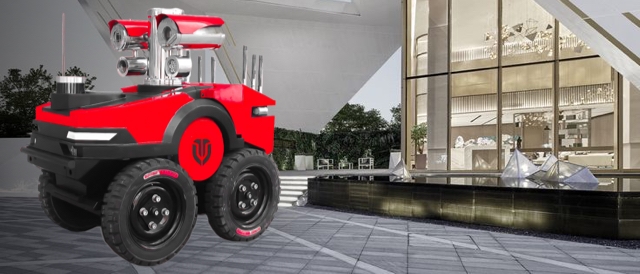
Most mobile robots are built for one world: either the polished floor of a laboratory or the rough apron of a yard. The trouble begins when a project needs both, when the same machine has to thread between racking in the morning and roll across a damp loading area in the afternoon. The Agilex UMR (UMR) was conceived for that in-between territory. It is an industrial robotic platform with a sealed body, four independently driven wheels and a navigation system able to hold its position to within a couple of centimetres. It gives engineers a base that does not need to be swapped out every time the task moves outdoors.
Robots Europa, based in Dublin, supplies the Agilex UMR (UMR) to organisations throughout the European Union and the DACH region. We prepare each quotation around the intended application, arrange delivery to your site and provide support once the platform is in service, so that research groups, integrators and industrial operators deal with a single European contact from first enquiry to deployment.
Background
AgileX Robotics and its open approach
AgileX Robotics was founded in 2016 and has since built a range of mobile platforms, manipulators and development kits. The company describes its mission as advancing embodied intelligence and accelerating the commercial adoption of robotics through full-stack technology and an open-source ecosystem. In practice, this means AgileX hardware is designed to be programmed, extended and combined rather than used as a sealed appliance. Readers who wish to compare the UMR with the wider family of tracked chassis, educational platforms and manipulator kits will find them gathered in the AgileX category.
Positioning: a platform rather than a finished product
The UMR sits in the industrial part of that range. AgileX presents it as an advanced, versatile platform that can be customised quickly for specific applications, and two elements make that possible: open API support and the Navis Plus module. The Navis navigation API comes with interface instructions and demonstration programs in Python and C++, and it is documented as compatible with both the UMR and Navis. For a development team, this shortens the distance between unpacking the robot and running its own code on it, which is exactly where many mobile robotics projects lose weeks.
Technical Specifications
| Specification | Value |
|---|---|
| Product type | Industrial robotic platform |
| Drive | Four independent hub motors |
| Dimensions (L x W x H) | 830 x 540 x 410 mm |
| Weight | 90 kg |
| Maximum load | 70KG |
| Climbing capacity | ≤20° |
| Ground clearance | 90 mm |
| Protection rating | IP65 |
| Operating temperature | -10°C to 40°C |
| Mapping area | Over 2 million square metres |
| Positioning accuracy | ±2cm |
| Safety sensing | 15 sensors including LiDAR, depth camera and ultrasonic sensor; 360° surrounding safety |
| Communication | Standard CAN, Serial Port 232 |
| Software integration | Open API; Navis Plus module; Navis API with Python/C++ demo programs |
Specifications are as published by the manufacturer and are confirmed against the datasheet at quotation.
The manufacturer has not published the battery capacity or chemistry, the charging time, the onboard processor, the maximum obstacle-crossing height or the list of included accessories; Robots Europa confirms these details at quotation.
What makes the UMR suited to both indoor and outdoor work?
The answer lies in the combination of its enclosure, its drive and its sensing rather than in any single feature. The IP65 rating means the body is protected against dust and water jets, so a light shower, a hosed-down floor or a dusty production hall does not force the robot back to its charging corner. The operating range of -10°C to 40°C covers an unheated warehouse in winter as well as a sunlit yard in summer, and AgileX states that the UMR performs consistently across it in both indoor and outdoor settings.
The four independent hub motors address the other half of the problem. Because each wheel is driven on its own, the platform can manage uneven surfaces and tight spaces without the bulk of a central drivetrain. With a ground clearance of 90 mm and a climbing capacity of ≤20°, it can handle ramps, thresholds and modest gradients that would stop a purely indoor base.
Sensing completes the picture. Fifteen sensors, among them LiDAR, a depth camera and an ultrasonic sensor, are fused to provide 360° surrounding safety, which matters when the robot shares aisles with people and forklifts. The navigation system can map areas of over 2 million square metres and holds a positioning accuracy of ±2cm. This makes the UMR credible for large campuses, ports and plants where routes run far beyond a single building.
How does the UMR fit into an existing development workflow?
A capable chassis is only useful if a team can put its own software on it. The UMR communicates over standard CAN and an RS-232 serial port, two interfaces that most industrial engineers already know and that connect readily to controllers, sensors and payload modules. Above that hardware layer, the open API and the Navis Plus module expose navigation functions to application code. The Python and C++ demonstration programs give developers a working reference from the first day, rather than a blank page.
The practical effect is that the UMR can serve as the common base for several projects at once. One group might mount an inspection camera mast, another a conveyor top for parcels, a third a robotic arm, and all of them reuse the same navigation and safety foundation. With a maximum load of 70KG, there is room for meaningful equipment on top, and our team will review the planned payload with you before the quotation is finalised.
Who is the UMR for?
The first group is industrial operators who need autonomous movement in places that are neither entirely clean nor entirely controlled: manufacturing sites, utilities, logistics hubs and processing plants. For them, the sealed enclosure, the temperature range and the large mapping area are what separate a pilot that works from one that stalls at the first wet floor.
The second group is system integrators who build turnkey solutions for clients. The UMR gives them a standardised base, documented interfaces and a navigation stack they do not have to write from scratch, so their engineering effort goes into the application that the client is actually paying for.
The third group is universities and corporate research laboratories working on autonomy, mobile manipulation and field robotics. The open API and the demonstration code suit teams that want to experiment with their own algorithms on industrial-grade hardware rather than on a hobby chassis.
Teams whose work is mainly educational or confined to a desk may find a smaller AgileX platform more appropriate. The AgileX category sets out the alternatives, and Robots Europa is glad to advise on which one matches a given brief.
What is the UMR used for?
- Industrial inspection – carrying cameras or measuring instruments on repeatable routes through plants and outdoor installations.
- Smart delivery – moving parcels, documents or parts between buildings across a large site.
- Intelligent material handling – transporting bins, tools and components between workstations and storage areas.
- Mobile manipulation – serving as the moving base for a robotic arm that picks, places or operates equipment.
- Research and development – providing laboratories with an open, programmable platform for testing navigation and autonomy.
- Custom applications – acting as the foundation for bespoke solutions built through the open API and the Navis Plus module.
Pricing and Availability
Robots Europa prepares a written quotation for each enquiry, tailored to your configuration, your planned payload and the country of delivery. Delivery, customs and after-sales support are arranged together with the quotation, so you receive a complete proposal rather than a bare figure. Share a few lines about your application and your site, and our team will reply with the details you need for an internal decision. The quotation request form is available on this page.
Frequently Asked Questions
Can the UMR operate outdoors?
Yes. The platform carries an IP65 rating and operates from -10°C to 40°C, and AgileX designed it for both indoor and outdoor industrial settings.
How precise is its navigation?
The UMR achieves a positioning accuracy of ±2cm and can map areas of over 2 million square metres.
How much can it carry?
The user manual gives a maximum load of 70KG. Our team checks the weight and mounting of your intended payload before quotation.
Which interfaces does it provide?
It communicates over standard CAN and an RS-232 serial port, and it offers an open API together with the Navis Plus module for software integration.
Is there sample code for developers?
Yes. The Navis API documentation includes demonstration programs in Python and C++ and covers both the UMR and Navis.
What battery does the UMR use?
The manufacturer has not published the battery capacity, chemistry or charging time. Robots Europa confirms these details with the quotation.
Where can I buy the Agilex UMR (UMR) and what does it cost?
You can buy it from Robots Europa, which supplies customers across the EU and the DACH region. The cost depends on configuration and destination, so please request a quotation on this page.
Summary
The Agilex UMR (UMR) answers a question many automation projects eventually face: what happens when the robot has to leave the controlled environment of the hall? Its IP65 enclosure, four independent hub motors, fifteen-sensor safety system and ±2cm positioning let a single platform work across warehouses, plants and open yards. Its open API, the Navis Plus module and standard CAN and serial interfaces leave the application itself in your hands. For teams that want one dependable base for inspection, delivery, handling or manipulation, and a European partner to supply and support it, this page is the starting point.