
Unitree H1-2 Specialized Intel Core I7 Computing Board
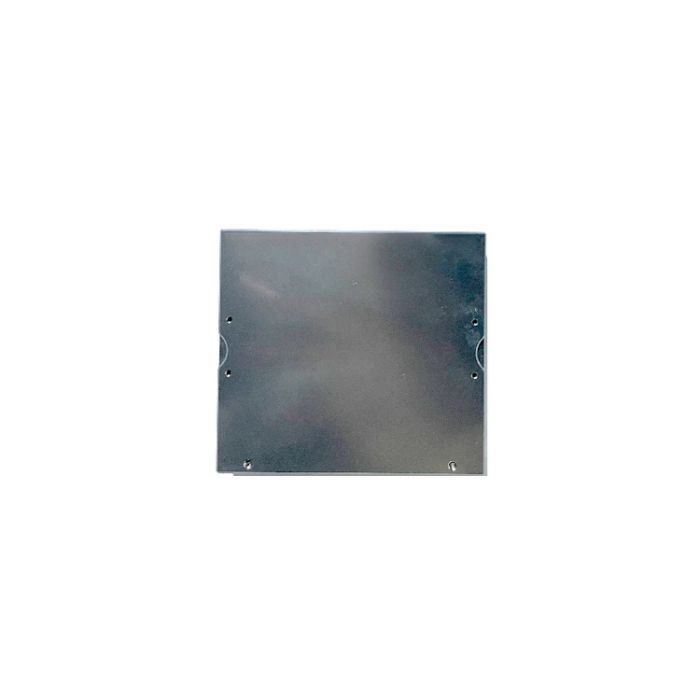
In stock
- BRAND:
- UNITREE ROBOTICS
- PART #:
- H1-2 Specialized Intel Core i7 Computing Board
- ORIGIN:
- China
- AVAILABILITY:
- SUBJECT TO AVAILABILITY
- SKU:
- Unitree-H1-2-Intel-Core-i7
Unitree H1-2 Specialized Intel Core I7 Computing Board
A humanoid robot that walks well is only half of a research platform; the other half is the computing that lets a team add its own behaviour without disturbing the balance and gait the machine already depends on. The Unitree H1-2 Specialized Intel Core I7 Computing Board sits inside that second half. It is a computing board built into the body of the Unitree H1-2 humanoid, not a box bolted on afterwards, and that single design decision governs how it should be specified, ordered and installed.
Robots Europa, based in Dublin, supplies the Unitree H1-2 Specialized Intel Core I7 Computing Board to customers across the European Union and the DACH region. Robots Europa prepares the quotation, coordinates delivery and customs within Europe and provides after-sales support, and the board is best quoted together with the H1-2 robot it is intended for.
Background
Unitree Robotics and the H1 family
Unitree Robotics is known for legged robots, from quadrupeds to full-size humanoids, and the H1 line is its family of bipedal humanoid platforms. The H1-2 is the member of that family this board is made for: the board is compatible with the Unitree H1-2 humanoids. Humanoid platforms of this class are used mainly by research groups, universities and engineering teams who need a physical body on which to test locomotion, manipulation and perception software, and the value of such a platform depends heavily on how its on-board computing is arranged.
Two computers and an expansion option
The H1-2 is equipped with one Motion Control Computing Unit and one Development Computing Unit, with an option to configure an additional expansion unit. This separation is typical of humanoid platforms: the computing that keeps the robot standing and walking is kept apart from the computing on which users run their own programs. The Intel Core i7 board belongs to this internal computing architecture. The board is built into the robot body, and no more than one board of this kind can be installed in a single robot, so it is a decision taken once per robot rather than a component to be multiplied.
Technical Specifications
| Specification | Value |
|---|---|
| Product designation | Intel Core i7 Computing Board Assembly |
| Compatible robot | Unitree H1-2 humanoids |
| Installation | Built into the robot body |
| Maximum number of boards per robot | Up to 1 board |
| Package contents | Intel Core i7 Computing Board Assembly ×1 |
| Robot on-board computers (H1-2) | One Motion Control Computing Unit and one Development Computing Unit, with an option for an additional expansion unit |
Specifications are as published by the manufacturer and are confirmed against the datasheet at quotation.
Unitree has not published the exact processor model, the memory and storage capacity, the board's dimensions and weight, its power consumption, the operating system or the connectivity ports; Robots Europa confirms these details at quotation.
Why does Unitree discourage buying the board separately?
Unitree highly discourages purchasing the board separately. The reasoning follows from the way the product is designed. Because the board is built into the robot body rather than attached externally, fitting it is part of how the robot is assembled and configured, not a quick accessory swap carried out on a workbench. Ordering it at the same time as the H1-2 allows the robot to be configured with its intended computing from the outset, and it avoids the situation in which a team receives a board that then has to be integrated into a robot already in service.
The limit of one board per robot reinforces the point. There is no case for stocking several boards against future expansion of a single machine, and the purchase decision is therefore closely tied to the robot itself. For organisations that already own an H1-2 and are considering the board afterwards, Robots Europa recommends discussing the specific robot, its current configuration and its intended use before any order is placed, so that the right path can be agreed with the manufacturer.
How does the board fit into the H1-2 computing architecture?
The H1-2 divides its on-board computing between a Motion Control Computing Unit and a Development Computing Unit, and it offers an option for an additional expansion unit. Where exactly the Intel Core i7 board sits within that arrangement deserves a precise answer rather than an assumption, and Robots Europa sets it out for your configuration when the robot is specified.
What the architecture makes clear is the principle behind it. Separating motion control from development work means that experimental software can be run, stopped and revised without interfering with the computing responsible for keeping a bipedal robot upright. For a research team this is the practical difference between a robot that can be used as a test bed day after day and one that must be handled with extreme caution every time new code is loaded. When you plan an H1-2 purchase, the choice of on-board computing should therefore be made alongside the choice of the robot, with the software you intend to run firmly in mind.
Who is the Unitree H1-2 Specialized Intel Core I7 Computing Board for?
The board is intended first for organisations ordering a Unitree H1-2 humanoid and specifying its computing configuration at the same time. University laboratories and research institutes form the core of this group: they need a humanoid body on which students and researchers can develop their own software, and they benefit from settling the robot's computing before it arrives.
System integrators and corporate innovation teams are a second segment. They typically evaluate humanoids for specific tasks and must document exactly what is installed in each robot; a board that is built in, limited to one per robot and supplied as a single assembly is straightforward to record in a project specification.
Owners of Unitree's H2 humanoid should not choose this board, since it is made for the H1-2. For that robot the network lists the Unitree H2 Dedicated Intel Core i7 Computing Board Assembly. Buyers assembling a complete H1-2 setup can find further components in the Unitree H1 / H1-2 range and in the wider Humanoid Accessories category, including the Unitree H1-2 Dexterous Hand for teams whose work extends to manipulation.
What is the Unitree H1-2 Specialized Intel Core I7 Computing Board used for?
- Configuring a new H1-2: specifying the robot's built-in computing at the moment the humanoid itself is ordered.
- Humanoid research: giving laboratories an on-board computing basis for experiments run on the H1-2.
- Teaching and student projects: supporting university programmes in which students develop software for a full humanoid platform.
- Software development and testing: providing a place in the robot's computing architecture where user programs can be developed and refined.
- Integration projects: helping integrators define a documented, repeatable computing configuration for each H1-2 they deploy.
- Platform evaluation: allowing innovation teams to assess the H1-2 with its computing configured as intended rather than retrofitted later.
Pricing and Availability
Robots Europa supplies the Unitree H1-2 Specialized Intel Core I7 Computing Board on a quotation basis, ideally as part of a quotation for the H1-2 humanoid itself, in line with the manufacturer's advice against buying the board separately. Delivery, customs and support are arranged together with the quotation. Tell us which robot you are configuring, how you intend to use it and where it will be delivered within the EU or the DACH region, and we will set out the configuration in full. A quotation request for the Unitree H1-2 Specialized Intel Core I7 Computing Board is available on this page.
Frequently Asked Questions
Which robot is the board compatible with?
The board is compatible with the Unitree H1-2 humanoids. For the Unitree H2, a separate dedicated Intel Core i7 board assembly is available.
Is the board installed externally or inside the robot?
It is built into the robot body. It is not an external module that can be attached or removed at will.
How many boards can one H1-2 hold?
Up to one board of this kind can be built into a single robot.
What is included in the package?
The package contains one Intel Core i7 Computing Board Assembly.
Can I buy the board on its own for a robot I already own?
Unitree highly discourages purchasing the board separately. If you already own an H1-2, contact Robots Europa first so that your robot's configuration and the options available can be reviewed.
Which processor, memory and storage does the board have?
Those details are not listed on this page. Robots Europa provides the datasheet together with the quotation.
Where can I buy the Unitree H1-2 Specialized Intel Core I7 Computing Board and what does it cost?
You can buy it from Robots Europa, which supplies customers across the EU and the DACH region. The cost depends on the overall configuration and is set out in a personal quotation, which you can request on this page.
Summary
A humanoid becomes a research platform when its computing is planned as carefully as its legs, and the Unitree H1-2 Specialized Intel Core I7 Computing Board is part of that plan for the H1-2. It is built into the robot body, limited to one board per robot and supplied as a single assembly, and Unitree advises against buying it in isolation. The sensible approach is therefore to treat it as a configuration choice for the robot rather than as an accessory to be added later, and to request the full datasheet before ordering. For organisations in the EU and the DACH region specifying an H1-2 with its on-board computing, a quotation from Robots Europa on this page is the starting point.
Specifications
General
What's included
Related Products
Out of stock


